How Barbed Wire Changed the American West and Ended the Open Range
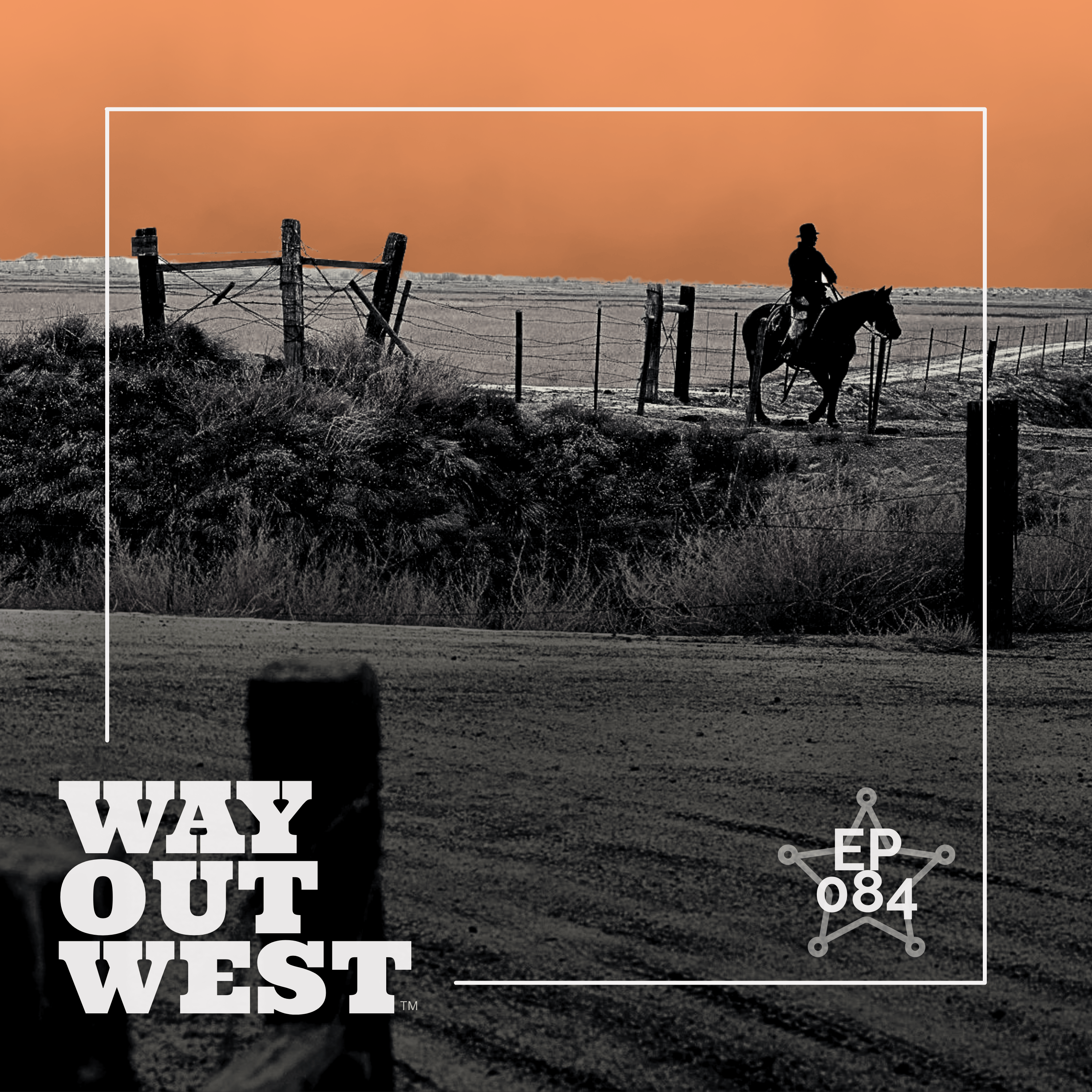
Barbed wire didn’t just fence cattle; it closed the open range and reshaped the American West. In this episode, we explore how one simple invention changed ranching, sparked conflict, and marked the end of an era on the frontier.


How Barbed Wire Changed the American West and Ended the Open Range
The open range didn’t disappear overnight.
A simple strand of steel—twisted tight with sharp barbs—reshaped the land, the cattle industry, and the life of the cowboy.
Out on the wide prairie, nothing stood still for long.
Cattle moved with the seasons. Cowboys followed. Land was open, unfenced, and defined more by custom than by boundary lines. But as settlers pushed west and farming took hold, conflict over land and resources became impossible to ignore.
In this episode of Way Out West, we explore how barbed wire changed everything. What began as a practical solution to wandering cattle quickly spread across the Plains, closing off water, dividing land, and bringing an end to the open range that had defined an era.
Through the stories of fence-cutting wars, brutal winters, and the shifting work of the cowboy, we look at how one small invention forced the West to adapt, and what was gained and lost along the way.
Because the open range didn’t end with a war.
It ended with wire… and a new way of life took its place.
In This Episode, You'll Hear:
- How barbed wire spread across the American West and closed the open range
- Why farmers and ranchers clashed over land and resources
- What the fence-cutting wars reveal about life on the frontier
- How the winters of the 1880s accelerated the end of the open range
- How barbed wire reshaped ranching and the daily work of the cowboy
As Mentioned in This Episode:
Barbed Wire and the End of the Open Range → https://ridewayoutwest.com/barbed-wire-end-open-range/
Roundup: A roundup is the seasonal gathering of cattle spread across an open range, where cowboys bring herds together for branding, sorting, and counting. On the frontier, it was essential work, and where a cowboy earned his keep.
Subscribe to Way Out West for weekly stories of cowboy life, ranching history, and the traditions that shaped the American West.
Transcript: For a full transcript of this episode, click on "Transcript"
Your Turn! Share your thoughts → howdy@ridewayoutwest.com
Support the Show: Buy me a coffee → https://buymeacoffee.com/thecowboycpa
Follow Along: Instagram → https://www.instagram.com/RideWayOutWest
02:05 - Chapter 1 - The World Before Wire
02:32 - Chapter 2 - The Problem No One Could Solve
03:07 - Chapter 3 - Enter The “Devil’s Rope”
03:35 - Chapter 4 - The Moment Everything Changed
03:57 - Chapter 5 - The Closing of The Range
04:33 - Chapter 6 - The Fence Cutting Wars
05:05 - Chapter 7 - Nature Delivers the Final Blow
05:39 - Chapter 8 - The End of the Trail Drive Era
06:04 - Chapter 9 - How Cowboy Life Changed
06:28 - Chapter 10 - The Transformation of Ranching
06:54 - Chapter 11 - The Human And Cultural Cost
07:40 - Chapter 12 - Modern Parallel
09:53 - Chapter 13 - Buster the Bull and Cowboy Glossary Term of the Week
10:47 - Chapter 14 - Thanks for Listening
There was a time…
when nothing stood between you and the horizon.
No fences.
No boundaries.
Just grass… sky… and cattle that moved like weather across the plains.
And then—
A simple strand of wire…
changed everything.
Not a railroad.
Not a war.
Not even a law.
Just steel…
twisted tight…
with a few sharp barbs.
And in a matter of years—
the open range…
was gone.
[MUSIC]
Howdy. Chip Schweiger, here.
Welcome to another edition of Way Out West.
The podcast that takes you on a journey through the stories of the American West…
brings you the very best cowboy wisdom…
and celebrates the legacy of the American cowboy
Imagine a time…
when a man could ride for miles…
No fences.
No boundaries.
No gates to open…
or wire to mend.
Just grass…
sky…
and cattle stretching to the horizon.
That was the open range.
And then—almost overnight—it wasn’t.
So this week on the show, we’re talking about the moment the open range came to an end—
and the simple invention that made it happen.
Barbed wire didn’t just fence in cattle…
it reshaped the West,
changed the cowboy’s life,
and closed a chapter that had defined the frontier.
After the episode, check out the show notes at WayOutWestPod.com/barbed-wire
The World Before Wire
Welcome back.
Before barbed wire…
the West ran on movement.
Cattle drifted with the seasons.
Cowboys followed.
Spring meant branding.
Summer meant grazing.
Fall meant the long push north.
The trail drives.
Texas to Kansas.
Hooves like thunder.
Ownership wasn’t about fences.
It was about brands.
And reputation.
You didn’t fence your cattle.
You knew them.
The Problem No One Could Solve
But there was a problem.
The Plains had grass…
but not wood.
No timber for fences.
No stone for walls.
And cattle?
They didn’t respect property lines.
Farmers moved in.
Planted crops.
And overnight…
those crops became dinner for a wandering herd.
Conflict was inevitable.
Farmers wanted protection.
Ranchers wanted freedom.
The land couldn’t support both—not the way things were.
Enter The “Devil’s Rope”
Then came a simple invention.
Steel wire.
Twisted tight.
With sharp barbs every few inches.
Barbed wire.
Cheap.
Easy to install.
Deadly effective.
Patented in the 1870s…
mass-produced soon after…
It did something no one had been able to do before—
It controlled the Plains.
The Moment Everything Changed
At first…
people didn’t trust it.
Would it hold cattle?
Would it injure them?
Then came the demonstrations.
Longhorns charged the fence…
and stopped.
Just like that—
the future snapped into place.
Sales exploded.
And the prairie began to change.
The Closing of The Range
Wire went up…
mile by mile.
Across Texas.
Across Oklahoma.
Across the Great Plains.
Land that had been open to all…
was suddenly divided.
Water sources—cut off.
Trails—blocked.
Migration routes—gone.
The open range didn’t disappear in a day.
But it didn’t take long.
Within a couple decades…
it was over.
Historians would later say—
Barbed wire didn’t just fence land.
It fenced in an entire way of life.
The Fence Cutting Wars
Not everyone accepted it.
Men rode at night…
with wire cutters in hand.
They cut fences.
Burned posts.
Opened the land back up—at least for a moment.
These were the fence-cutters.
And what followed?
Range wars.
Arguments turned to gunfights.
Property disputes turned deadly.
Texas had to step in.
Fence cutting became a felony.
And just like that…
The law took the side of the fence.
Nature Delivers the Final Blow
But wire alone didn’t end the open range.
Nature helped.
The winters of the 1880s—
brutal.
Blizzards swept the Plains.
Cattle trapped behind fences…
couldn’t move to better grass.
They piled up against the wire.
And died.
Some ranchers lost half their herds.
Some lost nearly all.
That winter made one thing clear—
The old way wasn’t just fading.
It was finished.
THE END OF THE TRAIL DRIVE ERA
With fences everywhere…
The great cattle drives?
They began to disappear.
No more long pushes north.
No more open corridors.
Railroads came closer.
Ranches became self-contained.
The cowboy’s job changed.
Less riding.
More managing.
Less freedom.
More responsibility.
HOW COWBOY LIFE CHANGED
The romantic cowboy…
Riding the wide-open prairie…
Was replaced by something quieter.
More practical.
Now it was:
Fix the fence.
Check the water.
Rotate the herd.
Same grit.
Different work.
As your article puts it—
The adventure gave way to routine.
But the spirit?
That didn’t change.
THE TRANSFORMATION OF RANCHING
Barbed wire didn’t just end something.
It built something new.
Ranching became more controlled.
More efficient.
Selective breeding improved herds.
Pasture management took hold.
What had been free-range grazing…
Became modern ranching.
In a way—
Barbed wire didn’t kill the cattle industry.
It reshaped it.
THE HUMAN AND CULTURAL COST
But there was a cost.
The bison lost their migration routes.
Driven closer to extinction.
Native American life—
already under pressure—
was further disrupted.
They had a name for barbed wire:
“The Devil’s Rope.”
Because it didn’t just fence cattle.
It fenced people out.
THE BIGGER LESSON
Here’s the thing about barbed wire—
It was simple.
Just wire and barbs.
But its impact?
Massive.
It changed:
Land ownership
Economics
Culture
Freedom itself
It’s a reminder—
Technology doesn’t ask permission.
It just arrives…
And everything adjusts around it.
MODERN PARALLEL
Think about it.
Barbed wire was the smartphone of the 1800s.
A tool that seemed small…
But rewrote how people lived.
How they worked.
How they moved.
How they connected.
And just like today—
Some people adapted.
Some resisted.
But nobody stayed the same.
Closing Thought
Next time you’re driving a country road…
And you see that line of rusted wire stretching into the distance…
Take a second.
Because you’re not just looking at a fence.
You’re looking at the moment…
The prairie closed.
And maybe that’s the part we don’t talk about enough.
We like to remember the open range as freedom—
and it was.
But it was also uncertainty.
Risk.
Exposure to the elements… and to other men.
Barbed wire brought limits.
But it also brought order.
It forced a different kind of thinking.
A different kind of discipline.
Not just riding harder—
but managing better.
Not just claiming land—
but taking responsibility for it.
Because when you put up a fence…
You’re saying something.
You’re saying:
This is mine.
I will care for it.
I will be accountable for what happens here.
And that idea—
that shift from open access to stewardship—
That’s still with us today.
Out here in the modern West…
The fences are still standing.
But they’re not just barriers.
They’re lines of responsibility.
They mark where a man—or a family—has chosen to invest their time, their labor, and their future.
And maybe that’s the real story of barbed wire.
Not just that it closed the prairie…
But that it helped define what came next.
Ranching didn’t disappear.
It matured.
It became more intentional.
More sustainable.
More rooted.
So yeah… the open range is gone.
But something else took its place.
Something built to last.
And if you look close enough—
You can still see both worlds out there.
In the stretch of a fence line disappearing into the distance…
And in the cowboy riding it.
Buster the Bull and Cowboy Glossary Term of the Week
Before we close out for this week, we’ve got one more thing…
Yep, that distinctive call from Buster the Bull means it’s time for our Cowboy Glossary Term of the Week.
Cowboy Glossary: Roundup
A roundup is the seasonal gathering of cattle spread across open range… brought together by cowboys for branding, sorting, doctoring, and counting the herd.
In the days of the open range, cattle from multiple outfits grazed together, so roundups were essential. Crews rode out—sometimes for weeks—locating, driving, and separating cattle by brand.
It was hard work.
Long days in the saddle.
Dust, weather, and miles of country to cover.
But it was also where the work of ranching came together—
and where a cowboy proved his worth.
Thanks for Listening
Well, that’s about all for this episode of Way Out West.
I appreciate you spending part of your day with me.
If you enjoyed this episode of Way Out West…
Make sure you’re subscribed wherever you get your podcasts. And maybe drop us a review which will help us reach more fans of the American west.
Next week on Way Out West, we’re going to step back even further—
into the true origins of the cowboy—and the Spanish and Indigenous traditions
that shaped everything from the gear…
to the language…
to the way a man rides.
Until next time, this is Chip Schweiger reminding you to
Keep your cinch tight…
your loops handy…
…and your eyes on the horizon.
We’ll see ya down the road