The Truth About Cowboying: Why Not Everybody Could Hold the Job
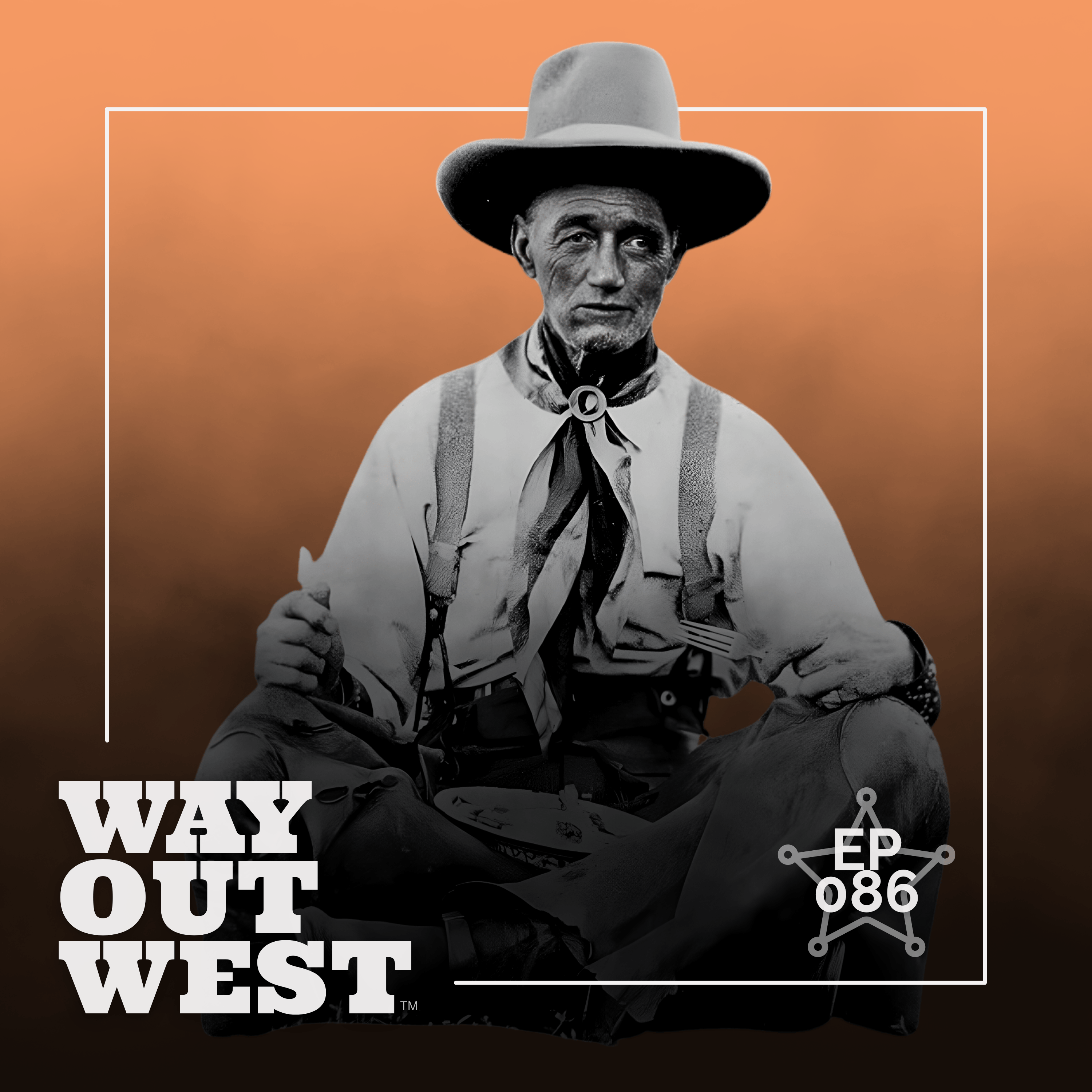
Cowboy life looked open to anyone willing to try, but the work quickly sorted men out. In this episode, we explore the hard truth about cowboy labor in the Old West and why not everybody could hold the job.



Why Not Everybody Could Be a Cowboy
The hard truth about cowboy work on the frontier
Cowboy life has long been romanticized in American culture. The open range. The horse. The freedom. The independence.
But behind that image was a harder truth.
In the Old West, cowboying was not glamorous work. It was labor. Rough, repetitive, uncomfortable, and often dangerous labor. While the frontier may have seemed open to any man willing to try, the work itself was brutally selective. It sorted men fast.
In this episode of Way Out West, we explore the reality behind cowboy work and why not everybody could be a cowboy. We look at the physical strain of the job, the repetition of everyday ranch labor, the role of weather and country in testing a man, and the way reputation is formed quickly on a working outfit. Because out on the range, style meant nothing without usefulness.
The cowboy legend endured because the labor underneath it was real.
In This Episode
- Why cowboying looked open to almost anyone
- How the work itself sorted men out fast
- The physical and mental demands of cowboy labor
- Why monotony was as important as danger
- How weather, distance, horses, and cattle tested a man
- Why reputation mattered so quickly on the frontier
- The difference between admiring the cowboy life and enduring it
- How grit on the range was quieter than modern myths suggest
- Why the cowboy myth lasted
- What cowboy labor can still teach us about substance and responsibility
🐎 Cowboy Glossary – Term of the Week
Top Hand: A top hand was one of the best workers on a ranch or trail outfit. More than just a skilled rider, a top hand was dependable, steady under pressure, and trusted to handle hard work well when it mattered most.
🎧 Listen & Subscribe
Subscribe to Way Out West for weekly stories of cowboy life, ranching history, and the traditions that shaped the American West.
Transcript: For a full transcript of this episode, click on "Transcript"
Your Turn! Share your thoughts → howdy@ridewayoutwest.com
Support the Show: Buy me a coffee → https://buymeacoffee.com/thecowboycpa
Follow Along: Instagram → https://www.instagram.com/RideWayOutWest
02:50 - Chapter 1 – The West Let You Try
04:39 - Chapter 2 – The Work Was Bigger Than the Image
06:39 - Chapter 3 – The Country Did Its Own Hiring
08:44 - Chapter 4 – Reputation Followed Fast
10:47 - Chapter 5 – Grit Was More Than Tough Talk
13:18 - Chapter 6 – The Myth Endured Because the Work Was Real
14:59 - Chapter 7 – What the Job Still Teaches
16:56 - Chapter 8 - Buster the Bull and Cowboy Glossary Term of the Week
17:38 - Chapter 9 - Thanks for Listening
Not everybody could hold the job.
That may be the simplest truth ever told about cowboy life.
A lot of men liked the look of it.
The hat.
The horse.
The freedom.
The open country.
But the work didn’t care what a man looked like.
The work cared whether he could stay in the saddle all day.
Whether he could rope when it counted.
Whether he could stay calm when cattle broke.
Whether he could handle dust, hunger, heat, cold, and the kind of tired that settled into the bones.
Out on the frontier, nobody handed out cowboy status because a man wanted it.
The job decided.
And not everybody could hold it.
[MUSIC]
Howdy. Chip Schweiger, here.
Welcome to another edition of Way Out West.
Where the stories of the American West are told…
Cowboy wisdom is earned…
And the legacy of the American cowboy still rides on.
There is a version of the cowboy that America has loved for a long time.
He rides beneath a big sky.
He moves easy in the saddle.
He looks independent.
Capable.
Untouched by ordinary life.
And to be fair, some of that image came from something real.
Cowboys did live close to the land.
They did know horses.
They did carry a kind of competence most people today rarely have to develop.
But the old West did what the old West always does.
It turned hard labor into legend.
Because the truth is, cowboying wasn’t glamorous work.
It was labor.
Rough labor.
Repetitive labor.
Risky labor.
It was work that could humble a man fast.
A man might like the idea of cowboying.
He might admire the men who did it.
He might imagine the freedom of the trail or the romance of the range.
But liking the idea and living the life were two very different things.
So, today on the show we’re talking about that divide.
About the men who tried it.
The men who lasted.
And the truth that sat behind the frontier image:
Not everybody could hold the job.
After the episode, check out the show notes at WayOutWestPod.com/ be-a-cowboy
Chapter 1 – The West Let You Try
Welcome back.
One reason the cowboy story became so powerful is that, in some ways, the work seemed open.
There was no application.
No HR department.
No polished interview.
No diploma hanging on the wall.
A man could drift into a town.
Find a ranch.
Ask for work.
Maybe get a chance.
That part mattered.
The frontier, for all its harshness, often had room for men who didn’t fit neatly somewhere else.
Young men.
Restless men.
Poor men.
Immigrants.
Freedmen.
Mexican vaqueros.
Men who had failed somewhere else and needed another start.
The West wasn’t equal.
It wasn’t fair.
But it could be porous.
A man didn’t always need polish.
He needed usefulness.
Could he ride?
Could he take instruction?
Could he stay with the work?
Could he keep his head?
That openness gave cowboying part of its myth.
It looked like a world where a man could prove himself.
And in a sense, it was.
But that’s only half the story.
Because while the door might open, the work itself stood on the other side like a judge.
You could try.
But trying and lasting weren’t the same thing.
The range was full of men who wanted the life for about three days.
Until the saddle sores came.
Until the weather turned.
Until the food got plain.
Until the hours got long.
Until the horse beneath them stopped being an idea and became a real animal with strength, speed, fear, and opinions of its own.
The West let you try.
But then it started cutting and sorting.
Chapter 2 – The Work Was Bigger Than the Image
This is where the romantic picture begins to crack.
Because cowboying wasn’t one long heroic ride into the sunset. It was hard labor.
And I think that’s one reason the real story matters more than the polished image.
It was day after day of necessary things.
Gathering cattle.
Moving them.
Watching them.
Separating them.
Branding them.
Doctoring them.
Finding water.
Fixing what broke.
Sleeping rough.
Waking early.
Doing it again.
And again.
And again.
That’s what made the work hard in a deeper way.
It wasn’t just danger.
Though danger was there.
It was repetition.
A cowboy had to be steady enough for routine.
Tough enough for discomfort.
Alert enough for sudden trouble.
Hollywood loves the dramatic moment.
The stampede.
The gunfight.
The showdown.
But a working cowboy’s real challenge often lived somewhere else.
In monotony.
In weather.
In distance.
In fatigue.
In keeping focus when every day looked a lot like the day before.
There’s a kind of toughness that charges into crisis.
And there’s another kind that wakes up sore, underfed, under-rested, sunburned, dust-covered, and goes right back to work.
The second kind is often quieter.
It’s also the kind the range demanded most.
A man could look right in the outfit.
Maybe even talk right.
But if he couldn’t handle the drag of the work, the outfit would know soon enough.
Because cattle don’t care about bravado.
Horses don’t care about posturing.
And weather has no respect for self-image.
The job stripped men down to what was real.
Chapter 3 – The Country Did Its Own Hiring
Out on the frontier, nature wasn’t just scenery.
It was management.
The country itself did part of the hiring and firing.
Heat could break a man.
Cold could break him too.
A dry stretch with little water.
A storm rolling in at the wrong moment.
A river crossing.
A long push with cattle growing restless.
A night with too little sleep and a dawn that came way too soon.
These weren’t side notes to the work.
They were the work.
The wide-open country people now admire in paintings and photographs was beautiful, yes.
But it was also unforgiving.
Beautiful country can still wear a man down.
A prairie under summer sun could feel endless.
A norther could hit with force.
Rain could turn ground slick and foul.
Dust could get into the mouth, the nose, the eyes, the clothes, the bedding, the food.
Then there were the insects.
The mud.
The thirst.
The isolation.
And always the horse.
A cowboy’s horse made the work possible.
But a horse was never just equipment.
It was a living, reacting creature.
To cowboy well, a man had to learn balance, timing, feel, and calm.
He had to ride not like a passenger, but like someone in partnership with an animal far stronger than he was.
That alone sorted people.
Some men could admire a horse from the ground.
Some could sit one.
Far fewer could really work from one.
And then came cattle.
Big.
Nervous.
Stubborn.
Unpredictable in groups.
A cow outfit didn’t need dreamers.
It needed hands who could read movement, anticipate trouble, and react without panic.
The country didn’t care what a man hoped to become.
It cared what he could do before dark.
Chapter 4 – Reputation Followed Fast
Because the work was so demanding, reputation mattered almost immediately.
Not in some distant, abstract sense.
In the practical sense.
Honestly, that’s one of the reasons I’m drawn to these stories. They remind us that usefulness and character used to travel together.
Could this man pull his weight?
Would he stay with the herd?
Would he do his turn on night guard?
Would he complain constantly?
Would he get sloppy when tired?
Would he panic when things went sideways?
Out there, a weak hand wasn’t just inconvenient.
He could make life harder on everybody.
He could endanger men, horses, and cattle.
He could turn a hard week into a miserable one.
So outfits learned men quickly.
And men learned one another.
A fellow who stayed steady under pressure earned respect.
A fellow who quit, sulked, bragged too much, drank too hard when it mattered, or failed to do his share got marked fast.
That didn’t mean cowboys were saints.
Far from it.
But in a labor world that ran heavily on trust and word of mouth, usefulness traveled.
So did uselessness.
In that sense, the cowboy trade was brutally honest.
You couldn’t fake it for long.
There was no polished résumé to hide behind.
No office politics to carry a weak worker farther than he deserved.
No great language to cover poor performance.
Sooner or later, a man had to show whether he could hold up.
If he could, his name might carry.
If he couldn’t, that carried too.
The frontier could be loose in structure.
It could be informal.
But that didn’t make it soft.
In some ways, it made judgment quicker.
Because when life and work were so close together, character showed itself fast.
Chapter 5 – Grit Was More Than Tough Talk
We use the word grit a lot now.
Sometimes too lightly.
We attach it to motivation.
To mindset.
To branding.
But frontier grit wasn’t a slogan.
It was staying with hard work that offered no applause.
It was doing the unpleasant thing because it needed doing.
It was enduring boredom without becoming careless.
Pain without becoming dramatic.
Fatigue without becoming unreliable.
And that is important.
Because the cowboy ideal has often been reduced to the bold man.
The fearless man.
The man of action.
But working outfits needed something more dependable than boldness.
They needed steadiness.
A hand who was all flash and no patience could be a liability.
A hand who stayed cool, stayed useful, and stayed dependable was worth something.
Real grit, in that world, often looked quiet.
It looked like saddling up again.
Like taking another shift.
Like riding night guard in darkness while cattle shifted and breathed and muttered in the dark.
Like swallowing discomfort instead of making it everybody else’s problem.
And yes, some men had that kind of grit.
Some developed it.
Others discovered they didn’t have it and couldn’t find it.
That’s not a moral failing in every case.
It’s just the truth.
Different men are built for different things.
The point is not that cowboys were superhuman.
The point is that the work was demanding enough to expose what a man had in him.
That’s why so many frontier jobs carried a kind of hard-earned respect.
Not because everybody did them.
But because not everybody could.
Chapter 6 – The Myth Endured Because the Work Was Real
Here’s the interesting part, and the part that’s stuck with me.
The cowboy myth didn’t survive only because people embroidered it.
It survived because underneath the embellishment, there was something solid.
People could romanticize the cowboy precisely because the work demanded so much.
If cowboying had been easy, nobody would’ve turned it into legend.
If any man could do it comfortably, nobody would still be talking about it.
The myth grew because the labor was real.
Because the conditions were real.
Because the consequences were real.
The cowboy stood for competence not by accident, but because the work selected for it.
That doesn’t mean every cowboy fit the legend.
Of course not.
But the legend attached itself to a job that required nerve, endurance, skill, and reliability.
That gave it staying power.
Over time, America polished the image.
Cleaned it up.
Turned it into costume in some places.
Reduced it to style in others.
But underneath all that remains the older truth.
A cowboy wasn’t supposed to be admired first for looking the part.
He was supposed to be useful.
And that may be one reason the image still has such force.
Deep down, people still admire competence.
They still admire endurance.
They still admire men and women who can carry responsibility without noise.
The cowboy, at his best, represented that.
Not because he posed for it.
But because the work forced it.
Chapter 7 – What the Job Still Teaches
So what do we do with this now?
Well, for one thing, it helps clear away some of the fog.
The cowboy life wasn’t built on aesthetics.
It was built on labor.
And that matters.
Because we live in a world full of presentation.
A world where it’s easier than ever to look capable.
Harder, sometimes, to be capable.
The frontier still offers a corrective.
It reminds us that reality eventually sorts people.
Work sorts people.
Responsibility sorts people.
Pressure sorts people.
Not always quickly.
But eventually.
The old range teaches something plain:
Wanting the identity is not enough.
You have to carry the weight that comes with it.
That applies well beyond cowboying.
Business.
Family.
Community.
Leadership.
A lot of people like the title.
Not everybody can hold the job.
And maybe that’s why the cowboy still matters. I think it is.
Not as a cartoon.
Not as a costume.
Not as some polished relic of a vanished world.
But as a reminder that there has always been a difference between image and substance.
The frontier had a way of exposing that difference fast.
The work made the call.
And not everybody could hold it.
The cowboy has been romanticized for a long time.
And some of that romance is understandable.
There’s something powerful about a figure shaped by open country, hard work, and self-reliance.
But the deeper truth is better than the myth.
Because the real story isn’t about costume.
It is about competence.
It’s about men who entered a hard trade and discovered quickly whether they could stay in it.
Some could.
Some couldn’t.
The work decided.
And maybe that’s the part still worth remembering.
Chapter 8 - Buster the Bull and Cowboy Glossary Term of the Week
Before we close out for this week, we’ve got one more thing…
Yep, that distinctive call from Buster the Bull means it’s time for our Cowboy Glossary Term of the Week.
And this week’s term is Top Hand
A top hand was one of the best workers in an outfit.
Not the loudest.
Not the flashiest.
The one others trusted.
A top hand could ride, rope, work cattle, handle pressure, and stay steady when the day went bad.
On a real outfit, being called a top hand meant something.
It had to be earned.
Chapter 9 - Thanks for Listening
Well, that’s about all for this episode of Way Out West.
I appreciate you taking time out of your day to spend with me.
If you enjoyed this episode…
Make sure you’re subscribed wherever you get your podcasts.
And consider dropping us a quick review on Apple or Spotify.
That helps us reach more fans of the American West.
Next week on Way Out West:
Everything a cowboy carried had a purpose.
The hat. The wild rag. The boots. The spurs. The chaps.
Out on the range, gear wasn’t decoration.
It was protection.
It was utility.
It was survival.
So, we’ll talk about why cowboy gear was never just for looks—and how every piece had a job to do.
Until next time, this is Chip Schweiger reminding you that in the West, a reputation wasn’t built by saying you could do the work.
It was built by doing it, day after day, until others knew you could be counted on.
We’ll see ya down the road