Bob Wills: The Man Who Helped the West Find Its Rhythm
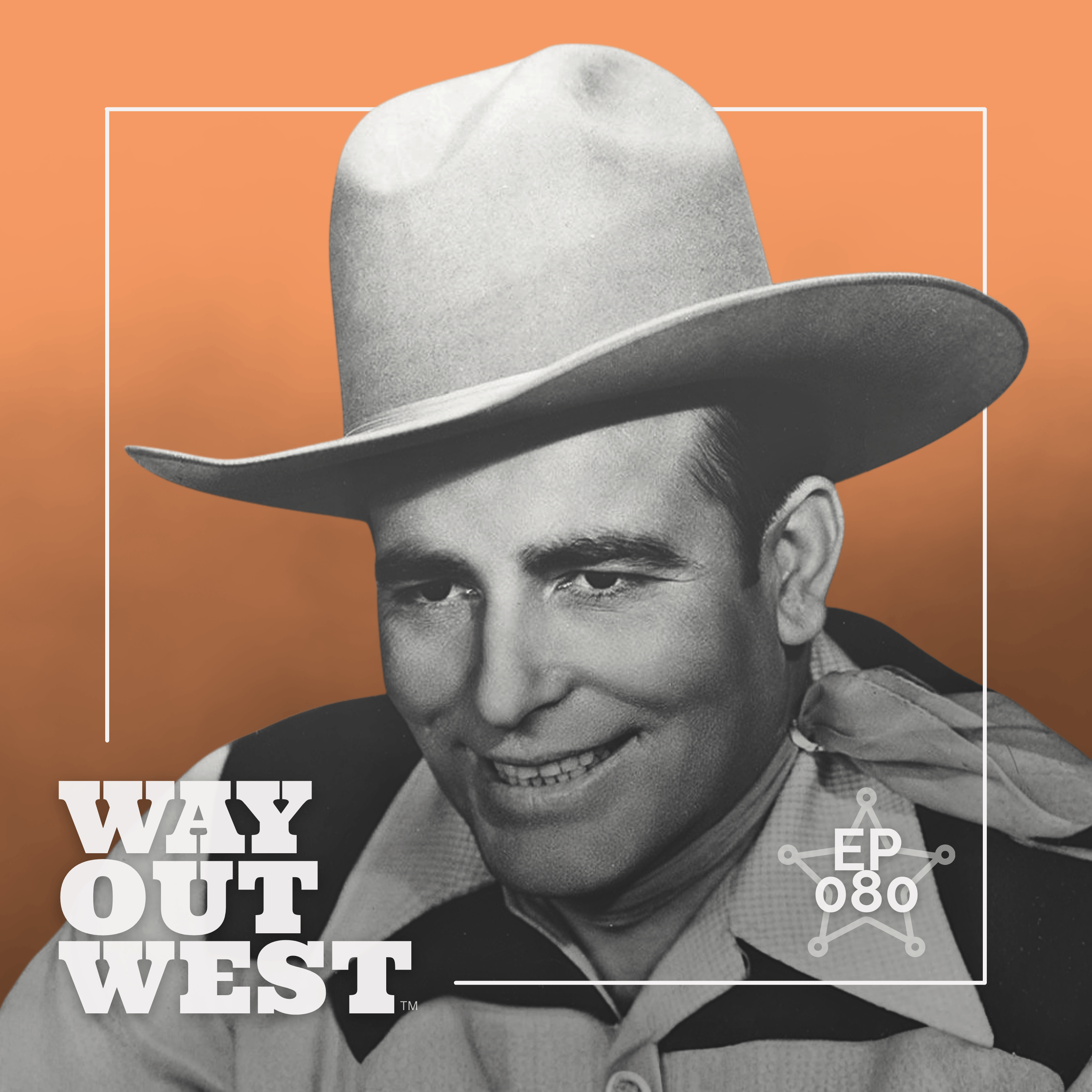
Bob Wills gave the working West more than music; he gave it rhythm. From ranch country to the oil patch to Cain’s Ballroom, this episode tells the story of how Western swing brought a scattered region together and turned Saturday night into a shared experience.


In the working West, life was measured in miles.
Miles to the next water.
Miles to the next town.
Miles between neighbors.
But on Saturday night, those miles disappeared.
Boots were cleaned.
Good hats came out of war bags.
Pickup trucks and sedans pointed toward the same wooden dance floors.
And when the band began to play, a scattered region moved together.
This episode tells the story of how Bob Wills and the Texas Playboys created the soundtrack for a modern West — a West of ranch work, oil fields, radio towers, and long highways — and how Western swing became the place where that world came back together.
This isn’t just the biography of a musician.
It’s the story of:
How rhythm created community across distance
Why dance halls were essential to working people
The rise of Tulsa and Cain’s Ballroom as the epicenter of Western swing
The transformation of a regional fiddle tradition into a modern cultural force
Because Bob Wills didn’t just make people dance.
He helped an entire region move to the same beat.
In This Episode, You’ll Hear:
- How radio turned Western swing into a shared identity
- Why Saturday night was sacred in ranch country and oil-boom towns
- Bob Wills’ journey from cotton fields to the national stage
- The role of Cain’s Ballroom in the rise of a modern Western sound
- How dance halls became the social center of the working West
- Why rhythm mattered in a culture defined by work and distance
This episode includes brief archival recordings of Bob Wills, presented in their historical context as part of the story of Western swing and the working West, used with the gracious permission of the Bob Wills Foundation.
Why This Story Still Matters
In a West defined by distance and hard work, Bob Wills gave people a reason to come together and move to the same rhythm. That need for community, for a place to set the week down and feel human again, hasn’t changed. The dance halls may look different, but the music that brings us together still matters.
🐎 Cowboy Glossary – Term of the Week
Punchy
A punchy cowboy is the real deal — a dependable working hand who can ride, rope, and stay with a job in bad country without complaint. The term comes from punching cattle, making a living in the saddle. It’s one of the highest compliments an outfit can give.
🎧 Listen & Subscribe
Subscribe to Way Out West for weekly stories of cowboy life, ranching history, and Western wisdom.
Transcript: For a full transcript of this episode, click on "Transcript"
Your Turn! Share your thoughts → howdy@ridewayoutwest.com
Support the Show: Buy me a coffee → https://buymeacoffee.com/thecowboycpa
Follow Along: Instagram → https://www.instagram.com/RideWayOutWest
02:18 - Chapter 1 — The West That Needed Music
05:03 - Chapter 2 — A Family Where Music Was Responsibility
06:29 - Chapter 3 — The Cotton Fields And The Barber Chair
07:58 - Chapter 4 — Radio And The End Of Distance
09:27 - Chapter 5 — Tulsa: Where the West Turned Electric
10:48 - Chapter 6 — Western Swing as The Sound of a Modern West
11:39 - Chapter 7 — The Social Contract of Saturday Night
12:53 - Chapter 8 — Life On The Road
13:31 - Chapter 9 — War And Loss
14:08 - Chapter 10 — Why Cowboys Trusted Him
14:33 - Chapter 11 — The Legacy in Wood Floors and Fiddle Strings
15:30 - Chapter 12 – Buster the Bull and Cowboy Glossary Term of the Week
16:28 - Chapter 13 – Thanks for Listening
Before the neon…
Before the radio towers…
Before the polished hardwood floors and ticket windows…
There was a farmhouse in Texas.
A fiddle.
A boy watching his father play.
Boot heels tapping on pine planks.
Neighbors drifting in from the dark.
Someone laughing in the kitchen.
Someone pushing the table back against the wall.
Music not as performance…
but as life.
Because out here…
music wasn’t something you listened to.
It was something that held a community together.
And that boy—
James Robert Wills—
would grow up to give that same feeling…
to an entire region.
To oil towns.
To ranch country.
To cowboys who had ridden a hundred miles for one night of light.
He gave them rhythm.
He gave them motion.
He gave them release.
He gave them a place to belong.
He made them dance.
[MUSIC]
Howdy. Chip Schweiger, here.
Welcome to another edition of Way Out West.
The podcast that takes you on a journey through the stories of the American West…
brings you the very best cowboy wisdom…
and celebrates the legacy of the American cowboy.
Last week we rode through saddle leather.
This week…
we step onto a wooden dance floor in the middle of an oil boom.
Because the story of the West is not only about work.
It’s about what people did…
to survive the work.
So today on the show, we’re telling the story of Bob Wills…
the man who made cowboys dance and turned oil-boom towns, ranch country, and small-town dance halls into the beating heart of the modern West.
After the episode, check out the show notes at WayOutWestPod.com/Bob-wills
Chapter 1 — The West That Needed Music
Welcome back.
Before we get into Bob Wills, I want to pause for a moment.
Robert Duvall passed away this week. For many of us, he will always be Augustus McCrae in Lonesome Dove — a character who carried the West with humor, grit, and a kind of hard-earned tenderness.
Men like that, even when they’re fictional, shape how we understand this country and the stories we tell about it.
So wherever you’re listening from, consider this a quiet tip of the hat.
OK, Now… let’s talk about the King of Western Swing.
The early twentieth-century West, trailing into the end of the cowboy era in the 1920s, was not the slow, sepia-toned place people like to imagine.
It was loud.
Mechanical.
Restless.
Oil derricks rising where longhorns had grazed only a generation earlier.
Rail lines cutting through old cattle trails like steel rivers.
Towns built in months — sometimes in weeks — with false-front buildings, boarding houses, cafés that never seemed to close, and dance halls big enough to hold a thousand people who had nowhere else to go.
And the people in those towns were not there for the scenery.
They were there to work.
Work that started before sunrise and didn’t stop when the sun went down.
Work that was measured in output — barrels, acres, head of cattle, miles of track.
Work where a man could be whole in the morning and broken by supper.
And the distances between those jobs and everything that felt like home were immense.
Not emotional distance.
Actual miles.
Miles of dirt roads.
Miles of prairie.
Miles of isolation.
So when Saturday night came, it wasn’t just the end of the week.
It was a migration.
Pickup trucks and Model A Fords coming in from every direction.
Cowboys who had been riding line camps.
Roughnecks who had been sleeping in bunkhouses.
Farm families who had not seen another face outside their own in days.
All moving toward one place.
Light.
Sound.
People.
And a bandstand.
Because a culture that works that hard must have a way to come back together.
It must have a place where the dust gets brushed off.
Where the week gets set down.
Where the body remembers it was made for something other than labor.
Western swing became that place.
And Bob Wills became the man who opened the door.
Chapter 2 — A Family Where Music Was Responsiblity
In the Wills household, music was not decoration.
It was responsibility.
His father didn’t play the fiddle for applause.
He played it because a dance had to happen.
Because neighbors had driven in from miles away and expected the room to come alive.
Because in rural Texas, a good fiddler was as valuable as a good blacksmith or a good horse.
Young Bob watched all of this from the edge of the room.
He watched how the chairs were pushed back.
How the lanterns were hung higher.
How the first notes changed the air.
He saw something most people miss.
He saw that music created motion.
A room full of tired people suddenly stood straighter.
Boot heels began to mark time.
Laughter came easier.
Conversations started between people who had never spoken before.
That was the lesson.
Music was not sound.
It was transformation.
And he learned it the same way every working skill in the West was learned.
Not through instruction.
Through immersion.
Through repetition.
Through being trusted to join in.
By the time he was grown, those tunes weren’t something he remembered.
They were something he carried in his body.
Just like a roper carries the feel of a loop.
Chapter 3 — The Cotton Fields And The Barber Chair
The cotton fields gave him rhythm before he ever led a band.
Long rows.
White bolls under a punishing sun.
The drag of the sack across your shoulder.
Step.
Pull.
Step.
Pull.
A tempo set by survival.
That kind of work teaches you something about time.
It teaches you that the human body has a natural cadence.
And later — when dancers filled a floor — he would recognize that cadence instantly.
Because he had lived inside it.
Then came the barber shop.
And the barber shop was a crossroads.
Farmers.
Drifters.
Railroad men.
Oil workers.
Black musicians traveling through town.
Stories.
Accents.
Jokes.
Blues guitar licks played while someone waited for a shave.
And here is where Bob Wills did something quietly revolutionary.
He listened across the lines that society said were not to be crossed.
He absorbed blues phrasing.
Jazz timing.
Swing rhythm.
Not as imitation.
But as fuel.
Because if it made people move — it belonged.
That instinct — that openness — is what built Western swing.
Not as a style.
But as a conversation between cultures on a wooden floor in Texas.
Chapter 4 — Radio And The End Of Distance
Radio changed the scale of everything.
Before radio, a band played for whoever could get to the dance.
After radio, a band played for an entire region.
A ranch house in the Panhandle.
An oil camp in Oklahoma.
A café in a small town in Kansas.
All hearing the same broadcast.
And when Bob Wills came over that signal, he didn’t sound distant.
He sounded present.
In songs like San Antonio Rose
You could hear him talking to the band.
You could hear him calling to the dancers.
You could hear the life in the room.
It was the audio version of walking through the door.
And that mattered in a place where people lived so far apart.
Radio made a scattered population feel like a community.
And when that signal carried Bob Wills across the airwaves —
people weren’t just hearing a band.
They were hearing themselves.
Now listen to how this record begins.
That smooth, almost orchestral fiddle line —
this isn’t front-porch music anymore.
This is a regional sound announcing itself at scale.
A ranch house in the Panhandle…
an oil camp bunkhouse in Oklahoma…
a café in a railroad town…
all tuned to the same moment.
And Bob Wills became the voice that tied it together.
Chapter 5 — Tulsa: Where The West Turned Electric
Tulsa was not just a city.
It was energy.
Oil money flowing through banks and into streets.
New buildings going up.
Cars everywhere.
People arriving with ambition and leaving with stories.
And Cain’s Ballroom sat right in the middle of it.
A vast wooden room that seemed to breathe when it filled.
Cars and trucks lined up outside.
Dust still on the cuffs of a week’s worth of work.
Now this — this is not listening music.
Hear that bounce in the rhythm section?
That’s built for motion.
Boot heels on hardwood.
Couples turning in a long counterclockwise line.
A thousand people moving as one.
Fast.
Urban.
Electric.
That’s Tulsa.
Bob Wills didn’t stand behind the music.
He stood inside it in songs like Take me back to Tulsa
He watched the dancers the way a trail boss watches cattle.
If the floor started to slow — he pushed the tempo.
If the room caught fire — he stretched the song.
He understood that this was not about perfection.
It was about momentum.
And when he threw his head back and shouted—
“Aahhh-haaa!”
—it wasn’t a catchphrase.
It was ignition.
Chapter 6 — Western Swing As The Sound Of A Modern West
Western swing was the first truly modern music of the rural West.
It had electricity in it.
Literally.
Amplifiers.
Steel guitars that could cry over the top of a crowd.
Drums that gave it drive.
Horns that connected it to the cities without losing the country.
It sounded like highways.
Like oil pumps.
Like freight trains.
It said that the West was not stuck in the past.
It was moving forward — fast.
And it gave working people a soundtrack that matched their new reality.
They were no longer just horsemen and farmers.
They were industrial workers.
Mobile workers.
People whose lives ran on engines and schedules.
Western swing moved at that speed.
Chapter 7 — The Social Contract Of Saturday Night
Saturday night had meaning because it had rules.
You respected the dance floor.
You respected your partner.
You behaved in a way that carried back into the week.
Because everyone there would see you again.
And then — near the end of the night — the tempo would settle.
Listen to the feel of this.
This isn’t about speed.
It’s about holding on to the moment.
One more turn around the floor.
One more conversation.
One more song before daylight and responsibility came back.
Because for a working cowboy…
for a roughneck…
for a farm family…
this was the only night that belonged to them.
This was reputation.
This was courtship.
This was networking before the word existed.
A young cowboy might meet the woman he would marry.
A rancher might meet the hand he would hire.
A business deal might begin at a table along the wall between sets.
It was the place where the scattered economy of the West became a society.
And at the center of that society was music that made everyone equal for a few hours.
Chapter 8 — Life On The Road
The Texas Playboys lived the same miles their audience did.
Bad roads.
All-night drives.
Loading equipment in the cold.
Sleeping wherever they could.
Playing night after night in a different town.
They were not insulated.
They were part of the same working circuit as the cowboys, oil workers, and harvest crews who followed opportunity across the map.
That is why there was never a wall between stage and floor.
Because they knew the same exhaustion.
The same hunger.
The same need for one good night.
Chapter 9 — War And Loss
World War II pulled the heart out of every dance hall in America.
Musicians enlisted.
Dancers enlisted.
Gasoline was rationed.
Travel became difficult.
And yet the music kept going.
Because when the world becomes uncertain, people reach for rhythm.
They reach for something that reminds them that life still exists beyond the headlines.
Bob Wills carried that responsibility.
Not as a celebrity.
But as a working bandleader who understood what those nights meant.
Chapter 10 — Why Cowboys Trusted Him
Cowboys measure a man by whether he is real.
They trusted Bob Wills because he never stopped being one of them.
He talked like them.
Joked like them.
Worked like them.
He didn’t polish the edges off the music.
He left the humanity in it.
And that told every man on that floor:
This belongs to you.
Chapter 11 — The Legacy in Wood Floors and Fiddle Strings
Walk into a Texas dance hall today.
The architecture is the same.
The movement is the same.
The rhythm is the same.
Couples circling counterclockwise in a long, flowing line.
Boots marking time.
Steel guitar rising above the band.
That is not reenactment.
That is continuity.
Because the working West still needs what Bob Wills gave it.
A place to come together.
A place to breathe.
A place to remember that life is more than labor.
Bob Wills did something rare.
He gave a working culture its soundtrack.
He made people feel seen.
He made them feel included.
He made them feel alive after a week that tried to take everything out of them.
That is not just musical success.
That is human success.
That is legacy.
And it lives on every time a dance floor fills.
Chapter 12 – Buster the Bull and Cowboy Glossary Term of the Week
Before we close out for this week, we’ve got one more thing…
Yep, that distinctive call from Buster the Bull means it’s time for our Cowboy Glossary Term of the Week.
This week’s term is: Punchy.
If a cowboy was called punchy, that was high praise.
It meant he was the real deal —
a working hand who could ride, rope, and stay with a job in bad country.
The word comes from punching cattle,
making your living horseback in the herd.
A punchy cowboy showed up early,
didn’t complain,
and didn’t have to tell you what he could do —
because his outfit already knew.
And here’s the best part —
A lot of those same punchy hands
cleaned up on Saturday night,
walked into a dance hall,
and could move just as smooth across a wooden floor
as they did across the range.
That’s punchy.
Chapter 13 – Thanks for Listening
Well, that’s about all for this episode of Way Out West.
I appreciate you spending part of your day with me as we reflect on the King of Western Swing.
What Bob Wills created…
didn’t just entertain the West.
It helped hold it together.
Next week on Way Out West,
we climb back into the saddle and explore a bond that built the West —
why a cowboy will trust a good horse with his life…
and why that horse becomes more than an animal…
it becomes a partner.
Until next time…this is Chip Schweiger reminding you to
keep your boots dry, your saddle ready…
and ride for the brand.
We’ll see ya down the road.