Before the Cowboy: The Braided Roots of the West
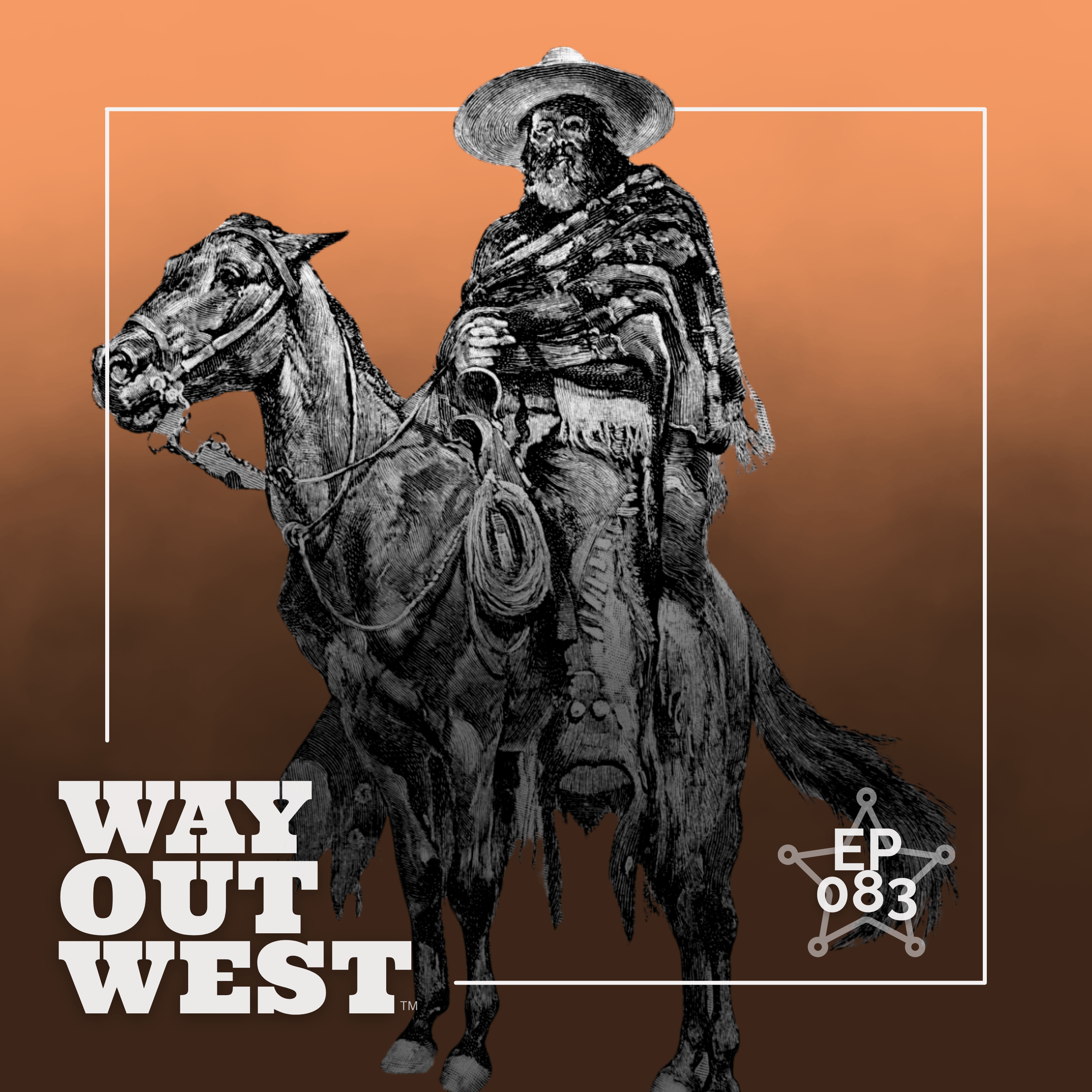
The American cowboy didn’t appear overnight. Spanish vaqueros, Indigenous horse cultures, and frontier ranchers all played a role in shaping the traditions of the working West. In this episode of Way Out West, we explore the braided roots of cowboy culture.


Before the Cowboy: The Braided Roots of the West
The American cowboy didn’t appear overnight. Spanish vaqueros, Indigenous horse cultures, and frontier ranchers braided together the traditions of the working West.
Out on the wide frontier, cultures didn’t stay separate for long.
Spanish riders brought centuries of horsemanship north from Mexico. Indigenous horse cultures mastered the Great Plains with extraordinary skill. And frontier ranchers adopted the tools and techniques that worked best in a hard country.
In this episode of Way Out West, we explore the braided roots of the American cowboy. Long before the image of the lone rider became a symbol of the West, different traditions of horsemanship, cattle work, and frontier life were blending together across the open range.
Through the stories of the vaqueros, the horse cultures of the Plains, and the ranchers who learned from both, we look at how the culture of the cowboy was shaped—not invented—on the frontier.
Because the cowboy didn’t arrive fully formed.
The culture was braided together… across generations… and across the wide country of the American West.
In This Episode, You'll Hear:
- How the cowboy tradition began with the Spanish vaqueros
- How Indigenous horse cultures transformed life on the Plains
- The tools and riding techniques adopted by frontier ranchers
- How horsemanship traditions blended across cultures
- Why the American cowboy is really a product of many influences
As Mentioned in This Episode:
Alhambra Bits and Spur: The Spanish Design Behind Cowboy Gear
🐎 Cowboy Glossary – Term of the Week
Rowel: If you look closely at a cowboy’s spur, you’ll see the small spinning wheel at the back. That wheel is called the rowel. Rather than stabbing the horse, a rowel rolls gently against the horse’s side, allowing a rider to give precise signals. The word and the design come from Spanish riding traditions, and the ornate rowels seen on many Western spurs today trace their heritage back centuries.
🎧 Listen & Subscribe
Subscribe to Way Out West for weekly stories of cowboy life, ranching history, and the traditions that shaped the American West.
Transcript: For a full transcript of this episode, click on "Transcript"
Your Turn! Share your thoughts → howdy@ridewayoutwest.com
Support the Show: Buy me a coffee → https://buymeacoffee.com/thecowboycpa
Follow Along: Instagram → https://www.instagram.com/RideWayOutWest
03:00 - Chapter 1 - Welcome Back
03:45 - Chapter 2 - The Myth of the Lone Beginning
04:39 - Chapter 3 - The Vaquero Tradition
05:46 - Chapter 4 - The Horse Nations of the Plains
06:51 - Chapter 5 - The Anglo Frontier
07:48 - Chapter 6 - A Culture Built From Work
08:37 - Chapter 7 - The West as a Cultural Braid
09:08 - Chapter 8 - Why It Still Matters
09:40 - Chapter 9: Buster the Bull and Cowboy Glossary Term of the Week
11:11 - Chapter 10 - Thanks for Listening
If you had ridden across Texas in the early 1800s… you might have seen something surprising.
A rider on horseback… swinging a rawhide rope.
But he probably wouldn’t have called himself a cowboy.
He might have been speaking Spanish.
Or Comanche.
And the saddle he rode in…
the way he handled his horse…
even the tools he carried…
would have told a much older story than the one we usually hear.
Because the cowboy didn’t start in Texas.
He didn’t start in Kansas.
And he definitely didn’t start in Hollywood.
The truth is…
Cowboy culture was braided together.
Spanish horsemanship.
Indigenous horse mastery.
Frontier ranch work.
Different peoples.
Different traditions.
All riding the same wide country.
And if you really want to understand the American West…
You have to start there.
[MUSIC]
Howdy. Chip Schweiger here.
Welcome to another edition of Way Out West.
The podcast that takes you on a journey through the stories of the American West…
brings you the very best cowboy wisdom…
and celebrates the legacy of the American cowboy.
There’s a certain quiet that belongs to the wide country.
Not the kind of quiet you find in a library or a church.
The kind that settles in after the horses are fed… and the last gate swings shut.
Out here, the land has a long memory.
Wind moves across the grass the same way it did a hundred years ago.
Hoofbeats echo across draws and ridges that have carried riders for generations.
And when most people picture the cowboy… they see a familiar scene.
A lone rider.
Wide-brimmed hat.
Horse working steadily beneath him.
It’s an image that feels timeless.
But like most things in the West… the truth behind it runs deeper than the picture.
Because the cowboy didn’t appear all at once on the American frontier.
The culture grew slowly.
Spanish riders bringing horsemanship north from Mexico.
Indigenous horse cultures mastering the plains.
Frontier ranchers adapting what worked in a hard country.
Different traditions.
Different languages.
Different ways of working cattle.
All braided together over time.
And that braid… became the culture we now recognize as the American cowboy.
After the episode, be sure to check out the show notes at WayOutWestPod.com/braided-west
Chapter 1 - Welcome Back
Welcome back.
Last week I mentioned we might spend this episode talking about fences.
And we will get there.
Because fences changed the West in ways most people don’t fully appreciate.
But something interesting happened after last week’s post.
A conversation started online about where cowboy culture actually came from.
Spanish horsemanship.
Indigenous horse mastery.
Anglo ranching traditions.
All braided together.
And it struck me that before we talk about fences on the land… we probably ought to talk about the culture that rode across it.
Because the cowboy didn’t just appear out of thin air.
He came from somewhere.
Chapter 2 - The Myth of the Lone Beginning
When most people picture the American cowboy, they see a familiar image.
A wide-brimmed hat.
Dusty boots.
A revolver on the hip.
Maybe riding across a big stretch of prairie somewhere in Texas or Wyoming.
Hollywood helped fix that image in our minds.
But the real story is older.
And deeper.
Cowboy culture wasn’t invented in a single place.
It wasn’t created by one group of people.
It grew.
Slowly.
Across centuries.
Across cultures.
What we call cowboy culture today is really a braid.
Several traditions… woven together on the frontier.
And to understand that braid, we have to start with the horsemen who came long before the word “cowboy” was ever used.
Chapter 3 - The Vaquero Tradition
Long before Texas was Texas…
Long before cattle drives headed north toward Kansas railheads…
Spanish settlers had already built a ranching culture across Mexico and the Southwest.
At the center of that culture was the vaquero.
The word comes from vaca — the Spanish word for cow.
A vaquero was, quite literally, a cow man.
But what those vaqueros developed was something much bigger than a job title.
They created a system.
Horsemanship.
Gear.
Working methods.
Techniques for managing cattle across wide, open land.
Many of the tools we associate with the American cowboy today trace directly back to that tradition.
The saddle built for long days in the saddle.
The lariat used to rope cattle.
The use of spurs.
The style of riding.
Even the broad hat designed to keep the sun off a rider’s face.
These weren’t inventions of the American frontier.
They were inheritances.
Chapter 4 - The Horse Nations of the Plains
But the braid doesn’t stop there. Because once horses spread north across the continent… something remarkable happened.
Many Indigenous nations of the Plains became some of the greatest horse cultures the world has ever seen.
Among the most formidable were the Comanche.
Within just a few generations of acquiring horses, the Comanche became extraordinary riders.
They could mount and dismount at a full gallop.
Ride hanging off the side of a horse for cover.
Manage large herds across enormous distances.
Early observers often said that Comanche riders seemed almost fused to their horses.
It was horsemanship born from necessity.
From environment.
From a deep understanding of the animal itself.
So when ranching culture later expanded across Texas and the Southwest… it entered a landscape already shaped by powerful horse traditions.
Chapter 5 - The Anglo Frontier
The third strand in the braid came with Anglo settlers moving into Texas and the frontier during the nineteenth century.
Many of these settlers came from farming backgrounds.
But when they arrived in the Southwest, they encountered a ranching culture that was already well developed.
Instead of inventing something entirely new…
They adopted what worked.
They learned roping techniques.
They adopted saddle designs.
They borrowed working methods from the vaqueros.
Over time, the English word cowboy began replacing the Spanish word vaquero.
But the working culture itself still carried those earlier influences.
What emerged was a new kind of horseman.
Part Spanish tradition.
Part Indigenous horsemanship.
Part Anglo frontier adaptation.
A true cultural braid.
Chapter 6 - A Culture Built From Work
One of the things I find fascinating about this history is how practical it all was.
None of this developed because someone was trying to create a legend.
No one was trying to invent a symbol.
These traditions grew because people had work to do.
Cattle had to be moved.
Horses had to be trained.
Land had to be managed.
When work demands results, good ideas travel fast.
If a saddle works better, people use it.
If a riding technique makes the job easier, it spreads.
If a tool helps a cowboy do his job, it becomes part of the culture.
That’s how working traditions evolve.
Quietly.
Practically.
Without much ceremony.
Chapter 7 - The West as a Cultural Braid
So when we talk about the cowboy today…
We’re really talking about the product of that long braid.
Spanish ranching traditions.
Indigenous horse mastery.
Anglo frontier expansion.
Each one contributed something.
Gear.
Horsemanship.
Range management.
Over time those threads wove together into something uniquely Western.
A culture built on land, animals, and responsibility.
Chapter 8 - Why It Still Matters
And maybe that’s why the West still captures people’s imagination.
Because beneath all the mythology…
There’s something real there.
Cowboy culture wasn’t invented in a studio.
It grew out of work.
Out of cooperation.
Out of people learning from each other across cultures and across generations.
That’s the real story of the West.
And honestly…
It’s a better story than the myth.
Chapter 9: Buster the Bull and Cowboy Glossary Term of the Week
Before we close out for this week, we’ve got one more thing…
Yep, that distinctive call from Buster the Bull means it’s time for our Cowboy Glossary Term of the Week.
This week’s term is: Rowel
If you’ve ever looked closely at a cowboy’s spurs…
you’ve probably noticed the small wheel that spins at the back.
That wheel is called the rowel.
It’s the part of the spur that actually touches the horse.
And when used correctly…
it doesn’t jab or stab.
It rolls.
A good horseman uses the rowel as a signal…
a quiet conversation between rider and horse.
The word itself comes from Spanish riding traditions.
And if you look at old spurs from Spain… or from Mexico…
you’ll often see rowels that are larger and more ornate than the ones most working cowboys use today.
That design tradition reaches all the way back to Moorish Spain…
and even to the intricate metalwork of places like the Alhambra.
So the next time you see a pair of cowboy spurs…
remember that little spinning wheel.
Because the rowel carries centuries of horsemanship…
all the way from Spain… to the American West.
And if you’d like to see some of that craftsmanship for yourself, this week’s article at RideWayOutWest.com looks at the Spanish and Alhambra influences behind modern bits and spurs.
Chapter 10 - Thanks for Listening
Well, that’s about all for this episode of Way Out West.
I appreciate you spending part of your day with me.
And I hope you’ll join me again next time as we continue exploring the people, traditions, and stories that shaped the American West.
Next time on Way Out West, we’ll return to the topic I teased earlier.
Fences.
Because once cattle spread across the plains and ranching expanded…
Fences began to reshape the land.
They changed how cattle were managed.
They changed how ranches operated.
And in many ways…
They changed the life of the cowboy himself.
But before fences could divide the land…
There had to be a culture capable of riding across it.
And that culture — like most good things in the West — was braided together over time.
Until next week…
This is Chip Schweiger reminding you to take care of your horses, and keep your word.
We’ll see ya down the road.