Buffalo Soldiers: Grit, Glory, and an Unbreakable Legacy
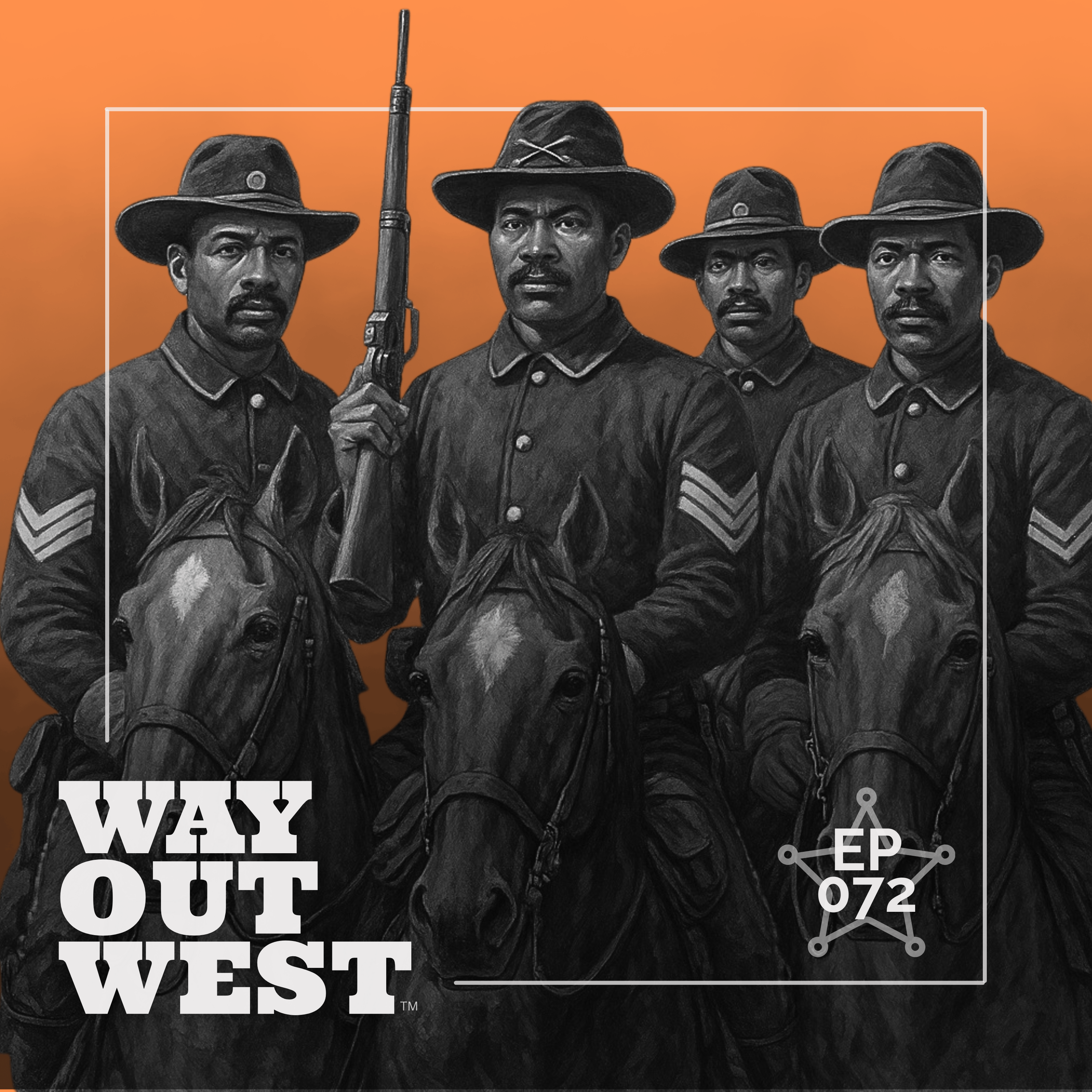
The Buffalo Soldiers faced the hardest assignments on the frontier — and left behind an unbreakable legacy. Ride along as we uncover their courage, service, and the overlooked stories that shaped the American West.


The story of the Buffalo Soldiers is one of grit, endurance, and quiet heroism on some of the hardest ground the American West had to offer. In this episode, ride deep into the lives of the Black cavalrymen who carved their names into frontier history — often without receiving the recognition they deserved.
Formed after the Civil War, the Buffalo Soldiers of the 9th and 10th Cavalry and the 24th and 25th Infantry became some of the most capable soldiers on the frontier. Plains tribes named them “Buffalo Soldiers” as a sign of respect — honoring their bravery, their resilience, and their unwavering spirit in battle.
These troopers built forts, protected settlers, patrolled vast stretches of dangerous country, fought in major campaigns, and endured extreme hardships with determination that even their critics couldn’t ignore. Their service stretched far beyond the frontier, from Cuba to the Philippines, and even into the early years of the National Park Service.
This episode explores their origins, their challenges, their victories, and the powerful legacy that still rides alongside the story of the American West.
In This Episode, You’ll Hear:
- How the Buffalo Soldiers were formed in the aftermath of the Civil War
- Why Plains tribes respected them and gave them their enduring name
- The brutal assignments and remote posts they were tasked with
- The leadership of figures like Benjamin Grierson and Henry O. Flipper
- Their role in major frontier conflicts and campaigns
- Their overlooked contributions in Cuba, the Philippines, and the early national parks
- How their service helped shape the story, and the soul, of the American West
Cowboy Glossary Term of the Week:
Forting Up — A frontier expression meaning to dig in, prepare for defense, or brace for incoming trouble.
Further Reading & Listening:
National Museum of African American History & Culture — Buffalo Soldiers
Fort Davis National Historic Site
“The Buffalo Soldiers” by William H. Leckie
Enjoying the ride? Saddle up with us:
Transcript: For a full transcript of this episode, click on "Transcript"
Your Turn! Share your thoughts → howdy@cowboyaccountant.com
Support the Show: Buy me a coffee → https://buymeacoffee.com/thecowboycpa
Follow Along: Instagram → https://www.instagram.com/RideWayOutWest
03:02 - Chapter 1: Born in the Ashes of the Civil War
04:17 - Chapter 2: Why the Plains Tribes Respected Them
05:00 - Chapter 3: The Hardest Assignments on the Frontier
06:07 - Chapter 4: Legendary Leaders and Unknown Heroes
07:31 - Chapter 5: Campaigns and Clashes on the Frontier
08:30 - Chapter 6: The Harsh Reality — Service Without Recognition
09:17 - Chapter 7: Beyond the Frontier — The Spanish-American War and Beyond
10:12 - Chapter 8: Legacy on the Land
10:51 - Chapter 9: Closing Reflections
11:36 - Chapter 10: Buster the Bull & the Cowboy Glossary Term of the Week
12:25 - Chapter 11: Thanks for Listening
Out on the farthest edges of the frontier… where dust storms swallowed the horizon, and silence could turn to gunfire in a heartbeat… There rode a group of cavalrymen whose names history nearly forgot.
They served with courage, fought in the worst conditions, and carried the weight of a nation that didn’t always honor them.
And yet… they rode on.
The frontier’s toughest cavalrymen, riding the hardest country and carving a legacy that still echoes across the American West.
[MUSIC]
Howdy. Chip Schweiger, here. Welcome to another edition of Way Out West.
The podcast that takes you on a journey through the stories of the American West, brings you the very best cowboy wisdom, and celebrates the legacy of the cowboys and cowgirls—who are feeding a nation.
Picture the Western night. It’s the kind of darkness that eats lantern light and makes a man feel small beneath the vast bowl of stars. A horse nickers somewhere in camp. Canvas tents snap in a cold wind rolling down out of the mountains. And across the glow of a low fire… You can see the silhouettes of cavalrymen — tired, watchful, and ready for whatever dawn brings.
They were young. They were tough. And many of them were former slaves or the sons of freedmen, riding for a country that still wasn’t sure what to make of them. But out here? On this brutal, beautiful frontier? Respect wasn’t granted. It was earned, mile by mile.
So today on the show, we’re diving into the history and legacy of the frontier’s toughest cavalrymen, riding the hardest country and carving a legacy that still echoes across the American West.
They were a group of US Army cavalrymen who called themselves troopers. But Plains tribes called them Buffalo Soldiers — out of respect, for their grit… and their stubborn, unbreakable spirit.
After the episode, check out the show notes at WayOutWestPod.com/buffalo-soldiers
[MUSIC]
Welcome back. I’m glad you’re here, because today we’re riding alongside some of the most courageous men to ever wear cavalry stripes.
The Buffalo Soldiers are often mentioned in passing — maybe a textbook blurb, a statue, or a footnote under “post–Civil War West.” But their story? Their real story? It’s big, complicated, inspiring, and long overdue for the spotlight.
So saddle up. Let’s ride.
Chapter 1: Born in the Ashes of the Civil War
The Civil War ended in 1865, leaving a wounded nation trying to stitch itself back together. Nearly 180,000 Black soldiers had served in the Union Army, proving themselves in battles from Fort Wagner to Appomattox.
When the smoke cleared, many of those men — skilled, disciplined, determined—wanted to continue their military careers.
Congress responded in 1866 by creating six new regiments of Black soldiers: the 9th and 10th Cavalry and the 38th, 39th, 40th, and 41st Infantry (later consolidated as the 24th and 25th Infantry).
These were the Buffalo Soldiers.
They weren’t just fighting enemies.
They were fighting perceptions — from officers who doubted them and civilians who dismissed them.
But they enlisted anyway, looking for steady pay, a future, a chance to serve a country that still hadn’t given them full equality.
And they stepped into some of the hardest service in the entire U.S. Army.
Chapter 2: Why the Plains Tribes Respected Them
The name “Buffalo Soldier” wasn’t an insult. It wasn’t meant to demean. It was an honor.
Plains tribes like the Cheyenne and Kiowa reportedly gave them the name because:
Their dark, curly hair reminded them of the buffalo’s mane
Their fierce fighting spirit mirrored the buffalo itself
Their refusal to back down matched the animal they hunted and respected
So Think about that.
The buffalo was sacred — powerful, stubborn, and essential to Plains life.
To be compared to it?
That was a sign of deep respect.
And these cavalrymen lived up to it.
Chapter 3: The Hardest Assignments on the Frontier
If there was a remote outpost no one wanted?
The Buffalo Soldiers got it.
If the mission was dangerous, exhausting, or guaranteed to make a man rethink his career choices?
They got that too.
They were tasked with:
· Building frontier forts
· Escorting settlers, stagecoaches, and mail routes
· Patrolling hostile country
· Chasing horse thieves and outlaws
· Quelling raids and defending isolated towns
· And constructing roads and telegraph lines
The 9th and 10th Cavalry spent years in the blistering deserts of Texas, New Mexico, and Arizona — places where a canteen emptied fast and a man’s patience faster.
One officer noted that his troopers had only two uniforms:
One for winter… and one ruined by July.
They survived on hardtack, beans, and black coffee.
They rode horses that were often barely trained.
And they fought in landscapes that could kill as quickly as any bullet.
But still… they rode.
Chapter 4: Legendary Leaders and Unknown Heroes
One of the most famous men ever to command Buffalo Soldiers was Colonel Benjamin Grierson, a former music teacher turned cavalry commander.
He respected his men, trained them hard, and demanded that they be judged by performance — not prejudice. And that didn’t always gain favor with his white superiors.
But under his leadership, the 10th Cavalry became one of the most disciplined regiments in the West.
Another respected officer, Lt. Henry O. Flipper, became the first Black graduate of West Point. He served with the 10th Cavalry and proved himself an exceptional engineer and tactician.
Yet his story — full of triumph and injustice — symbolizes the challenges Buffalo Soldiers faced.
Flipper was later court-martialed on questionable charges, driven more by racism than misconduct. And it took more than a century for his name to be officially cleared.
But for every well-known name, there were hundreds of troopers whose stories never made the history books.
Men who endured freezing nights on the Llano Estacado.
Men who walked beside their horses to spare the animals.
Men who rode toward gunfire with nothing but discipline and determination.
It wasn’t glamour. It was grit.
Chapter 5: Campaigns and Clashes on the Frontier
Buffalo Soldiers fought in dozens of battles and skirmishes across the West, including:
· The Buffalo Wallow Fight
· The Battle of Brazos River
· The Victorio Campaign against the Apache
· Running battles across the Guadalupe Mountains
· Fighting alongside legendary scouts like Kit Carson and Al Sieber
Now they weren’t only warriors — sometimes they were peacekeepers, helping prevent escalation between settlers and tribes.
In one famous incident, troopers marched 100 miles in 24 hours to rescue Buffalo Bill Cody’s theatrical troupe after an attack near Sweetwater.
Another time, they built the entire road to Fort Davis by hand — pickaxes, shovels, sweat, and determination.
These weren’t ordinary soldiers.
They were endurance machines.
Chapter 6: The Harsh Reality — Service Without Recognition
For all their service, Buffalo Soldiers often faced:
· Lower-quality equipment
· Non-Black officers who underestimated them
· Hostility in nearby frontier towns
· Discriminatory government policies
And yet, their units repeatedly posted the lowest desertion rates and highest reenlistment rates in the Army.
Why?
Because the regiment became a brotherhood.
A home.
A family forged in hardship.
Out here, rank mattered.
Color didn’t.
A man was judged by how he rode, how he fought, and whether he kept his word.
And Buffalo Soldiers kept theirs.
Chapter 7: Beyond the Frontier — The Spanish-American War and Beyond
By the 1890s, the frontier was closing… but the Buffalo Soldiers’ story wasn’t over.
They fought courageously in:
· The Spanish-American War
· The Philippine-American War
· The Punitive Expedition against Pancho Villa
· In Cuba, Buffalo Soldiers charged up San Juan Hill, rescuing a pinned-down unit that included a young Theodore Roosevelt and his Rough Riders.
Roosevelt later acknowledged that the Black regiments’ bravery helped secure victory — though textbooks often downplay their role.
In the Philippines, they served as scouts, diplomats, and peacekeepers.
Back home, they became some of the first park rangers in Yosemite and Sequoia — decades before the National Park Service existed.
Their fingerprints are all over American history.
You just have to know where to look.
Chapter 8: Legacy on the Land
The Buffalo Soldiers left behind:
· Roads still used today
· Military traditions adopted across the Army
· Stories told in cavalry halls from Kansas to Texas
· And a legacy of courage that outgrew prejudice
Their service proved — in a time of deep division — that patriotism isn’t based on how a nation treats you, but how you choose to stand for it.
It’s a legacy built on resilience.
On dignity.
On showing up… every single day.
They were riders for the brand — even when the brand didn’t always ride for them.
Chapter 9: Closing Reflections
When we think of the American West, we often picture a lone cowboy silhouetted against the sunset.
But the West was shaped by many hands — Black, white, Native American, Mexican vaquero, immigrant, soldier, scout, and settler.
The Buffalo Soldiers stand tall in that story.
They rode the roughest trails.
They built the hardest miles.
They kept the frontier from fracturing when it could’ve easily collapsed.
Their story isn’t just military history.
It’s Western history.
It’s American history.
And it deserves to be told — honestly, thoroughly, and with the respect these men earned in the saddle and in battle.
Chapter 10: Buster the Bull & the Cowboy Glossary Term of the Week
OK, before we finish up this week, we’ve got one more thing.
Yep, that distinctive call from Buster the Bull means it’s time for the Cowboy Glossary term of the week, and this week’s term is: “Forting Up”
So, Forting Up is a frontier phrase meaning to dig in, hunker down, or prepare for defense — whether at an actual fort or in a temporary defensive position.
You’d typically hear it used as, “When the storm rolled in, and the outlaws weren’t far behind, the troopers knew it was time to fort up.”
But it’s such a cool term that you can probably use it during the Holidays coming up. You can explain that the kids forted up in the living room with blankets and pillows.
Just be careful to say it slowly and clearly.
Chapter 11: Thanks for Listening
Well, that’s about all for this episode of Way Out West.
I appreciate you spending part of your day with me — and hope you enjoyed exploring the legacy and heritage of the Buffalo Soldiers.
If you enjoyed the show, please consider sharing it with a friend who loves a good Western tale. That helps us reach more fans of the American West.
And don’t forget to drop us a review on your favorite podcast app and connect with us on Instagram and Facebook.
Next time on Way Out West, we’re leaving the trail and heading into town — where cowboys cut loose after months on the open range. Saloons, standoffs, tall tales, and the wild energy that made frontier towns legendary.
Until next week, this is Chip Schweiger reminding you to keep your chin up, your cinch tight, and your spirit pointed toward good country.
We’ll see ya down the road.