How Did Cowboys Find Their Way Across the Open Range?
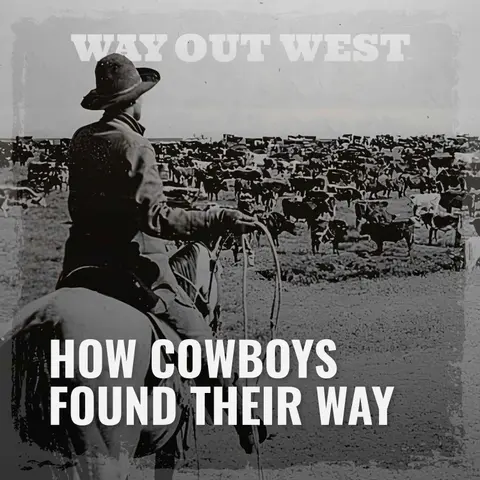
Without roads, signs, or GPS, trail outfits moved thousands of cattle across hundreds of miles. Discover how water, grass, river crossings, landmarks, experienced trail bosses, and point riders helped cowboys find their way across the open range.
How Did Cowboys Find Their Way Across the Open Range?
Without highways, road signs, or GPS, trail outfits relied on water, landmarks, established routes, and experienced riders who could read the country.

Moving several thousand cattle across hundreds of miles required more than pointing the herd north and following the stars.
At the height of the great Texas cattle drives, outfits traveled along established routes such as the Chisholm Trail, the Western Trail, the Shawnee Trail, and the Goodnight-Loving Trail. These weren’t narrow paths like the trails marked on modern maps. They were broad corridors shaped by water, grass, river crossings, geography, and repeated use.
The trail boss needed to know the sequence of the country ahead: where the next dependable water could be found, which rivers could be crossed safely, and how far the herd could travel without losing too much weight. When conditions were uncertain, trusted riders scouted ahead.
Once the route was chosen, point riders helped translate the trail boss’s plan into the herd's daily movement. They guided the lead cattle while swing, flank, and drag riders kept the rest of the herd moving together.
Cowboys used the sun, stars, rivers, ridgelines, timber, tracks, and other landmarks. But their real advantage was accumulated knowledge. They knew how to observe the country, gather information, and adjust when water, weather, or terrain changed the plan.
The land itself was the map, if you knew how to read it.
What You’ll Hear
- Why cattle trails were broad travel corridors rather than clearly marked paths
- How water and grass determined the route of a cattle drive
- Why river crossings could be among the most dangerous decisions on the trail
- How trail bosses gathered information and scouted the country ahead
- What point, swing, flank, and drag riders contributed to the movement of the herd
- Why getting lost often meant losing the workable route—not simply losing track of north
Cowboy Glossary
Point rider: An experienced cowboy who rode near the front of the herd and helped establish its direction and pace. Large herds might use a point rider on each side. The trail boss determined where the outfit needed to go; the point riders helped guide the lead cattle in that direction.
Sources and Further Reading
- Andy Adams, The Log of a Cowboy: A Narrative of the Old Trail Days
- J. Marvin Hunter, compiler, The Trail Drivers of Texas
- Texas State Historical Association, Handbook of Texas
- Cattle Drive Positions, American Cowboy
Ride Way Out West
Way Out West tells the stories of the history, culture, people, and traditions of the American West.
If you enjoyed this episode, follow the show and share it with someone who loves Western history. Then visit RideWayOutWest.com to explore the Way Out West Journal and discover more stories from across the West.
02:51 - Chapter 1 — The Country Was Not Blank
04:29 - Chapter 2 — Water Drew the Map
05:58 - Chapter 3 — They Read the Country
07:13 - Chapter 4 — The Herd Had a Steering System
08:32 - Chapter 5 — And Sometimes They Got It Wrong
10:32 - Chapter 6 — Buster the Bull and the Cowboy Glossary
11:17 - Chapter 7 – Thanks for Listening
Picture a trail boss somewhere on the plains in the late 19th century.
Behind him are two or three thousand head of cattle,
a dozen cowboys,
a chuck wagon,
and a remuda of spare horses.
Ahead are hundreds of miles without a highway sign or painted line.
Take the wrong fork and the herd might miss water.
Choose a bad crossing and cattle could bog down or drown.
Drift too far off course,
and the outfit could lose days it couldn’t afford.
So how did cowboys know where they were going?
The short answer is that they didn’t simply point the herd north and follow the stars.
They followed something far more practical: water, grass, river crossings, worn trails, recognizable country, and the knowledge of men who had been there before.
[Music Up]
Howdy. Chip Schweiger, here.
Welcome to another edition of Way Out West.
Where the stories of the American West are told...
Cowboy wisdom is earned...
And the legacy of the American cowboy still rides on.
There’s a particular way the old cattle trails look in our imagination.
A line of longhorns stretches toward the horizon.
A cowboy rides at the point, watching the country ahead.
There’s no road beneath him and no fence beside him.
At night, the North Star hangs over the plains like a compass placed there just for him.
And there’s some truth in that picture.
Cowboys noticed the sun, the stars, the direction of a river, and the shape of distant land.
But the great cattle drives weren’t acts of wandering.
They were organized movements of livestock through country that had limits.
A herd needed water.
It needed grass.
It needed a safe place to cross each river.
And it needed men who could recognize the difference between open country and usable country.
The cowboys didn’t need every mile to be marked because, if they knew how to read it, the land itself was the map.
Now, before we saddle up, remember you'll find additional resources for today's episode in the show notes at WayOutWestPod.com/ [url]
[BUMPER MUSIC]
Welcome Back
Today, we’re answering a simple question: How did cowboys find their way across the open range?
Firsthand recollections show us the system.
And it was much less mysterious than Hollywood sometimes makes it appear.
Chapter 1 — The Country Was Not Blank
The first thing to understand is that open country was not necessarily unknown country.
By the peak years of the Texas cattle drives,
outfits were using established routes such as the Chisholm Trail,
the Western Trail, the Shawnee Trail, and the Goodnight-Loving Trail.
These weren’t neat paths on a modern map. They were broad corridors shaped by geography and repeated use.
Some followed older wagon roads, trade routes, military roads, or paths used by Native peoples, hunters, freighters, and earlier cattle outfits.
A busy section might show wagon ruts, hoofprints, or trampled grass.
Elsewhere, the trail spread out or became difficult to see.
The outfit was rarely inventing an entire route from nothing.
The trail boss knew the major rivers, crossings, and supply points ahead.
He might have traveled it before, hired men who had, or gathered information along the way.
This was not a matter of knowing every bend and hollow.
It was knowing which river came next, where to cross it, where water was dependable, and how far the herd could travel.
Chapter 2 — Water Drew the Map
More than anything else, water determined the route.
A trail boss couldn’t choose a path based only on mileage. Cattle, horses, and men all needed water.
The herd also needed enough grass to arrive at market with weight still on it.
That meant the best route wasn’t always the straightest one.
A drive might angle toward a creek or take a longer route to reach a dependable spring. The next water determined the day’s distance and where the herd would bed down.
River crossings mattered just as much.
A usable ford needed a manageable current, a firm bottom, and passable banks.
A river that looked harmless could hide mud or quicksand.
Experienced men might test the water and inspect the bottom before bringing the herd across.
In Andy Adams’s The Log of a Cowboy,
based closely on his trail experience,
the foreman rides ahead to examine water and learn the lay of the land.
In one passage, Apache men sketch the rivers and trail in the dirt.
In another, a campfire near a river becomes a beacon after dark.
Navigation wasn’t separate from managing cattle.
Finding the route meant finding the next place the herd could safely live.
Chapter 3 — They Read the Country
Between those major points, cowboys relied on observation.
Rivers, ridgelines, timber, and buttes gave them reference points.
A line of trees could signal a watercourse.
Rising ground offered a view ahead.
A river or the sun could help a rider maintain a general bearing.
The stars could help,
especially if an outfit moved at night.
But this wasn’t usually delicate celestial navigation from the saddle.
A night drive might follow a known trail or use a fire or lantern ahead as a guide.
Moonlight helped cattle and riders see the ground.
Cowboys also read signs left by others.
Fresh tracks, churned-up crossings, fire rings, dung, and wagon marks showed that others had passed that way.
And when the signs were uncertain, someone went ahead to scout.
That may be the simplest answer:
they kept checking.
They didn’t assume the next creek was running or an old ford was still safe.
A trusted rider looked ahead, asked questions, and adjusted the plan.
Chapter 4 — The Herd Had a Steering System
Knowing the route was only half the job.
The outfit still had to persuade several thousand cattle to follow it.
That required organization.
The trail boss made the larger decisions,
but the cowboys rode assigned positions around the herd.
Near the front were the point riders.
They helped set the direction and pace,
giving the lead cattle something to follow.
Behind them, swing and flank riders kept the herd together.
Drag riders pushed the slower cattle from the rear,
usually while swallowing most of the dust.
Once a few steady animals accepted the direction,
the herd tended to follow.
Point riders didn’t steer every animal. They shaped the movement of the leaders.
The pace had to remain controlled.
Push too fast and the cattle lost weight, wore down, or became harder to manage.
Let the front move too freely and the herd could stretch for miles.
So the route existed at two levels.
The trail boss knew where the outfit needed to go.
The point riders translated that decision into the daily movement of the herd.
Chapter 5 — And Sometimes They Got It Wrong
The system worked, but it wasn’t foolproof.
Creeks dried up.
Rivers flooded.
Grass had already been eaten by another herd.
Bad weather erased tracks and hid landmarks.
A shortcut could lead into broken country, boggy ground, or a stretch too dry for the cattle.
In The Log of a Cowboy, Adams describes a herd reaching a range where expected water could not be found.
The cattle, desperate with thirst, eventually turned back toward water they already knew. The men had to race ahead and meet them there.
That episode captures something important.
Getting lost on a cattle drive didn’t always mean having no idea which way was north.
It could mean losing the workable route—missing water, a ford, or country that could support the herd.
Good trail bosses gathered information from other outfits and people who knew the country.
They sent riders ahead.
And when conditions changed, they changed the route.
The old cattle trails weren’t roads in the modern sense.
But neither were they imaginary lines through empty land.
They were routes built from water holes, crossings, grass, landmarks, tracks, camps, and accumulated knowledge.
Every passing herd made parts of the trail easier for the next outfit to recognize.
The romantic picture gives the cowboy a star overhead and an endless horizon in front of him.
The real story gives him something more useful: experience, attention, and the good sense to ask what lay ahead.
That was how cowboys knew where they were going.
They learned to read the country—
and understood that the country was never truly blank.
Chapter 6 - Buster the Bull and the Cowboy Glossary
OK, before we ride out today, we’ve got one more thing.
[BULL SOUND]
Yep, that distinctive call from Buster the Bull means it’s time again for our Cowboy Glossary Term of the Week.
This week’s term is… point rider.
The point rider—or point man—rode near the front of the herd and helped establish its direction and pace. On a large drive, there might be a point rider on each side.
It was a position of responsibility, generally given to experienced hands who could read both the cattle and the country ahead.
The trail boss decided where the herd needed to go. The point riders helped get it there.
Chapter 7 – Thanks for Listening
Well, that’s all for this episode of Way Out West. Thanks for riding with me here.
If you enjoyed the episode, please follow, rate, and share the show with someone who loves the history, culture, and traditions of the American West.
If you’re new to the show, you can visit RideWayOutWest.com.
And while you’re there, take a few minutes to explore the Way Out West Journal, where we dive even deeper into the people, places, and history that continue to shape the West today.
That’s RideWayOutWest.com.
Until next time, this is Chip Schweiger, reminding you that the country is never empty when you know how to read it.
We’ll see ya down the road.