What Did Cowboys Do With Their Money?
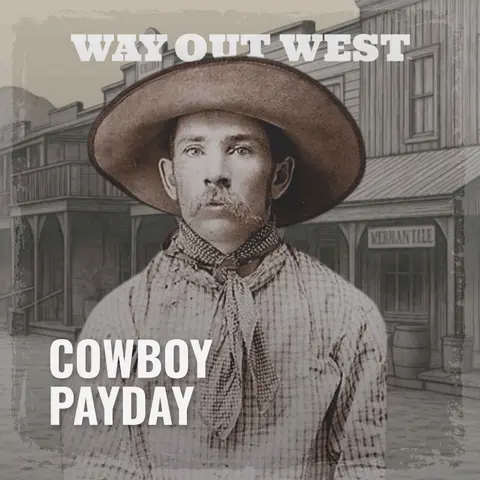
A working cowboy might earn only $25 to $40 a month, but food, horses, and a place to sleep often came with the job. Here's what cowboys actually earned, what they bought for themselves, and where their money went.
What Did Cowboys Do With Their Money?
How much cowboys earned, what they had to buy for themselves, and where a working cowboy’s wages went in the Old West.

A working cowboy during the great cattle-driving and open-range era might earn somewhere around $25 to $40 a month. By modern standards, that sounds remarkably low.
But cowboy pay worked differently from a modern salary.
While he was working, a ranch hand was generally fed by the outfit and given somewhere to sleep. On a cattle drive, the ranch or cattle outfit supplied the horses he rode. That meant a cowboy could go weeks or months with relatively few everyday expenses—and sometimes with nowhere to spend money even if he wanted to.
Then payday came.
The familiar image is the cattle drive cowboy arriving in town and promptly spending his accumulated wages on whiskey, gambling, women, and perhaps some new clothes. That behavior was enough to give the story a basis in fact. But working cowboys were individuals, and they didn't all handle their money the same way.
Some spent freely. Some saved. Some sent money home. Others bought better equipment, acquired livestock, rented land, or used cowboy work as a step toward something else.
In this episode of Way Out West, we follow the cowboy paycheck from the ranch and cattle trail into the stores, hotels, restaurants, and saloons of the Old West, and discover what cowboy wages can tell us about the life these men actually lived.
What You’ll Hear
- How much working cowboys and cattle drive cowboys typically earned during the late 19th century
- Why cowboy wages make more sense when you consider the food, horses, and accommodations provided by the outfit
- What cowboys bought for themselves, including boots, hats, clothing, saddles, and other personal equipment
- How the price of a good saddle or pair of chaps compared with a cowboy’s monthly pay
- What happened when cowboys reached cattle towns with accumulated wages—and why not everyone spent it the same way
- How some cowboys saved money, acquired livestock or land, or used ranch work to build toward something more
Thirty Dollars a Month Went Further Than It Sounds
There was no single cowboy salary in the Old West. Pay varied by time, place, experience, and responsibility, but ordinary working cowboys during the major cattle-driving and open-range years commonly earned roughly $25 to $40 per month.
Men with greater responsibility could earn considerably more. Trail bosses, cooks, horse wranglers, and other experienced hands might receive higher wages than an ordinary cowhand.
But the monthly wage tells only part of the story.
A cattle outfit generally supplied the horses a cowboy rode on the trail, along with food and camp equipment. Ranch hands commonly received room and board as part of their employment. A cowboy still worked hard for relatively modest wages, but he wasn't necessarily paying for housing and three meals a day out of his cash earnings.
Some expenses, however, could consume a remarkable portion of his paycheck.
Historical records show saddles selling for anywhere from around $15 to $35 or more. One Wyoming cattleman recorded paying $35 for a saddle in 1879, more than an ordinary cowboy might earn in an entire month. The same man paid $10 for a pair of chaps.
Boots, shirts, hats, tobacco, and other personal necessities came out of the cowboy's pocket as well.
That helps explain why the things a cowboy owned tended to be practical. A good saddle, dependable boots, a hat, clothing, and a few personal possessions weren't simply part of an image. They were the tools and belongings of a highly mobile working life.
When the Trail Reached Town
Cattle towns offered something the trail didn't: places to spend money.
A cowboy reaching the end of a drive might pay for a bath, barber, restaurant meal, hotel room, tobacco, or new clothing. He could also find saloons, gambling tables, dance halls, and other entertainment.
Some cowboys undoubtedly spent heavily after months on the trail. Contemporary accounts and the businesses that flourished in cattle towns make that clear.
But the cowboy who immediately drank and gambled away his entire paycheck shouldn't stand in for every ranch hand in the West.
Others saved their wages or sent money home. Some hoped to acquire cattle or horses of their own. A few used wages from cowboy work to begin farming, ranching, or another occupation.
For many young men, cowboying wasn't necessarily a lifelong identity. It was a job—and sometimes a way to accumulate enough money or experience to take the next step.
Why Cowboys Owned So Little
The working cowboy's relatively small collection of possessions wasn't simply a consequence of low wages.
Mobility mattered.
A cowboy might move between ranches or spend months on a cattle drive. Personal belongings had to travel with him, often packed into little more than a war bag carried with the outfit.
Possessions that couldn't be worn, carried, or ridden quickly became inconvenient.
That made a good pair of boots more useful than furniture. A quality saddle could justify a month's wages because it was something a cowboy depended upon every working day.
Seen that way, the cowboy paycheck tells us something larger about life in the American West.
Some cowboys spent their money. Some saved it. Some gambled it away. Some invested it in livestock, land, or better equipment.
But the working cowboy lived in a world that rewarded usefulness and portability. What mattered most wasn't necessarily how much he could accumulate.
It was whether he had what he needed for wherever the next job took him.
Cowboy Glossary: War Bag
War bag: A cowboy's personal bag or sack used to carry spare clothing and small belongings while traveling with a cattle outfit or moving between jobs. Despite the name, it had nothing to do with fighting. A war bag might contain little more than a change of clothes, a towel, grooming items, and a few personal possessions.
Ride Way Out West
Way Out West tells the stories of the American West and the people who shaped it—from working cowboys and ranch life to cattle drives, frontier communities, Western traditions, and the history behind the legends.
Listen to the episode wherever you get your podcasts, and explore more stories from the American West at Way Out West.
A working cowboy in the Old West might earn 25 or 30 dollars a month.
Which doesn't sound like much.
But while he was working, the ranch generally fed him, he had somewhere to sleep, and the outfit supplied the horses he rode.
And there were no rent payments, electric bills, car payments, or monthly subscriptions quietly draining $6.99 at a time.
So when payday came, where did the money go?
Hollywood has given us one answer.
The cattle drive ends. The cowboys hit town. And within about forty-eight hours, three months' wages have been converted into whiskey, poker losses, questionable decisions, and perhaps a new hat.
There was enough of that to give the story some basis in fact.
But Old West cowboys weren't all operating under the same financial plan.
[Music Up]
Howdy. Chip Schweiger, here.
Welcome to another edition of Way Out West.
Where the stories of the American West are told...
Cowboy wisdom is earned...
And the legacy of the American cowboy still rides on.
There was a time when a cowboy could spend weeks on the trail with almost nowhere to spend a dime.
His meals came from the chuck wagon.
His bed was whatever patch of ground he rolled his blankets out on.
The horses belonged to the outfit.
And everything he owned had to be carried with him or left behind.
Then the trail ended.
There was money coming to him, a town somewhere ahead, and suddenly plenty of places willing to take it.
So today on the show, we're looking at cowboy wages, cowboy pay, and a surprisingly revealing question:
What did cowboys spend their money on?
Because what a working cowboy earned—and what he chose to do with it—tells us quite a bit about the life he was actually living.
Now, before we saddle up, remember you'll find additional resources for today's episode in the show notes at WayOutWestPod.com/cowboy-wages
Chapter 1 — Thirty Dollars a Month
Welcome back.
And let's start with the obvious question.
How much did cowboys make?
For working cowboys during the great cattle-driving and open-range years,
24 to 40 dollars a month is a pretty defensible range.
The Kansas Historical Society puts cattle drive cowboys at roughly 25 to 40 dollars a month, plus food.
Ranch hands on Colorado outfits were remembered as earning around 25 to 30 dollars a month and their keep.
The enormous XIT Ranch in the Texas Panhandle later paid cowhands about the same.
And we have an unusually good contemporary source for trail wages.
In its report on agriculture,
the 1880 United States Census
described a typical Texas cattle drive employing about a dozen cowboys
at 25 to 30 dollars a month.
The boss drover?
90 dollars.
Because Responsibility paid.
Texas sources show the same general hierarchy:
ordinary trail hands around 25 to 40 dollars,
horse wranglers around 50,
cooks and ramrods perhaps 75,
and trail bosses sometimes 100 dollars or more.
So there really wasn't one cowboy salary.
A green hand pushing cattle through the dust at the back of the herd
was worth less than the experienced man trusted to run the whole outfit.
And there's something else important about cowboy wages.
That monthly figure wasn't quite comparable to a modern salary
because the cowboy wasn't paying all of his living expenses from it.
On the trail, the outfit supplied the cowhorses.
A cowboy might ride several different horses from the remuda.
The chuck wagon carried the food and camp equipment.
Back at a ranch, the arrangement usually included room and board—or "keep"—
although the room might amount to a bunkhouse bed
and the board wasn't likely to impress a restaurant critic.
The University of Nebraska's Encyclopedia of the Great Plains
describes room and board plus wages as a normal part of cowboy employment.
Chapter 2 — What a Cowboy Had to Buy
Now don't get the idea that the cowboy had no expenses.
The horse may have belonged to the ranch.
Much of the cowboy equipment did not.
Cowboys commonly supplied their own clothing
and personal gear,
and often their own saddle, bridle and rope.
And that could get expensive.
In 1879, Wyoming cattleman Bartlett Richards
recorded paying 10 dollars for a pair of chaps
and 35 dollars for a saddle.
Contemporary Nebraska advertisements
offered Texas saddles for 15 to 24 dollars,
while a fancier California saddle might run 30 to 35.
Think about that in terms of cowboy pay.
If you're making 30 dollars a month,
a good saddle can represent an entire month's wages.
Chaps at 10 dollars?
A third of a month's pay.
And cowboy clothing wasn't free either.
An 1880 Texas newspaper
advertised men's shirts from 75 cents to two dollars and 50 cents.
Another contemporary newspaper advertised heavy men's boots from 3.50 to 5 dollars.
Then there was the hat.
A basic Stetson Boss of the Plains sold for about 5 dollars,
with better grades costing considerably more.
At a 35 monthly wage,
even the basic version represented about one-sixth of a month's earnings.
Which helps explain something we've talked about before on this show.
Good cowboy equipment mattered.
A saddle wasn't decoration. Neither were boots, a hat, chaps or a slicker.
These were tools.
And a working cowboy might be perfectly willing
to put a meaningful portion of his wages into something he used every day.
Chapter 3 — When the Trail Reached Town
Eventually, the trail ended.
And this is where Hollywood arrives.
After weeks or months with a cattle herd,
a cowboy reached one of the cattle towns with accumulated wages
and suddenly had access to things he hadn't seen on the trail.
A bath.
A barber.
A hotel bed.
A restaurant meal.
Clean clothes.
Tobacco.
And yes, saloons and gambling.
The Kansas Historical Society notes that saloon keepers, gamblers and women working in the vice trade
all competed for the cowboys' money at the end of the trail.
Contemporary prices show how quickly relatively small purchases could add up.
In 1881, Fort Worth's Mansion Hotel
advertised single meals for 50 cents
and lodging for another 50 cents.
5-cent cigars were widely advertised in Texas and Kansas.
And in early Dodge City, George Hoover famously sold whiskey for 25 cents a ladle. Yep, you heard that right. A ladle.
For a cowboy making 30 dollars a month,
one 25-cent drink represented less than one percent of a month's pay.
The problem,
as generations of people since have discovered,
is rarely the first drink.
Dodge City and the other cattle towns absolutely offered drinking, gambling, dance halls and other entertainment.
A cowboy who wanted to spend aggressively could find plenty of people willing to help.
Chapter 4 — Spend It, Save It, or Build Something
Now we shouldn't turn that into a description of every working cowboy.
Because cowboys also saved.
Some sent money home.
Others hoped to acquire cattle, horses or land of their own.
And for some young men, working as a ranch hand or cattle drive cowboy was never intended to be a lifetime occupation.
It was a way to earn cash.
There were even ranch arrangements that allowed good hands to acquire cattle of their own.
Some employers paid part of a cowboy's compensation in calves or allowed trusted men to run a few steers alongside the ranch herd.
That gave an ambitious cowboy a possible foothold toward becoming a stockman himself.
One later account from West Texas tells of John Mackey,
who arrived in the region in 1889 with ten dollars in his pocket.
He took ranch work for $20 a month, saved his wages, rented 30 acres, and began farming.
That's a very different cowboy story from blowing three months' wages at a faro table.
And both kinds of men existed.
Which brings us to one final part of cowboy economics that I think is easy to overlook.
Why did cowboys own so little?
Partly because they didn't need much.
But also because possessions could become a liability.
A working cowboy might move from ranch to ranch.
On the trail, everything had to travel.
His personal belongings might amount to a change of clothes and a few necessities carried in a war bag.
Bartlett Richards described his war bag as nothing more elaborate
than a flour sack containing a change of clothing, towel, toothbrush and hairbrush.
The cowboy's life rewarded portability.
You could wear good boots.
You could wear a good hat.
You could ride a good saddle.
You could put tobacco in your pocket and your spare clothes in a war bag.
A dining-room table was considerably less useful.
And that may be the most interesting answer to the question of what cowboys bought.
The working cowboy wasn't necessarily poor because he owned relatively little.
He lived in an economy where some of his basic needs came with the job,
his employment could be seasonal,
and the possessions most worth paying for were generally the ones he could wear, carry, or ride.
Some cowboys spent their wages as quickly as they earned them.
Some gambled.
Or drank.
Or bought better clothes and equipment.
Others sent money home.
Some saved for cattle or land.
And plenty probably did a little of all of it at different points in their lives.
Because Old West cowboys weren't a single economic personality.
They were working men.
And maybe that's what their paychecks tell us best.
Thirty dollars a month wasn't much money for long days, dangerous work and months away from home.
But the cowboy's life wasn't built around accumulating things.
A horse beneath him, a saddle that fit, decent boots, a good hat, a little money in his pocket—
and somewhere else to ride when this job was finished.
For a lot of working cowboys, that was enough.
Chapter 5 – Thanks for Listening
Well, that’s all for this episode of Way Out West. Thanks for riding with me here
If you enjoyed the episode, please follow, rate, and share the show
with someone who loves the history, culture, and traditions of the American West.
If you’re new to the show,
you can visit RideWayOutWest.com.
And while you're there, take a few minutes to explore the Way Out West Journal, where we dive even deeper into the people, places, and history that continue to shape the West today.
That’s RideWayOutWest.com
Until next time, this is Chip Schweiger,
reminding you that sometimes the best measure of a man's wealth isn't how much he owns—but how little he needs.
We'll see ya down the road.