Fannie Sperry Steele: Skill That Couldn’t Be Denied
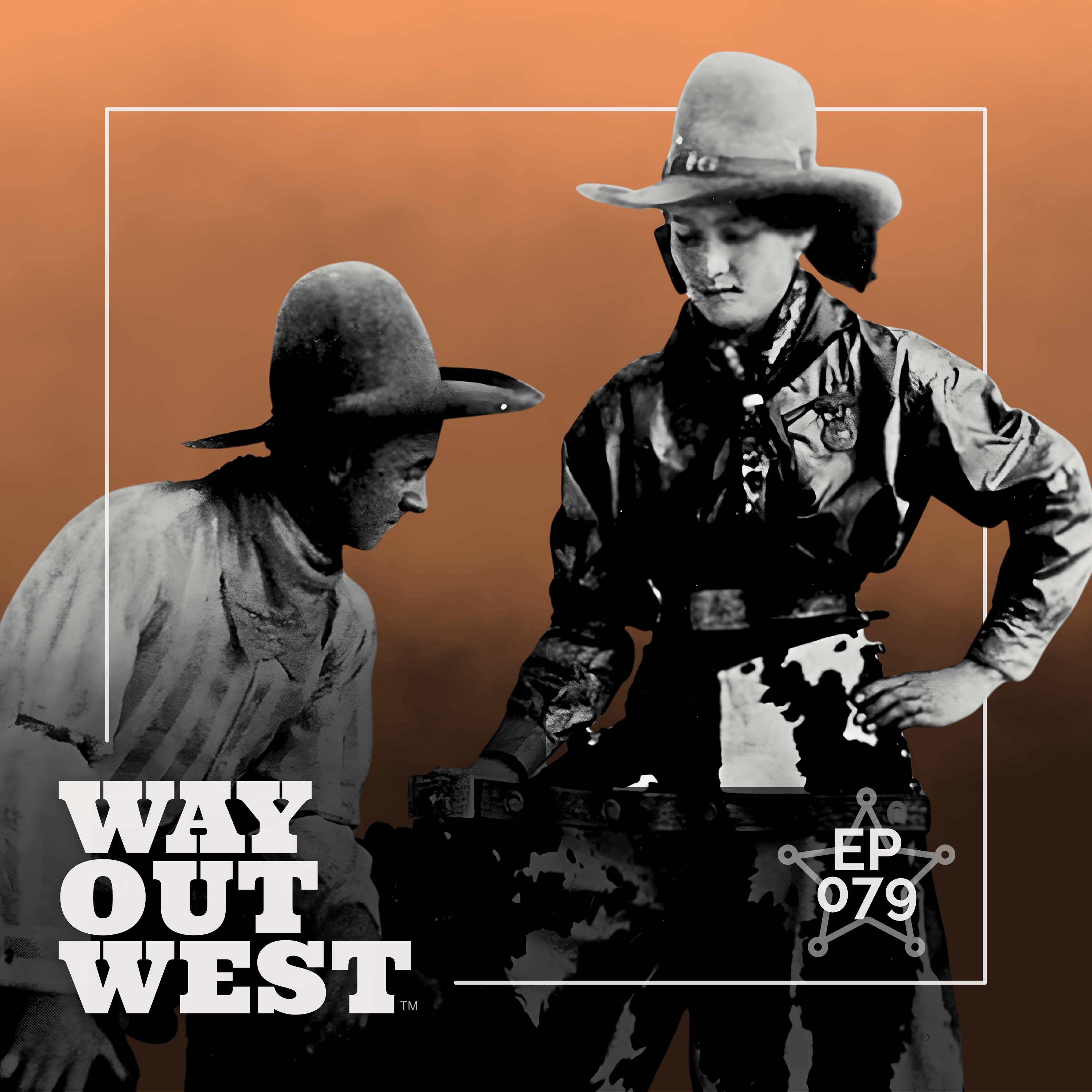
Before rodeo was a sport, bronc riding was a test. In this episode, we tell the story of Fannie Sperry Steele, a Montana cowgirl whose skill in the saddle was so undeniable that even the hardest standard of the West had to accept her.


Before rodeo lights and rulebooks, bronc riding was a proving ground. It wasn’t about applause. It was about usefulness.
In this episode of Way Out West, we step into the Northern Plains of the early 1900s to tell the story of Fannie Sperry Steele, a Montana horsewoman whose ability in the saddle forced a hard world to take notice.
Raised in the Bitterroot Valley, Fannie learned to ride not for performance, but for survival. Horses were labor, transportation, and livelihood. Balance wasn’t aesthetic. It was necessary.
When she entered the World’s Championship Bronc Riding Contest in 1912, she did so under the same conditions as the men around her. Same stock. Same danger. Same expectations.
And she won.
This episode explores what bronc riding represented in the early West, why it carried real weight among working cowboys, and how Fannie’s quiet authority in the saddle earned something more valuable than trophies: respect.
In This Episode, You’ll Hear:
- Why early bronc riding was a test of usefulness, not entertainment
- How growing up in Montana shaped Fannie’s riding style
- The tools that mattered: saddle, spurs, and reins
- Why bronc riding was considered the ultimate measure of horsemanship
- The story of her 1912 championship victory
- What respect looked like in a world that didn’t bend easily
- Why skill, not slogans, earned a place in the West
Why This Story Still Matters
The West didn’t make room out of kindness.
It made room for competence.
Fannie Sperry Steele didn’t demand a seat at the table. She earned it, one ride at a time. And her story reminds us that preparation, discipline, and quiet confidence still carry weight.
🐎 Cowboy Glossary – Term of the Week
Riding for the brand – A phrase meaning loyalty and responsibility to the ranch you represent. In the Old West, your work reflected on more than just you, it reflected on the entire outfit.
🎧 Listen & Subscribe
Subscribe to Way Out West for weekly stories of cowboy life, ranching history, and Western wisdom.
Transcript: For a full transcript of this episode, click on "Transcript"
Your Turn! Share your thoughts → howdy@ridewayoutwest.com
Support the Show: Buy me a coffee → https://buymeacoffee.com/thecowboycpa
Follow Along: Instagram → https://www.instagram.com/RideWayOutWest
03:13 - Chapter 1 – A Hard Standard
04:32 - Chapter 2 – Enter Fannie Sperry Steele
05:22 - Chapter 3 – The Tools That Mattered
06:02 - Chapter 4 – Why Bronc Riding Was The Ultimate Test
08:07 - Chapter 5 – The Moment That Settled It
08:38 - Chapter 6 – What Respect Looked Like
09:52 - Chapter 7 – A West That Was Harsh, But Honest
11:06 - Chapter 8 – Buster the Bull and Cowboy Glossary Term of the Week
11:44 - Chapter 9: Thanks for Listening
Out here…
Skill settled arguments.
Not opinions.
Not credentials.
Not who you knew.
If you could ride…
People noticed.
If you couldn’t…
Nothing else mattered.
A horse didn’t care about your reputation.
Didn’t care where you came from.
Didn’t care what anyone said about you.
It responded…
Or it didn’t.
Balance told the truth.
Timing told the truth.
Fear told the truth.
And every once in a while…
Someone came along whose ability was so obvious…
So undeniable…
That even a world built to exclude…
Had no choice but to acknowledge it.
This…
Is one of those stories.
[MUSIC BUMPER]
Howdy.
Chip Schweiger here.
Welcome to another edition of Way Out West.
The podcast that takes you on a journey through the stories of the American West…
Brings you the very best cowboy wisdom…
And celebrates the legacy of the American cowboy.
Out on the Northern Plains…
Before rodeo lights.
Before announcers.
Before scorecards and rulebooks…
There was dust.
Cold mornings.
And horses that hadn’t learned manners yet.
Bronc riding wasn’t entertainment.
It was a proving ground.
You didn’t ride for points.
You rode because a horse had to be broken.
Or because your reputation was on the line.
There were no safety rails.
No special allowances.
No second chances.
Just a gate…
A saddle…
And a horse that would expose every mistake you made.
And so this week on the show…
We’re telling the story of a woman who stepped into that world—
Not asking for permission.
Not asking for exception.
A woman who rode the same horses.
Under the same conditions.
And met the same risks as the men around her.
Her name was Fannie Sperry Steele.
And her skill was so undeniable…
That even a world that didn’t make room easily…
Had no choice but to take notice.
After the episode, check out the show notes at WayOutWestPod.com/Fannie-Steele
[MUSIC]
Welcome back.
Last time…
We talked about sickness.
Injury.
And death on the trail.
What happened when things went wrong.
When luck ran out.
And the margin for error disappeared.
Today…
We’re talking about something else.
What happened when preparation met pressure.
When discipline met danger.
And when skill became impossible to ignore. We’re talking about one of my favorite cowgirls, and I think she’ll become one of yours too, Fannie Steele
Chapter 1 – A Hard Standard
She wasn’t a product of show business.
She came out of Montana.
Born in Missoula.
Raised in the Bitterroot Valley.
That matters.
Because western Montana at the turn of the century wasn’t gentle.
And it wasn’t impressed easily.
Horses weren’t entertainment.
They were transportation.
They were labor.
They were survival.
You learned to ride because you had to—
Not because anyone was watching.
You rode in weather.
On uneven ground.
On horses that didn’t care how confident you felt.
That kind of country teaches balance early.
Patience early.
Respect for a horse’s power early.
So when Fannie Sperry Steele stepped into an arena later on…
She wasn’t learning something new.
She was doing what Montana had already taught her to do.
Because the early 1900s were not romantic out here.
They were practical.
If you couldn’t ride…
You didn’t ride.
If you couldn’t stay on…
You didn’t stay long.
Nobody argued about it.
Nobody softened the standard.
Because the work didn’t allow it.
Horses were tools.
Powerful ones.
Unpredictable ones.
And mastering them wasn’t optional.
Chapter 2 – Enter Fannie Sperry Steele
Fannie Sperry didn’t enter this world by accident.
She grew up riding.
Not performing.
Not posing.
Working horses.
Learning balance the same way everyone else did—
By losing it first.
She understood something early.
A rider didn’t dominate a horse.
A rider communicated.
Force created chaos.
Control created harmony.
That understanding would carry her farther than strength ever could.
A bronc didn’t know you were a woman.
Didn’t know you were supposed to fail.
It bucked the same either way.
That was the great equalizer of the West.
No speeches.
No explanations.
Just performance.
And Fannie performed.
Chapter 3 – The Tools That Mattered
Let’s talk about the tools—
Because tools mattered.
The saddle was heavy.
Unforgiving.
Built for work, not comfort.
You sat wrong…
You paid for it.
Spurs weren’t decoration.
They were communication.
Used wrong, they made things worse.
Used right, they disappeared into the ride.
The reins mattered most of all.
Too tight and you lost the horse.
Too loose and you lost yourself.
This wasn’t brute strength.
It was balance.
Timing.
Patience.
And that’s where Fannie stood apart.
Chapter 4 – Why Bronc Riding Was The Ultimate Test
Before rodeo became a sport…
Bronc riding was a judgment.
Not of style.
Not of flair.
Of usefulness.
A bronc wasn’t just wild.
It was unfinished.
And an unfinished horse was a liability.
It could wreck a roundup.
Injure a rider.
Spook a herd.
So breaking a horse mattered.
And the kind of rider who could do it—
That mattered even more.
Broncs didn’t buck in patterns.
They reacted.
To weight shifting half an inch too far.
To hands that pulled instead of guided.
To tension the rider didn’t even know they were carrying.
A bad rider fought.
A good rider stayed loose.
Stayed centered.
Let the horse make the first mistake.
That was the real test.
Not strength.
Not stubbornness.
But timing.
Every jump forced a decision.
Lean too far forward and you were gone.
Too far back and you were launched.
You had to feel the horse’s next move
Before it happened.
And you had to do it
With one hand tied to the saddle.
No corrections.
No second chances.
Just balance…
And nerve.
That’s why bronc riding carried weight in the West.
If you could ride a bronc well…
You could ride anything.
You could handle pressure.
Handle uncertainty.
Handle a bad situation without making it worse.
That’s the kind of skill ranchers trusted.
The kind cowboys respected.
And that’s what made Fannie Sperry Steele different.
She wasn’t just staying on.
She was reading horses.
Adjusting mid-air.
Letting the animal burn itself out
While she stayed calm.
That level of control couldn’t be taught quickly.
And it couldn’t be faked.
You either had it…
Or you didn’t.
And when people watched her ride,
They knew.
Chapter 5 – The Moment That Settled It
In 1912…
Fannie Sperry Steele entered the World’s Championship Bronc Riding Contest.
No qualifiers.
No exceptions.
She rode against men.
On their horses.
Under their conditions.
And she won.
Not a women’s title.
Not a novelty ribbon.
The championship.
No explanation followed.
None was needed.
Because skill doesn’t need defending.
Chapter 6 – What Respect Looked Like
Out West…
Respect wasn’t loud. Still isn’t.
It didn’t come with applause.
Or praise.
Or speeches afterward.
It showed up quietly.
In fewer doubts.
In fewer explanations required.
It showed up when no one questioned why you were there anymore.
That was the difference.
You didn’t earn respect by talking about what you could do.
You earned it by doing the work—
Over and over—
Without excuses.
And once you proved yourself…
The conversation ended.
No more tests.
No more challenges.
Just an understanding.
That was the kind of respect Fannie Sperry Steele earned.
Not admiration.
Not novelty.
Acceptance.
She wasn’t “the woman rider.”
She was a rider.
Someone you trusted on a bad horse.
Someone you didn’t worry about in a dangerous spot.
And that mattered more than trophies ever could.
Because in the West…
Trust was currency.
If people trusted your hands…
Your judgment…
Your nerve…
You belonged.
And once you belonged…
Nobody argued about it again.
Chapter 7 – A West That Was Harsh, But Honest
The West didn’t bend for women.
It didn’t soften its standards.
Didn’t lower the bar.
Didn’t make space out of kindness.
If anything…
It expected more.
Because a mistake from a woman wasn’t forgiven.
It was remembered.
A bad ride didn’t just mean you were having an off day.
It meant you didn’t belong.
That was the risk.
So when a woman succeeded out here…
It wasn’t because the West changed.
It was because she met it on its own terms.
That’s what makes Fannie Sperry Steele matter.
She didn’t ask the West to see her differently.
She didn’t ask it to be fair.
She rode the same horses.
Faced the same danger.
Accepted the same consequences.
And she didn’t just survive it.
She excelled.
In a world where failure was permanent…
And reputation traveled fast…
She built one strong enough that it couldn’t be dismissed.
That’s the part of the story that lasts.
Not that the West was harsh.
Everyone knows that.
But that a woman could step into it—
Clear-eyed.
Prepared.
Unapologetic.
And leave no doubt behind her.
Chapter 8 – Buster the Bull and Cowboy Glossary Term of the Week
Before we close out for this week, we’ve got one more thing…
Yep, that distinctive call from Buster the Bull means it’s time for our Cowboy Glossary Term of the Week.
This week’s term is “Riding for the brand.”
Out West…
That didn’t just mean working for a ranch.
It meant loyalty.
Responsibility.
And reputation.
If you rode for the brand…
Your work reflected on more than just you.
It reflected on everyone you worked beside.
And that idea—
Standing by what you represent—
Still matters today.
Chapter 9: Thanks for Listening
Well, that’s about all for this episode of Way Out West.
I appreciate you spending part of your day with me—
and hope you’ll remember that the West was shaped by women, too.
Not by asking for space—
but by earning it.
If you enjoyed the show, please consider sharing it with a friend who loves a good Western tale. That helps us reach more fans of the American West.
And don’t forget to drop us a review on your favorite podcast app and connect with us on Instagram and Facebook.
Next time on Way Out West…
We’re shifting gears.
From saddle leather…
To fiddle strings.
From horses under you…
To rhythm in the air.
To a man who took cowboy music…
And taught it how to swing.
We’re talking about Bob Wills.
And how the West found its rhythm.
Until next week…
this is Chip Schweiger reminding you…
that respect is earned,
competence carries weight,
and the West has always had a way of sorting things out.
We’ll see ya down the road.