How Hollywood Created the Cowboy We Know
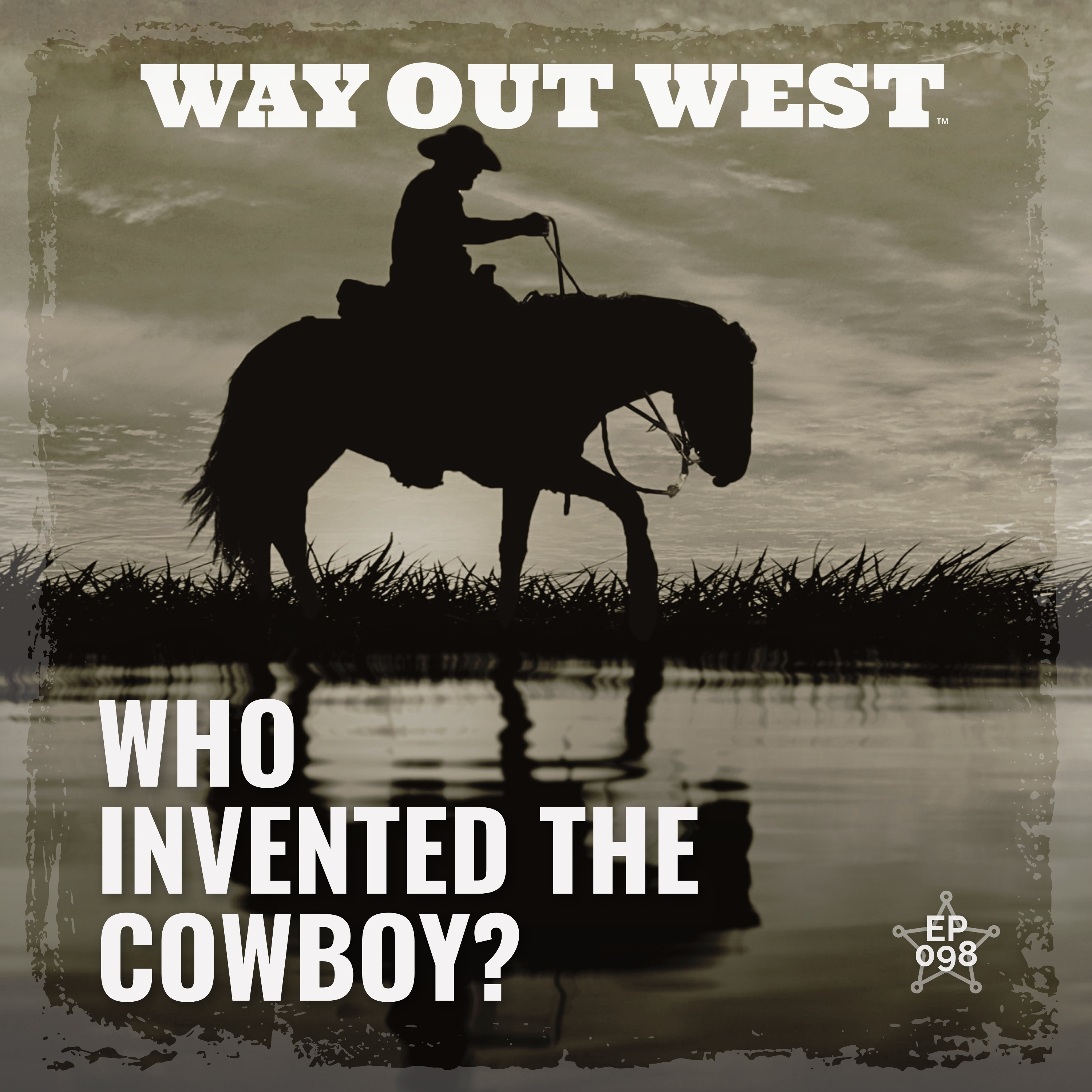
Hollywood didn't invent the cowboy, but it helped create the version most of us imagine today. Explore how movies, television, and popular culture transformed a working ranch hand into one of the most enduring symbols of the American West.
How Hollywood Invented the Cowboy We Know

When most people picture a cowboy, they're not imagining a working ranch hand from the 1880s.
They're imagining a legend.
For more than a century, movies, television shows, and popular culture have shaped the way Americans see the cowboy. From Buffalo Bill's Wild West shows and the silent film era to John Wayne, Roy Rogers, and Yellowstone, each generation has inherited its own version of the American West.
In this episode of Way Out West, we explore how Hollywood transformed a real occupation into one of the most enduring symbols in American culture.
Along the way, we'll examine the difference between the working cowboy and the mythologized cowboy, how Western films influenced everything from hats and clothing to public expectations about ranch life, and why debates about "real cowboys" often reveal more about popular culture than actual history.
Because while Hollywood didn't invent the cowboy, it helped create the version that millions of people around the world recognize today.
And in many ways, that image became powerful enough to change the West itself.
What You'll Hear
- What life was actually like for working cowboys before Hollywood
- How Buffalo Bill's Wild West shows helped launch the cowboy myth
- Why silent films turned the cowboy into a larger-than-life hero
- The impact of Roy Rogers, Gene Autry, and the singing cowboys
- How John Wayne became the defining image of the American cowboy
- Why modern Westerns introduced a more complicated cowboy character
- How Yellowstone revived interest in ranching and Western culture
- The surprising ways Hollywood influenced real cowboy traditions
- Why people still argue about what a "real cowboy" looks like
Cowboy Glossary
Feedlot: A facility where cattle are brought for the final stage of feeding before processing. Feedlots became an important part of modern beef production and represent a very different side of the cattle industry than the open-range imagery most people associate with the American West.
Ride Way Out West
If you enjoyed this episode, be sure to follow Way Out West wherever you listen to podcasts.
And if you'd like to support independent storytelling about the American West, share this episode with somebody who loves cowboy history, ranching culture, frontier survival, and the stories that still ride on today.
Support the Show: Buy me a coffee → https://buymeacoffee.com/thecowboycpa
03:34 - Chapter 1 - Before The Cameras Arrived
05:34 - Chapter 2 - The Cowboy Becomes a Hero
08:05 - Chapter 3 - The Cowboy Gets Complicated
09:51 - Chapter 4 - When The Myth Changes Reality
11:52 - Chapter 5 - The Cowboy Behind the Legend
13:26 - Chapter 6 – Buster the Bull & Cowboy Glossary Term of the Week
14:26 - Chapter 7 – Thanks for Listening
When you picture a cowboy, whose face do you see?
Maybe it's John Wayne riding across Monument Valley.
Maybe it's Clint Eastwood disappearing into the desert.
Maybe it's Kevin Costner standing on a Montana ridge beneath a wide-brimmed hat.
Or maybe it's a cowboy from a hundred different movies and television shows that have blended together in your imagination.
But here's the question.
When you picture a cowboy...
Are you actually picturing a cowboy?
Or are you picturing Hollywood's version of one?
Because the truth is, most Americans have never spent much time around working cowboys.
Most have never saddled a horse before sunrise.
Never spent twelve hours gathering cattle.
Never fixed fence in August heat.
Never slept on the ground during a storm because there wasn't anywhere else to go.
What we know about cowboys comes largely from stories.
And for more than a century, Hollywood has been one of the most powerful storytellers in America.
It didn't invent the cowboy.
Cowboys were riding cattle long before anyone pointed a camera west.
But Hollywood did create something almost as influential.
It created the cowboy most of us think we know.
And over time, that image became so powerful that it started changing the real West itself.
[Music Up]
Howdy. Chip Schweiger, here.
Welcome to another edition of Way Out West.
Where the stories of the American West are told...
Cowboy wisdom is earned...
And the legacy of the American cowboy still rides on.
If you think about it, the cowboy may be the most recognizable American symbol ever created.
People who have never been west of New York can identify a cowboy.
People in countries thousands of miles away recognize
the hat, the boots, and the horse.
They know the silhouette of a rider against a sunset.
The image of a campfire beneath a wide western sky.
The sound of leather creaking in a saddle and cattle drifting across open country.
Few occupations have ever become symbols.
Fewer still have become legends.
For more than a century, the cowboy has represented something larger than ranch work itself.
Independence.
Self-reliance.
Courage.
The belief that a person should keep their word and carry their own weight.
But symbols have a way of drifting away from reality.
Over time, stories become larger than life.
Details get smoothed over.
Hard edges disappear.
The legend grows while the history slowly fades into the background.
And that's exactly what happened here.
Because the cowboy most of us imagine today isn't just a product of the American West.
He's also a product of Hollywood.
After the episode, check out the show notes at WayOutWestPod.com/Hollywood-cowboy
Chapter 1 - Before The Cameras Arrived
Before Hollywood created heroes, there were simply cowboys.
And most of them weren't living lives that anyone would have paid to watch.
The working cowboy emerged from traditions that stretched across Spain,
Mexico,
and North America.
The methods of roping,
riding,
branding,
and handling cattle owed an enormous debt to the vaqueros who had perfected those skills generations earlier.
By the late nineteenth century, cowboys could be found throughout Texas, the Great Plains, the Southwest, and much of the American West.
Their work was difficult.
Their pay was modest.
A trail-driving cowboy might earn thirty or forty dollars a month.
Respectable wages for the era.
But hardly enough to become wealthy.
Most days were repetitive.
Checking water.
Watching cattle.
Repairing fences.
Breaking horses.
Moving herds.
And waiting for something to go wrong.
Despite what later movies suggested, most cowboys spent far more time dealing with livestock than dealing with gunfighters.
The real dangers weren't usually outlaws.
They were storms.
Stampedes.
River crossings.
Runaway horses.
And the countless ways nature could humble a person in open country.
Cowboys also came from far more diverse backgrounds than Hollywood often portrayed.
Many were Mexican.
Or Black.
Or Native American.
And still others were immigrants or Civil War veterans.
The cowboy wasn't a single kind of person.
He was a worker.
A skilled worker.
And if you had told one of those men that future generations would build an entire mythology around his profession,
He probably would have laughed.
But that mythology was already beginning.
And it started before Hollywood ever existed.
[MUSIC TRANSITION]
Chapter 2 - The Cowboy Becomes a Hero
Long before movies, there was show business.
And no one understood that better than Buffalo Bill.
By the 1880s, Buffalo Bill Cody was touring the United States and Europe with his Wild West shows.
The performances featured cowboys,
Native Americans,
stagecoach attacks,
sharpshooters,
cavalry charges,
and dramatic recreations of frontier life.
Millions of people attended.
For many eastern audiences, it was their first glimpse of the West.
Or at least what they believed the West looked like.
The important thing wasn't whether the performances were accurate.
The important thing was that they were memorable.
The West was becoming entertainment.
And entertainment tends to favor heroes over nuance.
When motion pictures arrived, filmmakers inherited that version of the West.
Silent Westerns simplified everything even further.
Good versus evil.
Hero versus villain.
White hat versus black hat.
The cowboy became a moral symbol.
A man who stood for courage, independence, and justice.
The real West had always been more complicated.
But complexity doesn't always fit neatly into a ninety-minute story.
Then came the singing cowboys.
Gene Autry.
Roy Rogers.
Clean-cut heroes who rarely seemed dusty enough to work cattle.
They sang.
They smiled.
They always did the right thing.
The cowboy became family entertainment.
An ideal American.
A symbol of decency and optimism.
Then came the figure who may have shaped the image of the cowboy more than anyone else.
John Wayne.
Wayne didn't invent the cowboy.
But he may have done more than any single person to define how Americans imagined one.
The walk.
The voice.
The confidence.
The code.
Strong but restrained.
Tough but honorable.
Independent but principled.
What people often miss is that many of the traits we associate with cowboys today actually came from movie cowboys.
And movie cowboys often reflected the values Americans wanted to see in themselves.
The cowboy had become more than a worker.
He had become a national myth.
[MUSIC TRANSITION]
Chapter 3 - The Cowboy Gets Complicated
By the late twentieth century, audiences began looking for something different.
The flawless hero started feeling less believable.
Westerns became darker.
More reflective.
More interested in moral ambiguity.
The cowboy wasn't always the good guy anymore.
Sometimes he was damaged.
Sometimes he was flawed.
Sometimes he was part of the problem.
Movies and television began asking harder questions about violence, settlement, justice, and the cost of survival.
The West became less romantic.
But also more human.
Maybe that's why some of the most enduring Western stories from this era remain so powerful.
They didn't abandon the myth.
They simply looked underneath it.
The cowboy became a person again.
A complicated one.
And then something unexpected happened.
Just when many people thought the Western had faded away, it came roaring back.
Not through movies.
Through television.
Yellowstone.
Whatever someone thinks about the show, its impact is impossible to deny.
Millions of viewers suddenly became fascinated by ranching.
Western fashion exploded.
Cowboy hats reappeared in places where nobody had worn one for decades.
People started booking ranch vacations.
Moving to mountain towns.
Buying boots.
Buying trucks.
Dreaming about open spaces.
Yellowstone didn't simply revive interest in cowboys.
It made the lifestyle aspirational again.
And that popularity created consequences throughout the modern West.
[MUSIC TRANSITION]
Chapter 4 - When The Myth Changes Reality
This is where the story becomes especially interesting.
Because Hollywood didn't just change how people imagined cowboys.
It changed actual cowboy culture.
Think about hats.
Many styles people consider "traditional cowboy hats" became popular largely because they appeared in films and television.
The same is true for clothing.
Gear.
Even horse bloodlines.
Movies influenced what people bought.
What they wore.
And what they expected a cowboy to look like.
Tourism followed.
Visitors arrived wanting to experience the West they had seen on screen.
Towns leaned into those expectations.
Ranches adapted.
Businesses adapted.
Entire communities adapted.
And today, social media has amplified the process.
I see it all the time in comments on Way Out West videos.
Post a Nevada buckaroo and somebody says that's not a real cowboy.
Post a Texas ranch hand and someone else says he's dressed wrong.
Show a Florida Cracker cowboy and somebody insists cowboys never looked like that.
What's happening isn't really an argument about history.
It's an argument about mythology.
People are comparing reality against whichever version of the cowboy they grew up watching.
John Wayne's cowboy.
Roy Rogers' cowboy.
The Marlboro Man.
Yellowstone.
Each generation inherits a different image.
And then assumes that's the authentic one.
The real story runs deeper than that.
There has never been a single cowboy tradition.
The American West has always contained many cowboy cultures.
Different landscapes.
Different gear.
Different techniques.
Different histories.
Hollywood often compressed all of that into a single image.
The actual West was far more interesting.
[MUSIC TRANSITION]
Chapter 5 - The Cowboy Behind the Legend
Hollywood didn't invent the cowboy.
The cowboy was already here.
Working cattle.
Riding horses.
Building ranches.
Surviving droughts.
Weathering blizzards.
Living lives that were often difficult and rarely glamorous.
But Hollywood did invent the cowboy most of us think we know.
The hero.
The loner.
The drifter.
The defender of the frontier.
The larger-than-life figure riding toward the horizon.
And maybe that's not a bad thing.
Stories matter.
Legends matter.
They inspire curiosity.
They inspire admiration.
Sometimes they inspire people to look deeper.
The important thing is remembering that there is a real history behind the legend.
A history built by actual men and women whose lives were often harder, more diverse, and more interesting than the movies ever showed.
The myth survived.
But the reality still matters.
And maybe that's the enduring power of the cowboy.
Not because he was perfect.
Not because Hollywood made him larger than life.
But because, beneath all the storytelling, he represented something people still admire.
Competence.
Resilience.
Independence.
The willingness to do difficult work without much recognition.
Those values existed before Hollywood.
They'll exist after Hollywood.
And they're still riding through the West today.
Chapter 6 – Buster the Bull & Cowboy Glossary Term of the Week
OK, before we ride out today, we’ve got one more thing
[BULL SOUND]
Yep, that distinctive call from Buster the Bull means it’s time again for our cowboy glossary term of the week. And this week’s term is Feedlot.
A feedlot is a facility where cattle are brought for the final stage of feeding before processing.
Rather than grazing on open range, cattle in a feedlot are typically fed carefully managed rations designed to help them reach market weight efficiently.
Feedlots became increasingly common during the twentieth century as ranching and beef production evolved.
While many people associate cattle entirely with wide-open grasslands, a large percentage of beef cattle today spend time in feedlots before entering the food supply chain.
Feedlot.
Not as romantic as a cattle drive.
But an important part of the modern cattle industry.
[MUSIC UP AND FADE]
Chapter 7 – Thanks for Listening
Well, that’s about all for this week’s episode. Thanks for riding with me here, Way Out West
If you enjoyed the show, please follow, rate, and share it with someone who loves the history, culture, and traditions of the American West.
And if you'd like to see more of the work we're doing, you can visit RideWayOutWest.com, where you'll find articles, a mercantile, the podcast archive, and more stories from across the West. That’s RideWayOutWest.com
Until next time…
this is Chip Schweiger reminding you…
Cowboy wisdom is earned.
And the legacy of the American cowboy still rides on.
We’ll see ya down the road.