How the Horse Made the American West Possible
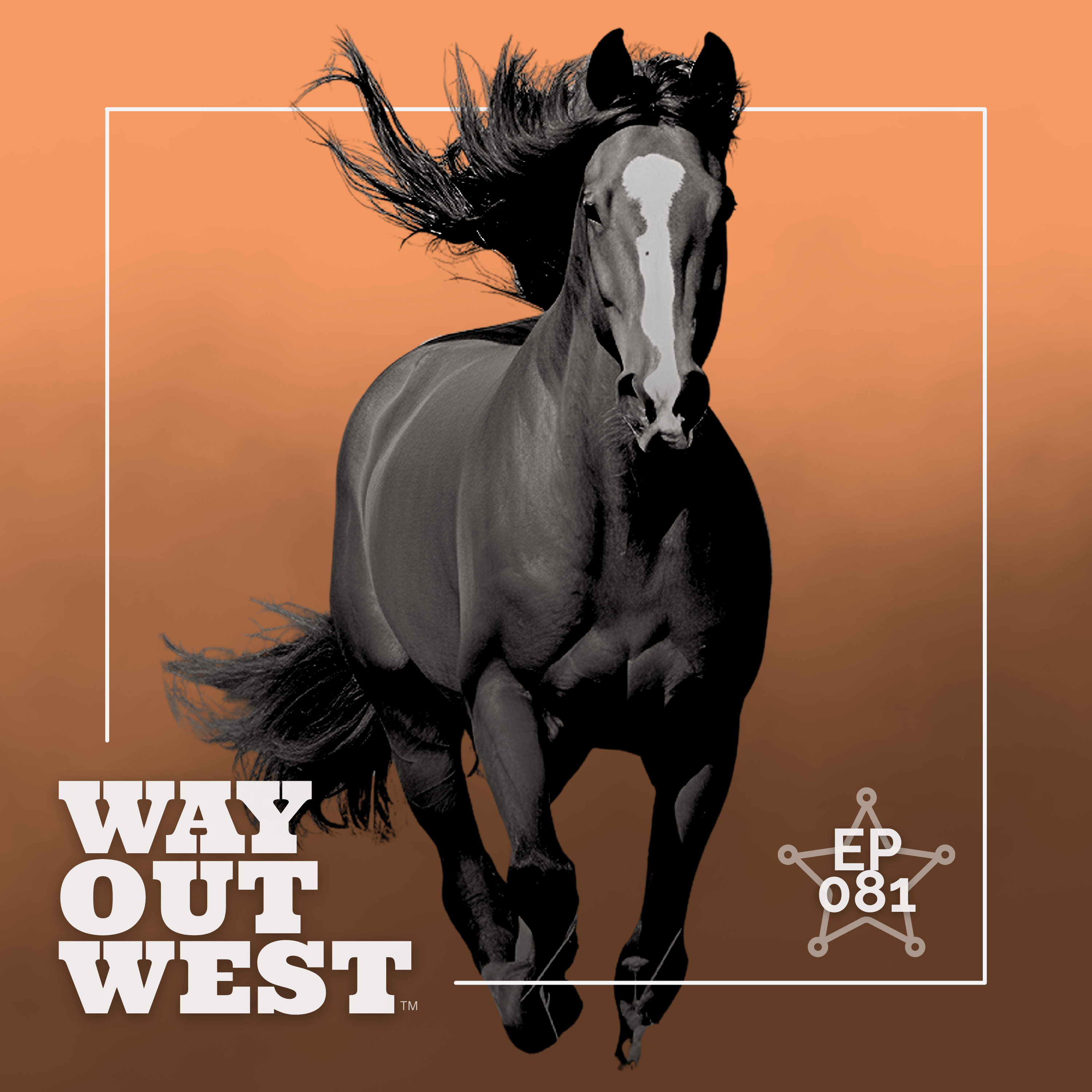
From Comanchería to the cattle drives and the Pony Express, the horse turned distance into motion and motion into history. Discover how horsepower reshaped economies, warfare, migration, and the working ranch—making the American West not just possible, but connected.


The American West was built on motion, and for centuries, motion meant horses.
This episode explores the return of the horse to North America and the transformation that followed: the rise of mounted Native cultures, the speed of the mountain men, the power behind the cattle drives, the brief lightning of the Pony Express, and the logistical reality of the U.S. Cavalry.
Without horses, the West remains distant and disconnected. With them, it becomes a continent in motion.
In This Episode, You’ll Hear:
- Why the horse’s return changed the balance of power in North America
- How the Comanche built a mounted empire
- The role of horses in westward migration and the fur trade
- The hidden horsepower behind the cattle kingdom
- How the Pony Express created organized continental speed
- Why cavalry logistics depended on remounts and endurance
- The shift from open range to fenced settlement
- Why modern ranches still rely on horses today
Why This Story Still Matters
The horse turned distance into connection and made the economy of the West possible.
Long after railroads and engines took over, the partnership between rider and horse still defines the working ranch—and the identity of the region itself.
🐎 Cowboy Glossary – Term of the Week
McClellan Saddle – A lightweight cavalry saddle introduced in 1859, built for long-distance riding and field repair. Its rawhide-covered tree and open design made it one of the most enduring working saddles in the West.
🎧 Listen & Subscribe
Subscribe to Way Out West for weekly stories of cowboy life, ranching history, and Western wisdom.
Transcript: For a full transcript of this episode, click on "Transcript"
Your Turn! Share your thoughts → howdy@ridewayoutwest.com
Support the Show: Buy me a coffee → https://buymeacoffee.com/thecowboycpa
Follow Along: Instagram → https://www.instagram.com/RideWayOutWest
02:23 - Chapter 1: The Measure of Distance
03:08 - Chapter 2: The Horse Comes Home
04:16 - Chapter 3: Mounted Nations
05:37 - Chapter 4: The West Gets Faster
06:27 - Chapter 5: The Cattle Kingdom
07:42 - Chapter 6: Muscle Outruns Wire
08:29 - Chapter 7: Horses and Empire
09:18 - Chapter 8: The Fence and the Future
09:56 - Chapter 9: Velocity and Myth
10:34 - Chapter 10: The Partnership That Remains
11:36 - Chapter 12 – Buster the Bull and Cowboy Glossary Term of the Week
12:22 - Chapter 13 – Thanks for Listening
Out here, speed was never a luxury.
It was survival.
A message that arrived too late…
meant a town went hungry.
A herd that moved too slow…
meant a trail boss went broke.
A patrol without fresh mounts…
meant men who didn’t come home.
We talk about the West as distance.
Endless grass.
Endless sky.
Endless horizon.
But the real story of the West…
is how that distance was defeated.
Not by engines.
Not by rail.
Not by wire.
By muscle.
By hide.
By hoof.
Because before there was a cowboy…
there was a horse.
[MUSIC]
Howdy. Chip Schweiger, here.
Welcome to another edition of Way Out West.
The podcast that takes you on a journey through the stories of the American West…
brings you the very best cowboy wisdom…
and celebrates the legacy of the American cowboy.
There’s a certain light you only find in the wide country.
Early morning.
Before the wind comes up.
Before the first gate swings open.
A saddle horse standing quiet in the dust…
one hind leg cocked…
steam lifting off his back in the cool air.
Leather creaks.
A bridle chain ticks.
Somewhere out beyond the pens… cattle are beginning to stir.
For generations, that sound—
that rhythm—
was the heartbeat of the West.
Not wagons.
Not railroads.
Not towns.
Horseflesh.
So today on the show, we’re talkig about the animal that turned space into motion…
and motion into history.
The partner that carried men into storms…
across rivers…
through war…
into markets…
and back home again.
And after the episode, check out the show notes at WayOutWestPod.com/horse
Chapter 1: The Measure of Distance
Welcome back. Today we’re going to step back.
Not into a single cattle drive.
Not into a single battle.
Not into one legend.
Not into one outlaw.
We’re going to look at the animal that made all of it possible.
The American West as we imagine it…
only exists because of one thing.
Speed.
And in the West…
Speed meant horseflesh.
Before the horse returned to North America…
this continent was vast in a way that’s hard for us to grasp now.
Distance wasn’t measured in miles.
It was measured in days.
In exhaustion.
In how much a man could carry on his own back.
Then the horse came back.
And everything changed.
Chapter 2: The Horse Comes Home
It’s worth remembering…
horses are native to North America.
They evolved here.
Then—at the end of the last Ice Age—
they vanished.
For thousands of years…
none.
Until the Spanish brought them back in the 1500s.
When Hernán Cortés landed in Mexico in 1519…
he brought sixteen horses.
Just sixteen.
But those animals carried something far greater than their weight.
They carried momentum.
From Spanish expeditions into the Southwest…
horses moved north.
Some were traded.
Some were stolen.
Some escaped and went wild.
Herds multiplied across hard country.
No fences.
No barns.
No human protection.
Only survival.
The mustang was born there—
Spanish bloodlines…
and unforgiving land.
By the 1700s…
the horse was no longer a European tool on American soil.
It had become…
a continental force.
Chapter 3: Mounted Nations
No one adopted the horse more completely—
or more brilliantly—
than the tribes of the Great Plains.
Within a few generations…
foot cultures became mounted nations.
The Comanche are the most dramatic example.
So skilled…
so mobile…
so dominant…
that historians sometimes call them a mounted empire.
Comanchería stretched across what is now
Texas,
New Mexico,
Oklahoma,
and beyond.
Mobility became power.
A mounted warrior could travel farther.
Hunt more efficiently.
Strike faster.
Disappear quicker.
Buffalo hunting changed.
Warfare changed.
Trade changed.
Status changed.
Horse ownership reshaped society.
We talk about independence in the West.
But independence…
rode on four legs.
If you’ve listened to the earlier episode on the warhorses of the West…
you’ve heard part of this story.
Cavalry mounts.
Battlefield endurance.
But that was one chapter.
This—
is the larger transformation.
Because long before the United States pushed west in force—
the balance of power on the plains
was already determined
by the horse.
Chapter 4: The West Gets Faster
When American trappers, traders, and explorers entered the region…
they didn’t bring speed with them.
They found it already there.
The mountain men didn’t carry their lives on their backs.
They packed them on horses and mules.
Winter gear.
Traps.
Pelts.
Trade goods.
All of it moved by animal power.
Wagon trains to Oregon and California?
Without draft teams—
they don’t make it out of Missouri.
And when gold was discovered in California in 1848…
the news didn’t travel by telegraph.
It traveled by horse.
Speed compresses geography.
It turns rumor into opportunity.
It turns maps into destinations.
The horse did that.
Chapter 5: The Cattle Kingdom
After the Civil War…
Texas had cattle.
Millions of head of them.
What it didn’t have…
was a nearby market.
Railheads sat hundreds of miles north.
Kansas became the funnel.
Abilene.
Dodge City.
Ellsworth.
Between Texas and Kansas—
rivers.
Storms.
Rustlers.
Open country.
The solution was mounted labor.
A trail drive might move three thousand head.
Ten to fifteen cowboys.
But each cowboy didn’t ride one horse.
He rode several.
A remuda—often a hundred horses or more—
traveled with the herd.
Fresh mounts rotated in every day.
Night guards rode in shifts.
Keeping cattle calm.
Preventing stampedes.
Without that depth of horsepower—
the drives collapse.
The cattle kingdom was not built on hats and spurs.
It was built on endurance.
Every steakhouse in Chicago…
every rail shipment east…
owed a quiet debt
to horseflesh on the plains.
The railroad completed the network.
But the horse—
made the railroad reachable.
Chapter 6: Muscle Outruns Wire
It lasted only nineteen months.
April 1860 to October 1861.
But the Pony Express captured the imagination of a nation.
Nearly two thousand miles of mail.
St. Joseph to Sacramento.
Relay stations every ten to fifteen miles.
A rider gallops in—
leaps off—
swings onto a fresh mount—
and runs again.
The mail moved in about ten days.
In that era…
that felt like lightning.
For a moment—
muscle outran wire.
And it did so because horses could sustain
organized velocity
across a continent.
Chapter 7: Horses and Empire
As settlement increased—
so did conflict.
Infantry alone could not police the plains.
The Army needed mobility.
It needed horses.
But here’s the irony.
Their mounts were often larger—
bred for European warfare.
Plains tribes rode smaller, tougher ponies—
adapted to harsh country.
Endurance beat size.
Logistics became everything.
No water.
No remounts.
No campaign.
A cavalry unit without horses—
was just a group of men
too far from home.
The West wasn’t contested by policy alone.
It was contested by supply lines.
And supply lines
moved on hooves.
Chapter 8: The Fence and the Future
Then came barbed wire.
Railroads.
Towns.
The open range closed.
The horse didn’t disappear.
It changed jobs.
From frontier necessity…
to ranch partner.
From military mount…
to agricultural power.
For decades—
even after automobiles—
horses plowed fields.
Hauled freight.
Ran city delivery routes.
The horse didn’t just build the frontier.
It carried the West
into modernity.
Then slowly…
stepped aside.
Chapter 9: Velocity and Myth
Think about this.
The West’s reputation for independence—
comes from mobility.
A man who can ride fifty miles in a day—
is not trapped by geography.
A ranch that can drive cattle hundreds of miles—
enters national markets.
The horse shrank isolation.
But it preserved space.
That paradox—
is the West.
Wide horizons.
Connected by hoofbeats.
Remove the horse from our imagery—
and the story goes still.
With it—
the West is alive.
Chapter 10: The Partnership That Remains
The automobile replaced the horse on the highway.
The tractor replaced it in many fields.
Mechanization changed ranching.
But not the partnership.
Even now—
on a modern ranch—
there is work a machine cannot do.
Sorting cattle in tight pens.
Crossing rough country.
Reading livestock.
That requires feel.
Not horsepower.
The horse made the West economically viable.
Militarily contestable.
Culturally iconic.
And even after engines took over—
horses remained stitched
into the character of the region.
The American West didn’t rise because it was empty.
It rose because it moved.
And for centuries—
movement meant muscle…
hide…
and hoof.
So when we talk about the West—
we’re not just talking about land.
We’re talking about velocity.
About the animal that came home…
after thousands of years…
and reshaped a continent.
Chapter 12 – Buster the Bull and Cowboy Glossary Term of the Week
Before we close out for this week, we’ve got one more thing…
Yep, that distinctive call from Buster the Bull means it’s time for our Cowboy Glossary Term of the Week.
This week’s term is: McClellan Saddle
The McClellan saddle was developed for the U.S. Cavalry in 1859, designed to be lightweight, durable, and comfortable for both horse and rider over long distances.
With its open seat, rawhide-covered tree, and minimal padding, it could be repaired in the field and ridden hard in brutal conditions.
It wasn’t fancy.
But it could travel.
And in the West…
that’s what mattered.
Chapter 13 – Thanks for Listening
Well, that’s about all for this episode of Way Out West.
I appreciate you spending part of your day with me—
and I hope you’ll never look at a set of tracks in the dust
or a remuda gathered at daylight
quite the same way again.
Because the story of the West…
is the story of motion.
And motion—
started in the saddle.
Next week on Way Out West,
we’re going to talk about a time when a man’s reputation traveled faster than he did.
When deals were made without paper.
When a handshake could move cattle, land, or a life’s worth of work.
No lawyers.
No contracts.
Just your name…
and what it was worth.
Because in the West—
your word wasn’t part of your character.
It was your character.
Until next time…this is Chip Schweiger reminding you…
that long before the West was connected by highways, it was carried there—one hoofbeat at a time.
We’ll see ya down the road.