The Ordinary People Who Keep the West Alive
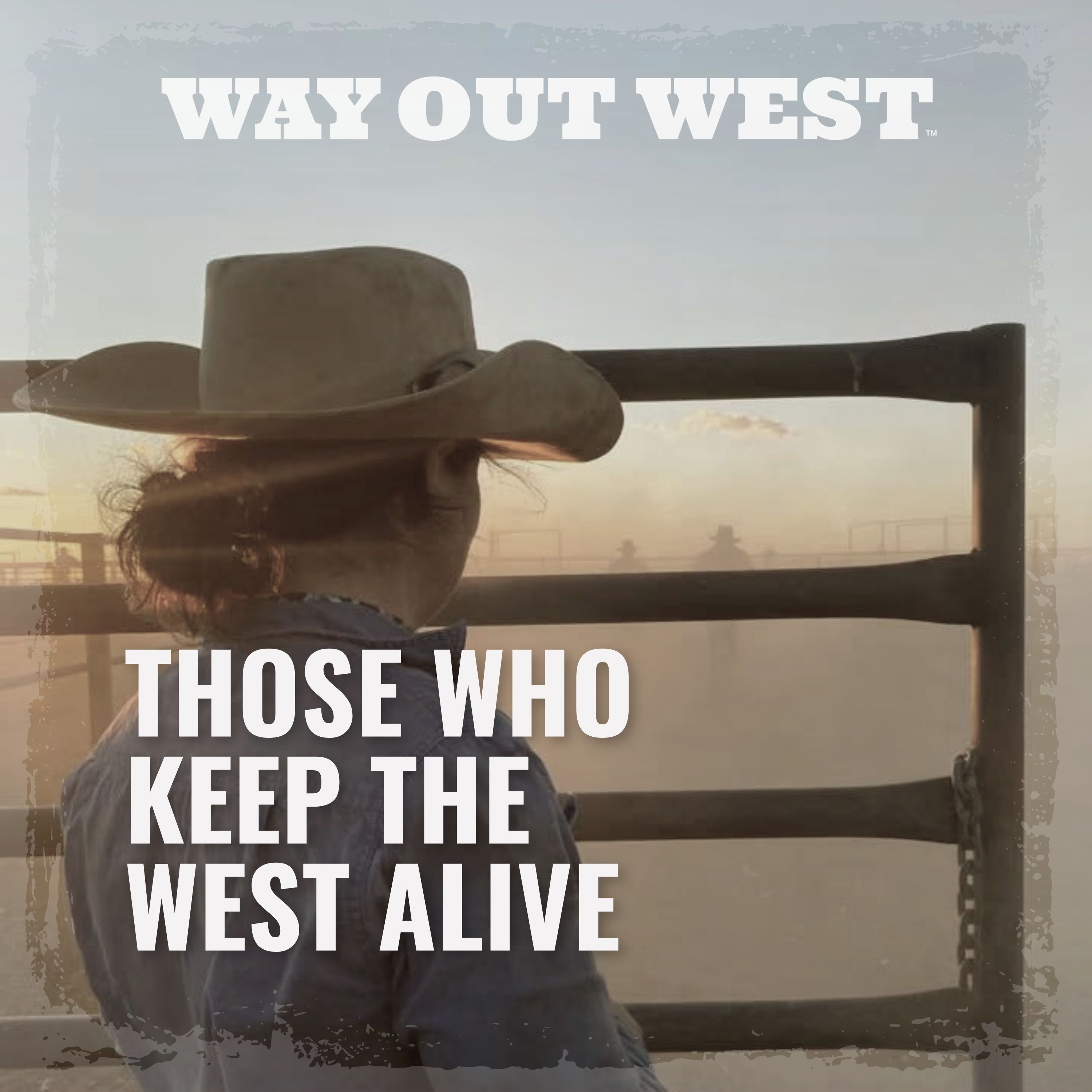
The American West isn't disappearing. It's being carried forward every day by ordinary people whose work, craftsmanship, service, storytelling, and curiosity keep its traditions alive. Meet five individuals who remind us that the West has always survived one generation, and one good example, at a time.
The Ordinary People Who Keep the West Alive
Five stories that remind us the American West isn't disappearing. It's being carried forward, one life at a time.

The American West isn't preserved only in museums, old photographs, or the pages of history books. It lives on through ordinary people who quietly choose to carry its traditions forward every day.
Some rise before daylight to care for livestock. Others shape leather with the same techniques their predecessors used generations ago. Some give up their vacation each year to help run a community rodeo. Others preserve Western history through museums, poetry, and storytelling. And somewhere, a young rider asks one more question, eager to learn the skills that will carry the West into another generation.
In this episode of Way Out West, we meet five people whose lives remind us that the American West isn't something we simply remember—it's something we continue to live.
Along the way, we'll explore why every generation has believed the West was disappearing, why craftsmanship and community matter as much today as they ever have, and why the future of the West has always rested in the hands of ordinary people willing to do extraordinary things.
Because the American West isn't disappearing. It's still being lived.
What You'll Hear
- Why every generation believes the American West is disappearing
- The quiet responsibility of a modern ranch hand
- How skilled craftsmen preserve more than traditional trades
- Why volunteers remain the backbone of community rodeos
- The importance of museums, poetry, and storytelling in preserving Western culture
- How curiosity and mentorship prepare the next generation of horsemen and horsewomen
- Why the future of the American West depends on ordinary people more than famous names
Cowboy Glossary Term of the Week
Green Broke: A horse that's green broke has been started under saddle and understands the basics, but it's still learning. It needs experience, patience, and miles before becoming a dependable ranch or riding horse.
In many ways, people learn the same way.
Every experienced ranch hand, master craftsman, rodeo volunteer, storyteller, and horseman was green broke once. Someone took the time to teach them, answer their questions, and trust them with a little more responsibility each day.
That's how traditions survive—not because they're inherited automatically, but because one generation patiently teaches the next.
Ride Way Out West
The American West has never belonged only to famous cowboys, legendary ranches, or larger-than-life figures from history. It has always been built—and sustained—by ordinary people who quietly chose to live its values.
If you enjoyed this episode, there are more stories waiting for you.
Explore the Way Out West Journal for in-depth articles on cowboy history, ranching, Western culture, and the people who continue to shape the American West today. You can also subscribe to the weekly newsletter for new stories, podcast episodes, and photographs delivered straight to your inbox.
Because the story of the American West is still being written.
02:28 - Chapter 1 – Introduction
03:20 - Chapter 2 – The Ranch Hand
05:05 - Chapter 3 – The Craftsman
06:48 - Chapter 4 – The Volunteer
08:27 - Chapter 5 – The Storyteller
10:02 - Chapter 6 – The Young Rider
11:33 - Chapter 7 – Closing Thoughts
13:06 - Chapter 8 – Buster the Bull & Cowboy Glossary Term of the Week
14:15 - Chapter 9 – Thanks for Listening
Every so often, someone tells me the American West is gone.
That all that's left are museums, old photographs, and reruns of classic Westerns.
I understand why people say it.
The open range is smaller than it used to be.
Family ranches fight to survive.
Small-town rodeos struggle to find volunteers.
And many of the people who grew up living this life are getting older.
From a distance, it can feel like the story is coming to an end.
But I don't think it is.
I think we've simply forgotten where to look.
[Music Up]
Howdy. Chip Schweiger, here.
Welcome to another edition of Way Out West.
Where the stories of the American West are told...
Cowboy wisdom is earned...
And the legacy of the American cowboy still rides on.
The West has always been a place of long horizons.
Places where you can watch a thunderstorm an hour before it reaches you.
Where the wind carries the smell of rain, fresh-cut hay, or sagebrush across miles of open country.
It's easy to think that's what defines the American West.
But landscapes, by themselves, don't create a culture.
People do.
Every generation inherits more than land.
It inherits ways of working.
Ways of speaking.
Ways of helping a neighbor.
Ways of keeping promises.
And whether those things survive has never depended on monuments or museums.
It has always depended on people.
So today on the show, we're going to look beyond the legends
and spend some time with five people who,
in their own quiet ways,
are carrying the American West into its next chapter.
Before we saddle up, remember you'll find additional resources for today's episode in the show notes at WayOutWestPod.com/ keep-the-west-alive.
Chapter 1 - Introduction
If you've listened to this podcast for very long, you know I spend a lot of time talking about history.
Trail drives.
Outlaws.
Ranches.
Cowboys.
The people who built the American West.
But history has a funny way of convincing us that important stories are always behind us.
The truth is, the West has never survived because of famous people.
It has survived because ordinary people quietly decided it was worth carrying forward.
People whose names never appeared in textbooks.
People who probably wouldn't consider themselves guardians of anything.
Today I'd like to introduce you to five of them.
Not because they're extraordinary.
But because they're exactly the kind of people who have always kept the West alive.
Chapter 2 - The Ranch Hand
One of the finest horsemen I've ever known could have chosen almost any life.
He went to college.
He had opportunities that might have led to offices instead of barns.
Regular hours instead of daylight and weather.
Predictable paychecks instead of seasons.
Instead, he chose ranch work.
Not because it was easy.
Because it felt like where he belonged.
Over the years he became much more than a ranch hand.
He trained horses.
Guided hunters through remote country.
Spent weeks where the nearest pavement was hours away.
He's the sort of person who notices a loose shoe before anyone else does.
Who fixes a gate because it needs fixing, not because someone asked.
Who understands that animals don't care whether you're tired.
Neither does the weather.
We often celebrate ranch owners.
Historic brands.
Legendary outfits.
But ranches have always depended upon people exactly like him.
People who quietly shoulder responsibility because somebody has to.
Frederic Remington believed he was painting the last generation of cowboys.
That was more than a century ago.
Yet every morning somewhere in the American West, someone saddles a horse before daylight because cattle still need checking.
Maybe they don't make headlines.
But they still make the West possible.
Watching him taught me something.
Traditions don't survive because people admire them.
They survive because somebody keeps practicing them.
And sometimes...
Somebody keeps making the tools that make that work possible.
Chapter 3 - The Craftsman
Not far from where I live is a leather shop.
Walk inside and you'll smell it before you see it.
Fresh leather.
Neatsfoot oil.
Beeswax.
The quiet rhythm of hands that have repeated the same motions thousands of times.
The man behind that bench didn't inherit a famous name.
He didn't begin with customers waiting outside the door.
He simply kept showing up.
One belt.
One holster.
One notebook.
One saddle repair.
One customer at a time.
Year after year.
Piece after piece.
Until something remarkable happened.
People stopped asking whether he was good.
They started asking whether he had room on his waiting list.
His order book filled.
Not because he advertised louder than everyone else.
Because quality has a way of traveling by word of mouth.
Cowboys have always known that.
Long before online reviews, a man's reputation rode ahead of him.
On the frontier, craftsmanship wasn't a luxury.
It was a matter of trust.
A cowboy might never know the name of the person who built his saddle,
but every day he trusted that person's work with his comfort,
his livelihood, and sometimes his life.
Craftsmanship isn't just preserving old skills.
It's preserving standards.
And standards are part of culture too.
But even good tools need somewhere to be used.
Somewhere people still gather.
Somewhere traditions become community instead of memory.
Chapter 4 – The Volunteer
One of my closest friends spends his vacation every year in Houston.
Not on the beach of Galveston Island.
Not in the malls, or restaurants or on a golf course.
He uses his vacation days to work.
For nearly thirty years he's served on the livestock committee at the Houston Livestock Show and Rodeo.
He pays his own expenses.
Works long days.
Gets home exhausted.
And can't wait to do it again next year.
If you've ever attended a rodeo, you've probably noticed the announcer.
The contestants.
The bucking horses.
The lights.
What you probably didn't notice were the thousands of volunteers who made all of it possible.
Directing traffic.
Moving cattle.
Checking credentials.
Cleaning barns and mucking stalls.
Solving problems no one else ever sees.
The first rodeos weren't productions.
They were communities gathering around the work they already shared.
That spirit still exists.
Not because someone is paid to protect it.
Because someone volunteers.
Wallace Stegner often reminded us that the West was built through communities as much as individuals.
I think he'd recognize this immediately.
The people wearing volunteer badges aren't looking for recognition.
They're simply making sure there will still be a rodeo next year.
Communities create memories.
But memories don't last very long unless somebody tells the stories.
Chapter 5 – The Storyteller
I've met people who know almost everything about Western history.
Dates.
Battles.
Brands.
Trails.
But knowledge by itself isn't enough.
History has to be brought to life.
One woman I know does exactly that.
She runs a museum where thousands of visitors walk through every year.
Artifacts matter.
Documents matter.
Photographs matter.
But she understands something even more important.
Objects tell us what happened.
Stories tell us why it mattered.
She also happens to be a cowboy poet.
Which somehow feels exactly right.
Long before history books, the West preserved itself around campfires.
Someone remembered.
Someone repeated the story.
Someone added one small detail.
And before long, a generation understood where it came from.
Baxter Black once observed that cowboys never wasted a good story by telling it only once.
There's wisdom hiding inside that joke.
Every culture survives because someone decides its stories are worth repeating.
Today that happens in museums.
On stages.
In books.
In songs.
Even through podcasts like this one.
But every story eventually reaches a moment when someone younger raises a hand...
...and asks another question.
That's where the future begins.
Chapter 6 – The Young Rider
Several years ago I volunteered at a horse barn.
Most of my attention was on helping the kids.
One of them especially caught my attention.
She wasn't the loudest.
She wasn't trying to impress anybody.
She simply wanted to learn.
If there was a gate to open from horseback, she wanted to know how.
If we were practicing with ropes, she'd ask one more question.
If something didn't work the first time, she'd try again.
Week after week.
Month after month.
It became one of my favorite parts of Sunday afternoons.
Fast forward several years.
That little girl became a champion reining horse rider.
Earned a scholarship to compete on her college rodeo team.
And watching that happen never surprised me.
Not because she was naturally gifted.
Although she certainly had talent.
It happened because curiosity is one of the greatest teachers anyone can have.
Every generation worries that young people aren't interested anymore.
People said that after barbed wire.
After automobiles.
After tractors.
After television.
After computers.
Now they say it about smartphones.
And every generation quietly produces another young cowboy.
Another horsewoman.
Another craftsman.
Another storyteller.
Not because someone forced them.
Because something inside them wanted to learn.
Chapter 7 – Closing Thoughts
Maybe that's why I don't worry quite as much when people tell me the West is disappearing.
I've seen too many people quietly carrying it.
The ranch hand who chose responsibility over comfort.
The craftsman who spent decades earning trust one piece at a time.
The volunteer who gives up his vacation simply because rodeos still matter.
The storyteller who reminds us why our history is worth remembering.
And the young horsewoman whose questions became a lifetime of learning.
None of them are famous.
Most people listening will never know their names.
But maybe that's exactly the point.
The American West has never belonged only to the legends.
It has always belonged to ordinary people who showed up.
People who cared enough to do the work.
To learn the craft.
To tell the story.
To teach the next generation.
The truth is, cultures rarely survive because someone decides to preserve them.
They survive because ordinary people quietly choose to live them.
One ranch.
One workshop bench.
One rodeo committee.
One story.
And one curious young rider at a time.
So the next time someone tells you the American West is over...
Tell them to look a little closer.
It may not always wear the clothes we're expecting.
But it's still here.
Still working.
Still teaching.
Still remembering.
And I think that's something worth celebrating.
Chapter 8 – Buster the Bull & Cowboy Glossary Term of the Week
OK, before we ride out today, we’ve got one more thing
[BULL SOUND]
Yep, that distinctive call from Buster the Bull means it’s time again for our cowboy glossary term of the week.
This week's cowboy glossary term is green broke.
A horse that's green broke has been started under saddle.
It understands the basics—how to accept a rider, respond to simple cues, and begin working—but it's still learning.
It lacks the experience that only time, patience, and miles can provide.
There's an old saying that a horse can be broke in a day, but it takes years to make one dependable.
In a way, that's true of people, too.
Every experienced ranch hand, every skilled craftsman, every rodeo volunteer was green broke once.
Someone took the time to teach them.
Someone answered their questions, corrected their mistakes, and trusted them with a little more responsibility each time.
That's how traditions survive.
Not because they're inherited automatically, but because one generation patiently teaches the next.
[MUSIC UP AND FADE]
Chapter 9 – Thanks for Listening
Well, that’s all for this episode of Way Out West. Thanks for riding with me here.
If you enjoyed the episode, please follow, rate, and share the show with someone who loves the history, culture, and traditions of the American West.
And if you'd like to see more of the work we're doing, you can visit RideWayOutWest.com.
And while you're there, take a few minutes to explore the Way Out West Journal, where we dive even deeper into the people, places, and history that continue to shape the West today.
That’s RideWayOutWest.com
Until next time, this is Chip Schweiger, reminding you that history tells us where the American West has been—but ordinary people decide where it goes next.
We’ll see ya down the road.