The Life of Kit Carson: Scout, Pathfinder, Complicated Legend
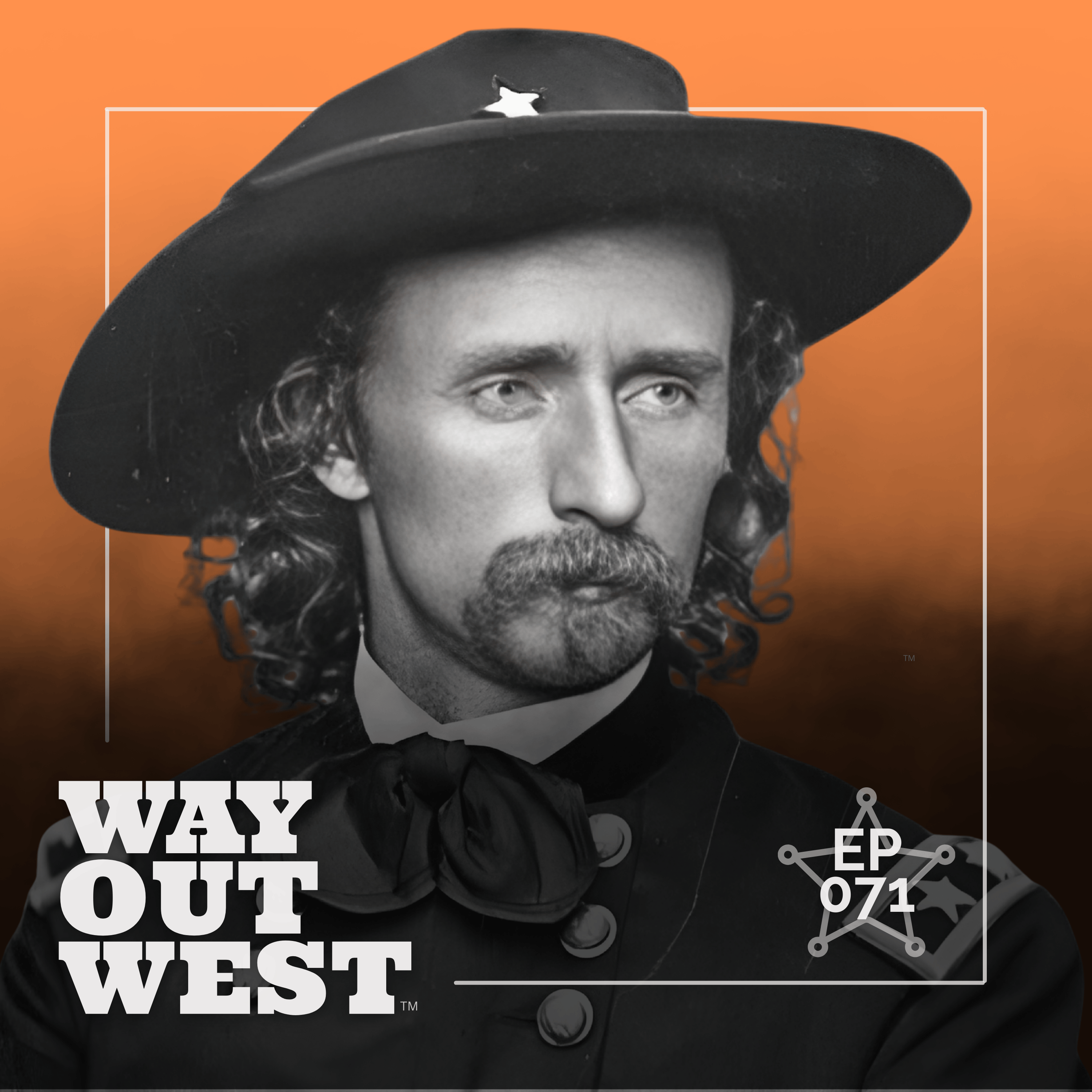
Scout. Pathfinder. Wilderness expert. Kit Carson’s name still echoes across the West, but his real story is far more complex than the legends suggest. Ride along as we explore the grit, contradictions, and legacy of one of the frontier’s most fascinating figures.


Kit Carson is one of the most famous names in the American West—scout, pathfinder, mountain man, soldier, and guide whose reputation grew so large it became legend. But real history is rarely simple, and Carson’s life holds both heroism and hard truths.
In this episode, go deep into the high deserts, mountain passes, and shadowed histories of a man who lived multiple lives across a frontier in transition.
We follow Carson from his beginnings as an illiterate runaway on the Santa Fe Trail…
to his years among trappers and mountain men…
to guiding John C. Frémont through unmapped country…
to his controversial role in the military campaigns that changed Native life forever.
Along the way, we explore:
What You’ll Hear in This Episode
Carson’s rise from teenage runaway to legendary scout
His extraordinary skills as a tracker, hunter, and interpreter
The uneasy fame he earned through dime novels and exploration reports
The complex and painful legacy of his role in the Navajo Long Walk
His deep ties to Native communities through marriage and language
The surprising, human side of a man often flattened into myth
How the West created legends—and why the truth is more powerful
Cowboy Glossary Term of the Week
Cut Sign — A frontier term meaning to track someone or something by reading subtle clues on the ground. Modern meaning? Noticing what others miss.
Further Reading & Resources
The Life of Kit Carson by Charles Burdett
Blood and Thunder by Hampton Sides
National Park Service: Kit Carson Home & Museum in Taos
Navajo Nation resources on the Long Walk
Closing Thought
Carson’s legacy is complicated because the American West is complicated. His story reminds us that even legends are human, and that truth matters more than myth.
Enjoying the ride? Saddle up with us:
Transcript: For a full transcript of this episode, click on "Transcript"
Your Turn! Share your thoughts → howdy@cowboyaccountant.com
Support the Show: Buy me a coffee → https://buymeacoffee.com/thecowboycpa
Follow Along: Instagram → https://www.instagram.com/RideWayOutWest
03:10 - Chapter 1: The Making of a Mountain Man
04:17 - Chapter 2: The Pathfiner's Scout
05:31 - Chapter 3: The Complexity of a Frontier Life
06:53 - Chapter 4: A Life of Contradictions
07:41 - Chapter 5: The Reluctant Hero
08:36 - Chapter 6: The Man Behind the Legend
11:00 - Chapter 7: Legacy on the Trail
12:08 - Chapter 8: Closing Thoughts
12:36 - Chapter 9: Buster the Bull & the Cowboy Glossary Term of the Week
13:23 - Chapter 10: Thanks for Listening
There’s a certain kind of silence in the high desert.
A silence so wide you can hear your own heartbeat echo off distant stone.
In that kind of country, a good scout isn’t just useful —
he’s the difference between getting home…
and never being heard from again.
And every now and then, a scout comes along who seems almost part of the land itself.
Moves through canyon shadows like he was born there.
Reads tracks the way a preacher reads scripture.
Finds water where others see nothing but sunburned rock.
Folks swore he could talk to the mountains.
Maybe he could.
Some men are just built that way.
His name… was Kit Carson.
[MUSIC]
Howdy. Chip Schweiger, here. Welcome to another edition of Way Out West.
The podcast that takes you on a journey through the stories of the American West, brings you the very best cowboy wisdom, and celebrates the legacy of the cowboys and cowgirls—who are feeding a nation.
There are names in the American West that still echo like bootheels on dry ground.
Names that carry the dust of the Santa Fe Trail.
Names that rise like campfire smoke into legend.
Kit Carson is one of them.
Scout.
Pathfinder.
Mountain man with a wild frontiersman’s grit.
And yet… a figure whose story gets more complicated the closer you ride.
A man who guided explorers through unmapped country.
Who spoke multiple Native languages.
Who married into Native communities.
A man who saved lives.
A man who took lives.
A man tangled in the contradictions of a frontier that was changing faster than any one rider could keep up with.
Today, we’re digging into the real Kiowa-whispering, Ute-tracking, mule-packing scout who helped map the West…
And we’re also talking about the choices that still spark debate.
Because the frontier wasn’t clean.
And neither were the men who shaped it.
After all… legends don’t rise out of easy places.
After the episode, check out the show notes at WayOutWestPod.com/kit-carson
[MUSIC]
Welcome back.
Today’s trail takes us deep into the high deserts and timbered mountains of the early American frontier.
Into the world of Christopher “Kit” Carson — a man who lived several lives in one body.
A trapper.
A guide.
A soldier.
A husband and father.
A reluctant celebrity.
And a name that still stirs both admiration and hard conversations.
Let’s saddle up.
Chapter 1: The Making of a Mountain Man
Kit Carson was born in 1809 in Kentucky, but the West got into his veins early.
His family moved to Missouri when he was a kid, settling right near the starting point of the Santa Fe Trail.
And that was it.
The horizon grabbed him.
At 16, instead of a blacksmith apprenticeship, he ran off.
Signed up as a wagon laborer on a trading caravan headed to Santa Fe.
From that moment forward, he belonged to the West and nowhere else.
Carson rode with traders, trappers, mountain men — the rough crowd who wrestled a living from raw country.
He learned to track by broken twigs, read weather in the mountains, speak multiple Native languages, and move across big country with a kind of instinct you can’t teach.
By his 20s, he was already well-known up and down the Rockies.
Quiet.
Deadly accurate with a rifle.
Unflinching when the moment got hot.
A man others trusted to get them home alive.
Chapter 2: The Pathfiner's Scout
Kit Carson’s name jumped from frontier circles to national fame when he crossed paths with a young officer turned explorer: John C. Frémont.
Frémont needed a scout for his government expeditions mapping the West.
He needed someone who could read country like scripture.
Someone who understood tribal boundaries.
Someone who could find water when the desert had gone bone-dry.
He found all of that in Carson.
Together, they traveled thousands of miles — through the Sierras, the Great Basin, the Rockies, Oregon country, and California.
And when Frémont’s wildly popular reports were published back East?
Carson’s name rode shotgun with every page.
Suddenly, the quiet mountain man became a legend.
The dime novel hero.
The fearless scout.
The man who could find a trail where none existed.
People named towns after him.
Newspapers gushed.
Soldiers wanted to serve with him.
But fame never sat easy on his shoulders.
He’d rather have been in a saddle than in a parlor any day.
Chapter 3: The Complexity of a Frontier Life
Here’s where the story turns.
Because you can’t talk about Kit Carson without talking about the harder chapters.
Carson fought in violent conflicts against several Native nations.
He tracked raiding parties.
He fought for the U.S. Army in campaigns that pushed tribes from their own lands.
And as the West filled with more settlers, those conflicts got worse.
The most debated part of his life?
His role in the Navajo Long Walk of 1864.
As a military officer, he oversaw the scorched-earth campaign that forced Navajo families — men, women, and children — onto a brutal 300-mile march to Bosque Redondo.
It remains one of the darkest moments in Southwest history.
A moment many Native families still carry in their bones.
Carson didn’t design the policy, but he executed the orders.
Historians argue about how willingly or reluctantly he participated.
But the fact remains: lives were shattered.
And that’s part of his legacy too.
A reminder that the West wasn’t just big skies and open ranges.
It was collision and conquest.
It was complicated people making complicated choices.
And Kit Carson was right in the middle of it.
Chapter 4: A Life of Contradictions
But Carson’s story doesn’t stay in just one lane.
He spoke several Native languages.
Lived among tribes.
Married two Native women in his lifetime.
Raised children who were half-Arapaho and half-Cheyenne.
Worked as a broker, an interpreter, a go-between.
Some tribes respected him.
Some feared him.
Some hated him.
Like many frontier men, he moved in multiple worlds — without fully belonging to any of them.
He was fiercely loyal to people he cared for.
He risked his life to save others.
He also fought in campaigns that devastated Native families.
A contradiction of a man living in a contradictory time.
Chapter 5: The Reluctant Hero
Despite the mythology, Carson didn’t see himself as a legend.
He couldn’t read or write well.
He laughed off the tall tales printed about him.
He once said the stories made him “out ten times bigger than I am.”
But he kept guiding.
Kept scouting.
Kept answering the call when the frontier needed someone who knew the land better than anyone else.
After the Civil War, Carson served as an Indian agent — one of the few who actually tried to protect the tribes under his watch from exploitation and starvation.
His body finally gave out in 1868.
He was 58.
Worn down by miles, wounds, cold winters, and hard living.
His last words reportedly were:
“Wish I had time for just one more hunt.”
Chapter 6: The Man Behind the Legend
For all the big stories about Kit Carson, it’s the smaller ones that reveal who he really was.
Because the truth is…
The man behind the legend wasn’t anything like the dime-novel hero printed back East.
Start with this:
He couldn’t even read the books written about him.
Carson was functionally illiterate.
Could sign his own name…
and that’s about it.
Yet he became one of America’s first action heroes —
a living legend who had no idea what the newspapers were saying.
And here’s the twist:
He hated the attention.
Fame made him uncomfortable.
Crowds made him uneasy.
When folks tried to shake his hand in Washington, he tried to slip out the back door.
This wasn’t a man who chased headlines.
This was a man who chased horizons.
And for all the danger he lived with, here’s a detail most folks don’t know:
Carson was gentle with kids.
Wouldn’t cuss around them.
Wouldn’t raise his voice near them.
Around camp, he was the mountain man who softened when a child walked by.
But don’t confuse gentle with fragile.
On the trail, Carson was steel.
Once, after taking an arrow and then a gunshot from his own men in the dark,
he rode forty miles through hostile country to get help for his expedition.
Most men would’ve dropped in the dirt.
Carson kept riding.
And to think — none of this might’ve happened at all if he’d stayed where he started.
But life on the frontier wasn’t all diplomacy.
Sometimes it was theater — literally.
At a social gathering in Taos, an opera singer mocked Carson for being plain and unrefined.
Carson didn’t shout.
He didn’t swing.
He calmly offered to “fight him as a man, if he was a man.”
The singer left town by dawn.
And through all this, remember something surprising:
He wasn’t a giant.
He wasn’t the towering hero on book covers.
Carson stood about five-foot-five and weighed maybe 140 pounds.
Quiet.
Modest.
Almost unremarkable in a crowd —
until you saw him on a trail,
reading the land like it was written for him alone.
These aren’t the stories that make statues.
But they’re the stories that make a man real.
Chapter 7: Legacy on the Trail
So how do we remember Kit Carson today?
As a hero?
A villain?
A man shaped by his era?
A man who shaped it?
Maybe the truth is this:
He was all of them.
Because the West wasn’t a place for simple stories.
And its people weren’t simple either.
Carson’s life forces us to talk about the things that made the West both legendary and tragic.
The courage.
The cruelty.
The wilderness that tested everyone.
And the choices that echo long after the dust settles.
When we look back at frontier history — honestly, not romantically — we see that legends are rarely spotless.
But they still have something to teach us.
That leadership means navigating hard decisions.
That loyalty doesn’t always follow easy lines.
That the people who helped shape the West were human — for better and worse.
And maybe that’s why Carson still fascinates us.
Because he isn’t a carved-in-stone hero.
He’s a reminder that history is lived by real people.
And real people are messy.
Chapter 8: Closing Thoughts
The West has always been a place of contradictions.
A place where grit meets beauty.
Where hope meets hardship.
Where legends rise… but not without shadows behind them.
Kit Carson’s story reminds us that the frontier was big enough to hold courage and conflict inside the same saddlebag.
And that when we talk about the West honestly, we honor everyone who lived it — not just the ones who became famous.
Chapter 9: Buster the Bull & the Cowboy Glossary Term of the Week
Well, before we finish up this week, we’ve got one more thing.
Yep, that distinctive call from Buster the Bull means it’s time for the Cowboy Glossary term of the week, and this week’s term is Term: Cut Sign
So A Cut Sign is frontier term meaning to track someone or something by reading clues on the ground — hoof marks, bent grass, displaced stones, broken twigs, or anything that reveals a direction of travel.
Modern version?
Following clues others overlook.
Staying sharp.
and paying attention.
Whether it’s in business, leadership, or life, the best people still "cut sign" — they notice what others miss.
Chapter 10: Thanks for Listening
Well, that’s about all for this episode of Way Out West.
I appreciate you spending part of your day with me — and hope you enjoyed diving into the incredible and contradictory life of Kit Carson.
If you enjoyed the show, please consider sharing it with a friend who loves a good Western tale. That helps us reach more fans of the American West.
And don’t forget to drop us a review on your favorite podcast app, and connect with us on Instagram and Facebook.
Next time on Way Out West, we’re saddling up with the Buffalo Soldiers — the frontier’s toughest cavalrymen, riding the hardest country and carving a legacy that still echoes across the American West.
Until next week, this is Chip Schweiger reminding you that out here, the truth of the West isn’t tidy — but it’s worth telling.
We’ll see ya down the road.