The Last Real Cowboy (According to Everybody)
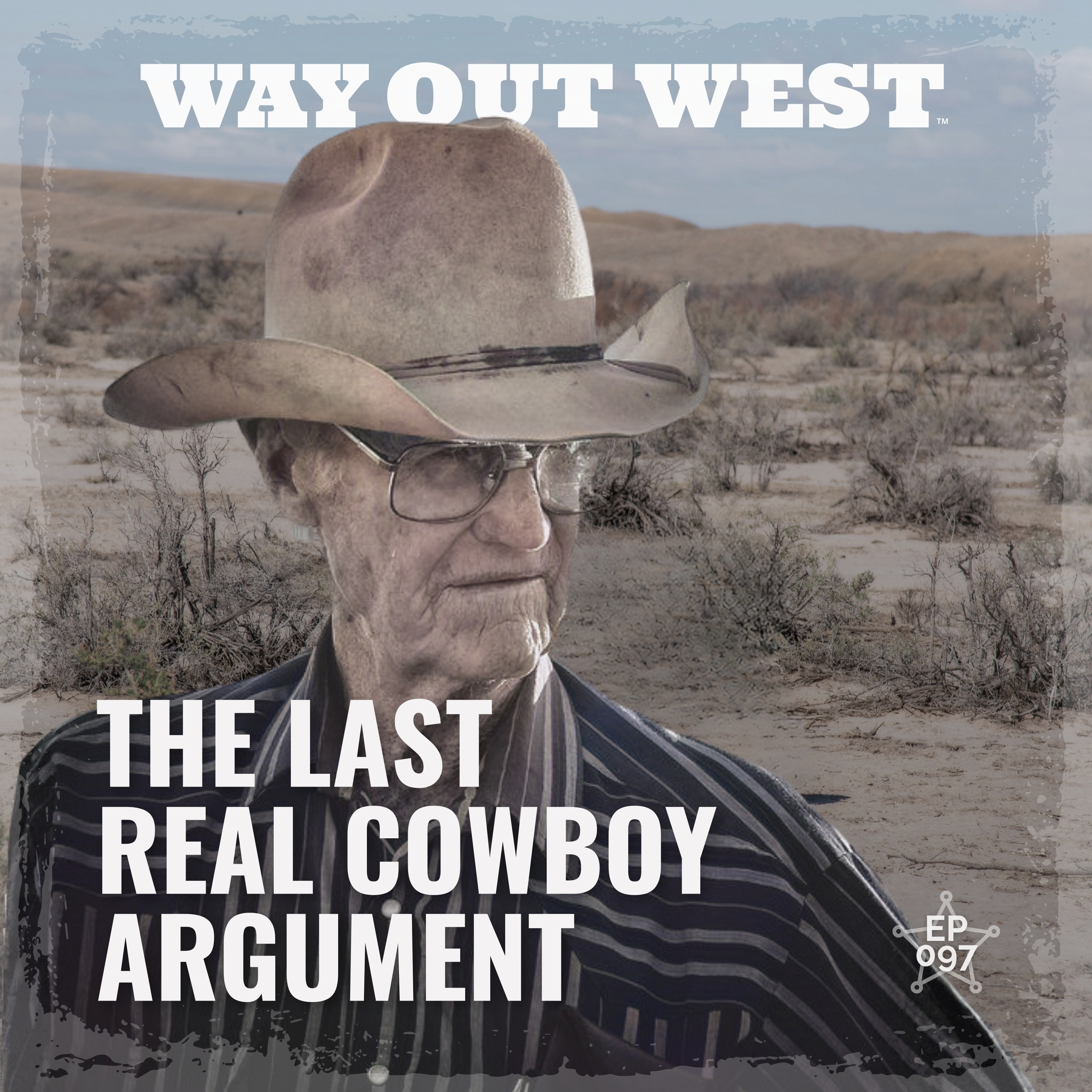
Every generation thinks the previous one was the last authentic generation of cowboys. From pickup trucks and ATVs to barbed wire and the open range, this episode explores why the West has always been changing—and why the argument over authenticity never ends.
The Last Real Cowboy (According to Everybody)
Every generation seems convinced they're watching the end of the authentic West.

Today, people blame ATVs, smartphones, social media, Yellowstone tourism, and newcomers moving to ranch country. A century ago, ranchers complained that pickup trucks were changing cowboy life. Before that, many believed barbed wire had ruined the open range forever.
In this episode of Way Out West, explore one of the oldest arguments in Western history: the belief that the previous generation was the last generation of "real" cowboys.
From the arrival of trucks and modern ranch equipment to the fencing of the open range and the transformation of the frontier itself, we'll trace a familiar pattern that has repeated across the American West for generations.
Because every era seems to believe it is witnessing the end of something authentic.
But the truth is, the West has never stood still.
What You'll Hear
- Why every generation believes the previous one was the last authentic generation
- How pickup trucks sparked many of the same debates we hear today
- Why barbed wire transformed ranching and changed the open range forever
- The surprisingly long history of Western authenticity arguments
- How cowboy culture adapted through constant change
- Why the values of the West matter more than the tools
Because when you look closely, the argument over who the last real cowboy was may be one of the oldest traditions in the West itself.
The horses changed. The fences changed. The trucks changed. The people changed.
But somehow the West endured. And maybe that's because authenticity was never about preserving a particular moment in time. It was about carrying forward the values that mattered most.
Cowboy Glossary Term of the Week
Bell Stirrups: Wide stirrups commonly found in buckaroo country across Nevada, Oregon, Idaho, and the Great Basin. Viewed from the side, they're bell-shaped. Their broad platform provides comfort and support during long hours in the saddle and makes it easier to "trot out" across big country when covering long distances horseback before the day's work even begins.
Ride Way Out West
If you enjoyed this episode, be sure to follow Way Out West wherever you listen to podcasts.
And if you'd like to support independent storytelling about the American West, share this episode with somebody who loves cowboy history, ranching culture, frontier survival, and the stories that still ride on today.
Support the Show: Buy me a coffee → https://buymeacoffee.com/thecowboycpa
02:14 - Chapter 1: The Cowboy Isn't What He Used to Be
03:25 - Chapter 2: The Pickup Ruined Everything
04:51 - Chapter 3: The Fence That Ended The West
06:18 - Chapter 4: Before The Cowboy
07:28 - Chapter 5: The Real Story
09:06 - Chapter 6 – Buster the Bull & Cowboy Glossary Term of the Week
10:05 - Chapter 7 – Thanks for Listening
The last real cowboy has died a remarkable number of times.
According to some people, he disappeared when ranches started using pickup trucks.
According to others, it happened when ATVs showed up.
Some blame cell phones.
Some blame social media.
Others blame Yellowstone.
Some blame newcomers moving West.
And if you go back far enough...
You'll find people blaming barbed wire.
The funny thing is...
Every generation seems convinced they're watching the end of the authentic West.
And every generation has been wrong.
Because the argument over who the last real cowboy was...
May be one of the oldest traditions in the West itself.
[Music Up]
Howdy. Chip Schweiger, here.
Welcome to another edition of Way Out West.
Where the stories of the American West are told...
Cowboy wisdom is earned...
And the legacy of the American cowboy still rides on.
If you've spent much time around ranch country, you've probably heard the conversation.
Somebody points at a pickup truck.
Or an ATV.
Or a smartphone.
Or maybe a tourist wearing a brand-new cowboy hat.
And sooner or later somebody says:
"Well... it wasn't like that in my day."
So Today on the show...
We're talking about the Last Real Cowboy Argument.
The strange habit every generation seems to have of believing the generation before them was the last authentic one.
Because when you look closely...
This argument turns out to be almost as old as the West itself.
After the episode, check out the show notes at WayOutWestPod.com/last-real-cowboy
Chapter 1: The Cowboy Isn't What He Used to Be
Welcome back.
Spend enough time around ranch country and you'll hear it eventually.
Usually around a branding fire.
Or over coffee at the local café.
Or leaning against a feed-store counter.
Someone will explain that cowboys aren't what they used to be.
Maybe they'll point to a pickup truck.
Maybe they'll point to an ATV.
Maybe they'll point to a young hand checking a weather app before heading out.
The details change.
The complaint stays remarkably consistent.
The modern cowboy, we're told, has it too easy.
The old-timers were tougher.
The horses were better.
The work was harder.
The people were more authentic.
And yet if you travel backward through history, you discover something interesting.
Every generation seems to believe that authenticity ended with them.
Not after them.
With them.
They are the last witnesses.
The last guardians.
The last real thing.
Maybe that's why the argument never goes away.
It's not really about equipment.
It's about change.
And nobody likes watching the world they understand disappear.
Chapter 2: The Pickup Ruined Everything
When pickup trucks became common on ranches, not everyone celebrated.
Today, a ranch truck is so normal that we hardly notice it.
But there was a time when many stockmen viewed them with suspicion.
A horse could cross rough country.
A horse could gather cattle.
A horse could work all day.
A horse didn't get stuck because a battery died.
And perhaps most importantly, a horse represented a way of life.
Then the trucks arrived.
They hauled feed faster.
Covered more miles.
Reduced labor.
Made ranching more efficient.
In other words, they did exactly what new technology always does.
They changed the job.
And some people hated it.
The same thing happened when tractors replaced teams of horses.
When windmills reduced the need to haul water.
When telephones connected isolated ranches.
When two-way radios appeared.
When GPS arrived.
The pattern repeated itself again and again.
The older generation would shake its head.
The younger generation would adapt.
And ranching would continue.
The myth survived.
But the reality still mattered.
Because the purpose of ranching was never preserving technology.
The purpose was caring for livestock and making a living on the land.
The tools simply changed.
Chapter 3: The Fence That Ended The West
Now let's go farther back.
Long before anyone worried about pickup trucks, people were worried about barbed wire.
It's hard to overstate how disruptive fencing was.
For generations, enormous portions of the West operated as open range.
Cattle moved freely.
Ranchers depended on custom, cooperation, and vast distances.
Then came barbed wire.
Cheap.
Durable.
Practical.
And incredibly controversial.
To many cattlemen, fences represented the end of freedom itself.
Trails were blocked.
Water sources became restricted.
Movement became controlled.
The landscape began changing.
People spoke about the end of the old days because, in many ways, they were right.
The open-range era was ending.
What people often miss is that the complaints sounded remarkably familiar.
The West was being ruined.
The newcomers didn't understand.
The old traditions were disappearing.
The next generation wouldn't know what had been lost.
Sound familiar?
It's almost the exact same conversation people have today.
Only now they're talking about subdivisions, tourists, social media, and rising land prices.
Different century.
Same argument.
Chapter 4: Before The Cowboy
Now let's take this one step further.
Before there were American cowboys, there were vaqueros.
Long before Texas trail drives.
Long before Hollywood.
Long before the famous cattle kingdoms.
Spanish and Mexican horsemen had already developed much of the horsemanship, stock-handling, and equipment that would later define cowboy culture.
The rope.
The saddle traditions.
The spurs.
The riding techniques.
The vocabulary.
Much of it came from the vaquero tradition.
And before that?
Indigenous peoples across the West were adapting to horses and creating entirely new cultures built around mobility, hunting, warfare, and trade.
The West was changing then, too.
Always changing.
Always evolving.
Always becoming something new.
Which means the argument about the last real cowboy is actually older than the cowboy himself.
Every generation inherits a landscape shaped by people who came before.
And every generation watches it change again.
Chapter 5: The Real Story
So who was the last real cowboy?
The trail driver of 1880?
The ranch hand of 1920?
The bronc rider of 1950?
The cowboy who still works cattle horseback today?
The answer is probably none of them.
Because authenticity isn't frozen in time.
A cowboy isn't defined by whether he rides a horse or drives a truck.
He isn't defined by whether he carries a rope or a smartphone.
And he’s not defined by the decade he happened to be born in.
The real story runs deeper than that.
What matters are the values that survived all the changes.
Competence.
Responsibility.
Self-reliance.
Stewardship.
The willingness to do difficult work without much applause.
Those things have existed through every version of the West.
Open range.
Fenced range.
Horseback.
Pickup truck.
ATV.
The tools changed.
The landscapes changed.
The economics changed.
But those values remained.
And that's why the West never actually disappeared.
The people who live it simply found new ways to carry it forward.
The truth is, somebody is probably complaining right now that today's cowboys aren't real cowboys anymore.
And fifty years from now, somebody else will be saying exactly the same thing.
That tells you something.
The argument isn't proof that the West is dying.
It's proof that the West is still changing.
Just like it always has.
Chapter 6 – Buster the Bull & Cowboy Glossary Term of the Week
OK, before we ride out today, we’ve got one more thing
[BULL SOUND]
Yep, that distinctive call from Buster the Bull means it’s time again for our cowboy glossary term of the week. And this week’s term is Bell Stirrups.
Bell stirrups are wide stirrups commonly associated with buckaroo country across Nevada, Oregon, Idaho, and the Great Basin.
Viewed from the side, they're shaped much like a bell, which is where they get their name.
Their wide design provides a comfortable platform for long hours in the saddle and makes it easier to trot extended distances across big country.
For buckaroos who might spend miles simply reaching the place where the real work begins, bell stirrups help make those long rides a little easier on both horse and rider.
Bell stirrups.
A practical piece of gear born from the vast distances of the American West.
Chapter 7 – Thanks for Listening
Thanks for riding with me here, Way Out West
If you enjoyed the show, please follow, rate, and share it with someone who loves the history, culture, and traditions of the American West.
And if you'd like to see more of the work we're doing, you can visit RideWayOutWest.com, where you'll find articles, a mercantile, the podcast archive, and more stories from across the West. That’s RideWayOutWest.com
Until next time…
this is Chip Schweiger reminding you…
The West has always been changing.
But its best values are worth carrying forward.
We’ll see ya down the road.