6 Cowboy Myths Hollywood Got Wrong
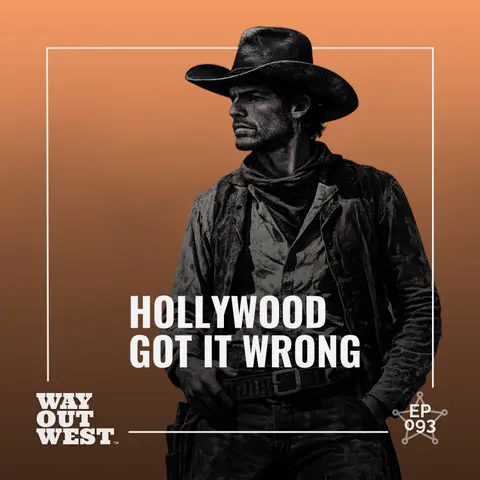
Hollywood gave us gunfights, spotless hats, and mysterious drifters riding into the sunset. But the real West was built by hard work, endurance, and responsibility. In this episode, we separate six popular cowboy myths from the fascinating realities behind frontier life.
6 Cowboy Myths Hollywood Got Wrong
The Real West vs. the Movie West
For more than a century, Hollywood has shaped how people imagine the American cowboy.
Fast-draw gunfights.
Spotless hats and polished boots.
Lone drifters riding from town to town with no responsibilities and no roots.
But how much of that image was actually true?
In this episode of Way Out West, explore six cowboy myths Hollywood got completely wrong, and the fascinating realities behind them. From the truth about frontier gunfights and saloons to the hard realities of ranch work, cattle drives, and life on the frontier, this episode separates movie legend from historical reality.
Along the way, we also look at the real diversity of the cowboy workforce, the influence of Mexican vaqueros, and the quieter forms of toughness that truly defined life in the American West.
Because the real West was rarely as glamorous as the movies portrayed it to be. But it may have been far more impressive.
What You’ll Hear
- Why Hollywood exaggerated gunfights in the Old West
- The practical reasons behind cowboy clothing and gear
- The truth about the “lone drifter” myth
- How difficult real cowboy labor actually was
- The overlooked diversity of the American cowboy
- Why resilience mattered more than bravado on the frontier
Cowboy Glossary Term of the Week
Maverick: Originally tied to Texas rancher Samuel Maverick, the term “maverick” referred to unbranded cattle roaming the range. Over time, the word came to describe an independent-minded person unwilling to follow the crowd.
Ride Way Out West
If you enjoyed this episode, make sure to subscribe to Way Out West wherever you listen to podcasts.
You can also explore more stories, articles, and episodes celebrating the history, culture, and legacy of the American West at Way Out West
Follow along for more frontier history, cowboy wisdom, ranching heritage, and stories from the open range.
Your Turn! Share your thoughts → howdy@ridewayoutwest.com
Support the Show: Buy me a coffee → https://buymeacoffee.com/thecowboycpa
03:32 - Chapter 1 - The Myth of Constant Gunfights
05:04 - Chapter 2 - The Myth of the Spotless Cowboy
06:22 - Chapter 3 - The Myth of the Lone Drifter
07:45 - Chapter 4 - The Myth of the Fancy Cowboy Lifestyle
08:50 - Chapter 5 - The Myth That Cowboys Were All the Same
09:58 - Chapter 6 - The Myth That Cowboys Never Failed
11:25 - Chapter 7 - Closing Thoughts
12:15 - Chapter 8 – Buster the Bull & Cowboy Glossary Term of the Week
12:59 - Chapter 9 - Thanks for Listening
Hollywood gave us a version of the American West that still shapes how millions of people picture cowboys today.
Fast gunfights in dusty streets.
Perfect hats.
Spotless shirts.
Lone drifters riding from town to town without responsibility or roots.
And while those stories made for great movies… they often missed the reality of cowboy life entirely.
Because the real West was not built by dramatic shootouts.
It was built by work.
Long days in the saddle.
Dust storms.
Broken fences.
Cold mornings.
Cattle drives.
Horse wrecks.
And communities that depended on people doing difficult jobs well.
The truth is, the real cowboy life was usually quieter, harder, dirtier, and far more practical than Hollywood ever wanted to admit.
And strangely enough… that reality might actually be more interesting than the myths.
[MUSIC]
Howdy. Chip Schweiger, here.
Welcome to another edition of Way Out West.
Where the stories of the American West are told…
Cowboy wisdom is earned…
And the legacy of the American cowboy still rides on.
There’s an image people carry in their minds when they think about the American West.
A rider silhouetted against the sunset.
Leather creaking in the saddle.
A six-shooter hanging low on the hip.
Dust rolling through a frontier town
a piano echoes from somewhere inside a saloon.
And for more than a century… Hollywood helped build that image.
Movies turned the cowboy into something larger than life.
Part warrior.
Part outlaw.
Part philosopher.
But out beyond the movie screen, the real West was often quieter than that.
More work than drama.
More endurance than glory.
The people who built the West usually weren’t trying to become legends.
They were trying to survive weather.
Protect cattle.
Earn a paycheck.
Raise families.
And carve a life out of difficult country.
And maybe that’s why the real stories still matter.
Because underneath all the myths and movie scenes… there was still something undeniably real about the people who lived it.
After the episode, check out the show notes at WayOutWestPod.com/
[MUSIC}
Welcome back.
Today we’re talking about cowboy myths Hollywood got completely wrong.
Now to be fair—Hollywood gave us some incredible Western films.
Some of them captured parts of the West beautifully.
But movies also created a version of cowboy life that became larger than reality.
And over time… people started confusing the movie West with the real one.
So today, let’s separate a few myths from the truth.
Chapter 1 - The Myth of Constant Gunfights
If Hollywood taught people one thing about the West… it’s that every town apparently experienced three shootouts before lunch.
A stranger walks into town.
Somebody insults somebody.
Hands hover over revolvers.
Music builds.
Then suddenly half the town is shooting.
The reality?
Most cowboys rarely participated in gunfights at all.
Cowboys were laborers.
Young working men.
Many were in their late teens or early twenties.
They spent far more time handling cattle than handling pistols.
And towns in the West often had surprisingly strict gun rules.
Places like Tombstone and Dodge City frequently required visitors to surrender firearms upon entering town limits.
Why?
Because merchants, saloon owners, and lawmen understood something very practical:
Gunfights were bad for business.
Most famous shootouts were remembered precisely because they were unusual.
And Hollywood also exaggerated the “fast draw” duel.
Real violence in the West was often sudden, chaotic, ugly, and unfair.
Not dramatic contests between noble rivals standing twenty feet apart.
The movie version looked cleaner.
But the reality was usually messier and more human.
Chapter 2 - The Myth of the Spotless Cowboy
Hollywood cowboys always seem to look freshly dressed.
Crisp shirts.
Perfect hats.
Clean boots.
Meanwhile the real cowboy West involved:
Dust.
Mud.
Sweat.
Rain.
Smoke.
And months spent outdoors.
Clothing was about function first.
A wild rag was not fashion.
It protected the neck from sun, cold, and dust.
Chaps protected legs from brush, cactus, weather, and rough country.
Big hats provided shade and rain protection.
And no working cowboy expected to stay clean very long.
The West could be brutal on gear.
Clothes wore out.
Boots cracked.
Hats lost shape.
And many cowboys owned fewer clothes than Hollywood wardrobes would suggest.
That polished “cowboy look” people associate with the West today?
A lot of it developed later through rodeo culture, Western shows, television, and modern Western fashion.
The real working cowboy usually cared more about durability than appearance.
Chapter 3 - The Myth of the Lone Drifter
Hollywood loves the lonely cowboy.
No family.
No responsibilities.
No roots.
Just a mysterious man riding endlessly toward the horizon.
Now sure—drifters existed.
But most cowboys were part of crews, ranches, families, or communities.
The West actually depended on cooperation.
Trail drives required teamwork.
Roundups required teamwork.
Branding season required teamwork.
Even survival often depended on neighbors helping neighbors.
A ranch hand who refused to work with others probably didn’t last long.
And many cowboys eventually settled down.
They married.
Raised families.
Worked ranches for years.
Some became business owners.
Lawmen.
Farmers.
Freight operators.
Hollywood preferred the wandering outsider because it created drama.
But the real West was often built by people staying somewhere long enough to build something.
And honestly… that may be one of the biggest truths Hollywood missed.
The West wasn’t only built by independence.
It was built by responsibility.
Chapter 4 - The Myth of the Fancy Cowboy Lifestyle
Movies often make cowboy life look adventurous and glamorous.
But historically?
Cowboy work was exhausting.
Long cattle drives involved:
Bad weather.
Dangerous river crossings.
Stampedes.
Poor sleep.
Monotony.
Loneliness.
A cowboy might spend ten or twelve hours in the saddle day after day.
Food was simple.
Conditions were rough.
And the pay usually wasn’t very impressive either.
Many cowboys were seasonal workers trying to make a living the best they could.
The saloon-and-gambling version of the West became exaggerated because those moments were more entertaining than watching somebody mend fence for eight hours.
But real cowboy life involved enormous amounts of routine labor.
And that labor mattered.
Because those ranches fed growing cities.
Built regional economies.
And helped shape the American West itself.
Chapter 5 - The Myth That Cowboys Were All the Same
One of Hollywood’s biggest mistakes was simplifying who cowboys actually were.
The real West was deeply diverse.
Mexican vaqueros shaped much of cowboy culture long before Hollywood Westerns existed.
Many cowboy traditions, riding techniques, gear, and words came directly from Spanish and Mexican influence.
Native Americans influenced horsemanship, survival knowledge, trade routes, and life across the frontier.
Black cowboys played major roles in ranching and cattle drives.
Historians estimate that roughly one in four cowboys may have been Black.
And cowboys came from all kinds of backgrounds:
Civil War veterans.
Immigrants.
Former farmers.
Freedmen.
Young men looking for opportunity.
Hollywood often reduced the cowboy into a single image.
But the real West was far more complicated than that.
And honestly… more interesting because of it.
Chapter 6 - The Myth That Cowboys Never Failed
Hollywood cowboys are usually portrayed as fearless.
Confident.
Tough.
Always in control.
The hero rides into town.
Wins the fight.
Gets the girl.
Rides away.
But the real West involved failure constantly.
Horses bucked people off.
Blizzards wiped out cattle herds.
Drought ruined ranches.
Investments collapsed.
People got lost.
Cowboys got hurt.
A trail boss could make one bad decision and lose thousands of cattle.
And one thing the real West demanded was resilience.
You got up the next morning anyway.
That may actually be one of the most authentic parts of cowboy culture that survived into modern times.
Not toughness in the loud Hollywood sense.
But toughness in the quieter sense.
The ability to keep going.
To solve problems without complaining constantly.
To adapt.
To endure bad seasons.
Because the frontier punished arrogance very quickly.
Weather didn’t care how tough somebody looked.
Neither did a spooked horse.
Or a flooded river crossing.
The real cowboy life was full of setbacks.
And maybe that’s exactly why people still admire it today.
Not because it was easy.
But because people kept riding anyway.
Chapter 7 - Closing Thoughts
The strange thing about Hollywood myths is this:
They survived because they touched something people still admire.
Courage.
Freedom.
Self-reliance.
Adventure.
But the real West was never as simple as the movies made it appear.
The real story involved work.
Responsibility.
Community.
And endurance.
And maybe that’s why the American West still matters today.
Because underneath all the mythology… there really were people who learned how to survive hard country, solve difficult problems, and build lives under demanding conditions.
Not perfect people.
Not mythical heroes.
Just real people.
And sometimes the truth is even more powerful than the legend.
Chapter 8 – Buster the Bull & Cowboy Glossary Term of the Week
Before we close out for this week, we’ve got one more thing…
[BULL SOUND]
Yep, that distinctive call means Buster the Bull is back. And that means it’s time for our Cowboy Glossary Term of the Week.
This week’s cowboy glossary term is: Maverick
Today people use the word “maverick” to describe an independent thinker.
But the term originally came from Texas rancher Samuel Maverick, who reportedly refused to brand his cattle.
As unbranded cattle spread across the range, people started calling them “mavericks.”
And eventually the word became associated with people who refused to follow the herd.
Chapter 9 - Thanks for Listening
Well, that’s about all for this episode of Way Out West.
I appreciate you taking time out of your day to spend with me.
If you enjoyed this episode…
Make sure you’re subscribed wherever you get your podcasts.
And if you’d like to support this work, I’ll never say no to a cup of coffee. There’s a link in the show notes about how you can buy me one.
Thanks in advance. It means a lot.
Until next time, this is Chip Schweiger reminding you:
The West was never as clean or simple as the movies made it look.
But maybe that’s exactly what made it real.
We’ll see ya down the road.