Ride for the Brand (Encore): The Cowboy Code That Still Matters
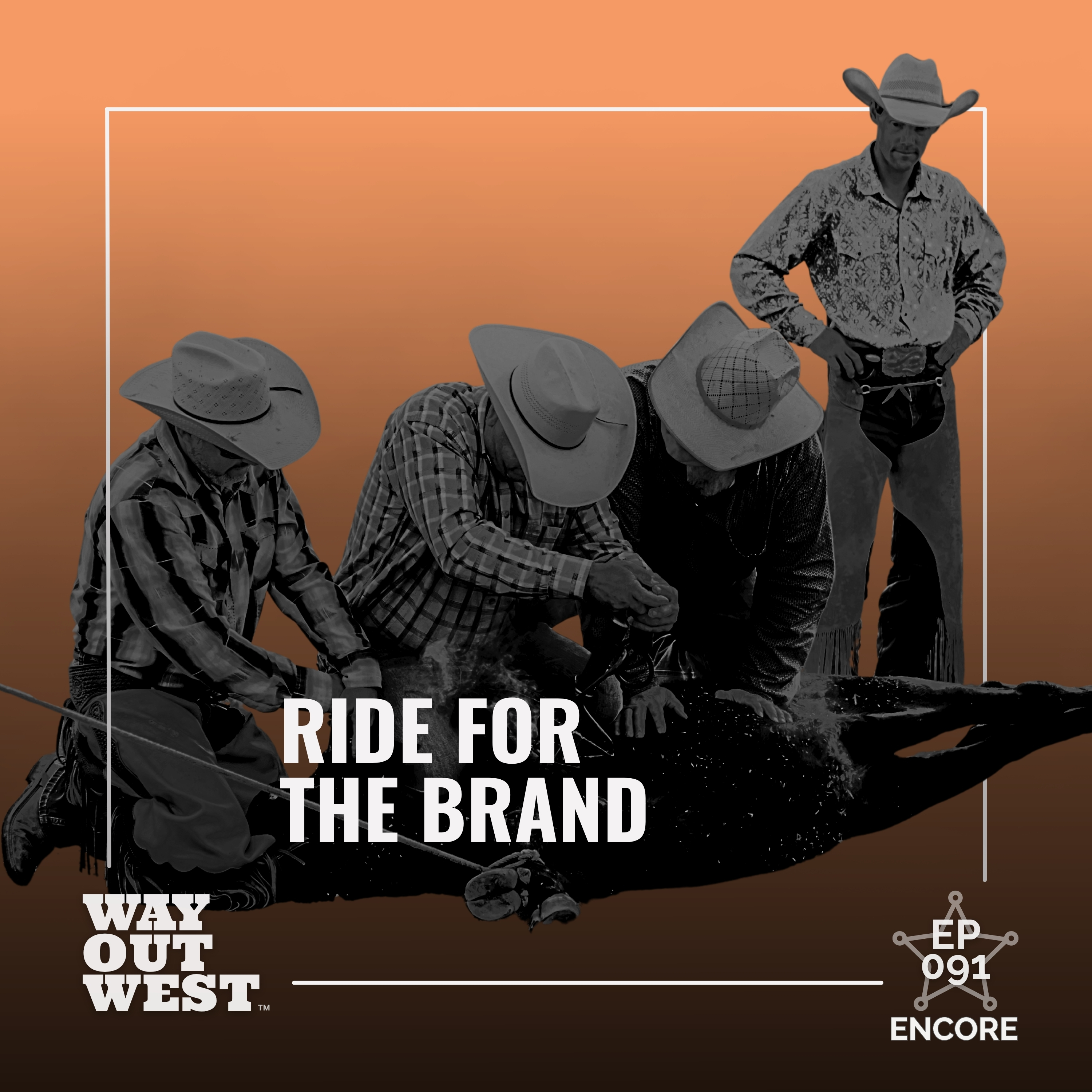
An encore worth another listen. Ride for the Brand explores the code behind cowboy life, loyalty, responsibility, and carrying your weight, and why those principles still matter far beyond the saddle and the open range.
Ride for the Brand (Encore): The Cowboy Code That Still Matters
Some things don’t need to be updated. They just need to be heard again.
This week on Way Out West, we’re bringing back an episode from the archives—Ride for the Brand—because the idea at its center still carries weight.
Over the last stretch of episodes, we’ve talked about what cowboy life demanded: hard work, long days, and a willingness to stay in the saddle when conditions turned rough. But underneath all of that was something quieter… a code.
“Ride for the brand” wasn’t just ranch language. It was a way of carrying yourself. A standard of loyalty, responsibility, and showing up when it counted.
And while the open range may have changed, the need for those values hasn’t.
In this encore episode, Chip reflects on the cowboy code and explores how its lessons still apply far beyond ranch country—in business, relationships, leadership, and everyday life.
If you’ve heard this one before, it may land differently now.
If you haven’t, it’s one of the clearest windows into what Way Out West is really about.
In This Episode, You’ll Hear
- What “ride for the brand” truly meant on the frontier
- Why loyalty in the West had to be earned
- The expectations placed on working cowboys
- How cowboy values shaped ranch culture
- Why integrity and responsibility still matter today
- The connection between Western heritage and modern life
Cowboy Glossary Term of the Week
Circling the Wagons: In the Old West, “circling the wagons” referred to pioneers arranging their wagons in a circle—or sometimes a rectangle—at night to create a makeshift defensive camp. The enclosure helped protect livestock and settlers from wild animals, thieves, and other dangers encountered on the trail.
Over time, the phrase also came to mean people pulling together in support of one another during difficult times.
Ride Way Out West
If you enjoyed this episode, make sure you’re subscribed wherever you get your podcasts.
Share your thoughts → howdy@ridewayoutwest.com
Support the Show: Buy me a coffee → https://buymeacoffee.com/thecowboycpa
Follow Along: Instagram → https://www.instagram.com/RideWayOutWest
00:00 - Why This Archive Episode Returns
01:45 - What Riding For The Brand Means
02:43 - Thank You And Why It Matters
03:16 - Loyalty As The Cowboy Code
07:31 - Choosing A Brand Worth Riding
08:39 - Bringing The Code Into Work
11:33 - Cowboy Glossary Circling The Wagons
12:58 - Closing Message And Listener Stories
Why This Archive Episode Returns
Speaker
Howdy Chip Schweiger here. Before we get into this week's episode, I wanted to do something just a little bit different. So I'm stepping back for a moment and bringing back one from the archives. An episode called Ride for the Brand. Now there's a reason for it. Over the last stretch of episodes, we've talked a lot about what the job looked like, how a cowboy got hired, and why most didn't last. But underneath all of that was something quieter, something that didn't always get said out loud. This episode gets at that. It's about the code behind the work. The idea of riding for the brand, not just on horseback, but in the way a man carries himself, keeps his word, and shows up when it counts. You'll hear a quick thank you to the audience early on, and I'm leaving that in, because it still stands, probably now more than when I first said it. And you'll also hear me draw a line between the cowboy world and the one most of us are living in today. And that part matters just as much. So if you've heard this one before, listen to it again with fresh ears. And if you haven't, this is a good place to understand what Way Out West is really about. I'll be back next week with a brand new episode in a brand new season. Welcome to another edition of Way Out West. The podcast that takes you on a journey through the stories of the American West, brings you the very best cowboy wisdom, and celebrates the cowboys and cowgirls who are feeding a nation. You ever heard the phrase riding for the brand? Way Out West, that meant something. It wasn't just a paycheck, it wasn't just a job, it was a code, a way of life. So today on the show, we're diving into it. We're talking about loyalty, what it meant on the range, what it meant to ride for the brand, and how those values still matter today. After the episode, check out the show notes at WayoutWestpod.com forward slash ride for the brand. Howdy and welcome back. Before we get to this week's episode, I want to thank you for something. We are quickly becoming one of the top podcasts of the Western world, and that's because of you. Every episode you listen to, every time you share it with family and friends, and every review or rating you leave makes an impact in getting this to more people to talk more about our way of life. So thank you. I'm honored to ride with you. Okay, let's talk about this concept of riding for the brand. It gets thrown around a lot sometimes, but I'm not always sure we completely understand what it means, and more importantly, what it means in our lives. Let's start simple. Riding for the brand meant you were loyal to the outfit you worked for. The brand? That was the symbol burned onto cattle. But it stood for more than just livestock. It stood for a ranch's name, its reputation, and its people. To ride for the brand meant you represented all of that. You didn't badmouth the ranch, you didn't quit when things got hard, you didn't steal, lie, or cheat your boss. You rode, you worked, you showed up. Rain, shine, or dust storm. And in return, you got more than wages. You got belonging. Cowboys didn't write this down in rule books, but they sure lived it. It was part of what we now call Code of the West. And I talked about this in episode 19. The fact that a handshake mattered. Your word was gold. Loyalty wasn't an option, it was expected. You were loyal to your brand, and the brand was loyal to you most of the time. Of course, there were bad bosses and rough deals, but the ideal that was strong and it stuck. Here's what writer Louis Lemour said about it. When you ride for the brand, you looked out for what it stood for. And that's really what I think is at the heart of it. Let's paint a picture. Imagine a cowboy out on a week-long roundup, sleeping on the cold ground, eating beans out of a Dutch oven, herding cattle through thunderstorms and swollen rivers and rattlesnake country. Nobody's watching, nobody's grading him, but he still does the job right. Why? Because he's riding for the brand. Because that outfit gave him a place, a purpose, and he's not about to let it down. He doesn't cut corners, he doesn't sneak off early, he doesn't gripe about the work. That loyalty, it wasn't about being told what to do. It was about owning your role. Here's something folks sometimes miss. Riding for the brand wasn't just about the ranch owner. It was about your crew, your fellow riders, your cook, your wrangler, even that old dog sleeping under the wagon. You were part of a team, and when you're part of something bigger than yourself, you pull harder, you show up stronger. There's an old cowboy quote: if you're not willing to do your part, best stay off of the trail. That's riding for the brand. Now here's the kicker. This idea, it ain't dead. You can ride for the brand today. Doesn't have to be a ranch, maybe it's a company, maybe it's your own family name, maybe it's your community, your values, or your mission. When you sign on to something, when you say yes, do it like you're riding for the brand. Be loyal, be dependable, stick it out when the trail gets rough. That cowboy mindset, it still works in business and in life and in leadership. And if you're the one with the brand, if you're the boss, the founder, the one folks ride for, make sure your brand's something worth riding for. Treat people right, honor your word, pay fair, work fair, and care for your crew. Because loyalty goes both ways, always has. That's being taken for a ride. Cowboys knew when it was time to move on, but they didn't burn bridges. They rode out with dignity. So, yes, ride for the brand, but pick your brand carefully. Let's take a quick break, and when we come back, I want to talk more about riding for the brand and why it still matters today. Be right back. So check this out. Frank Pistol Pete Eaton wasn't just the face behind a few college mascots. He was a living legend. A crackshot by the age of 15, Eaton set out on a relentless quest to avenge his father's murder, one outlaw at a time. On the next episode of This Week in the West from my friends at the National Cowboy and Western Heritage Museum, dig into the real story of the man who became a frontier icon. You can find it at NationalCowboymuseum.org or on your favorite podcast app. Oh, and spoiler alert on Pistol Pete, it's wilder than the myth. New episodes drop every Monday. Here's where riding for the brand starts to matter today. You don't have to work on a ranch to ride for a brand. We all have a brand, whether it's a company, a cause, a community, or your own last name. When you agree to something, a job, a partnership, or a marriage, ride for it. Show up, take ownership, give it your best, even when nobody's watching. That cowboy ethic, it still works in boardrooms, in small businesses, classrooms, and on job sites. Here's a question worth asking. Whatever you're part of, are you just punching the clock or are you riding for the brand? And if you're leading, would you ride for your own brand? This old idea still has power, especially in a world full of shortcuts and finger pointing. We need more folks who show up early, stay late, and do the job right. Not for applause, but because it's the right thing to do. Now let's flip it around. Maybe you own the brand, maybe you run the business, you're the trail boss. Then here's the question. Are you building something people want to ride for? Because loyalty goes both ways. If you treat folks like tools, you get the bare minimum. But if you lead with integrity, fairness, and grid, well, you get a crew that sticks with you when the herd scatters and the storm rolls in. A cowboy boss didn't have to bark orders. He earned respect by living the code, by backing his crew, and by being the kind of man folks wanted to ride for. This still holds true whether you're running a ranch or a company with 50 employees. You want to build a strong team? Hire folks who ride for the brand. People who take pride in their work and people who care. And here's the secret to keeping them: give them a reason to stay. Let them take ownership. Trust them. Back them when it's tough, and let your brand mean something. If you're building a business today, build one that lives on the old cowboy code, where your handshake still matters, where loyalty is earned, and where people are proud to ride for your brand. So let's ride back around here. Riding for the brand isn't just about saddles and spurs, it's about loyalty, integrity, commitment. It's about doing a job even when the weather's bad, even when you're tired, even when no one's watching. And whether you're running cattle or crunching numbers, those values still matter. The West may have changed, but the code, that's timeless. Okay, we're almost done for this week, but before we go, we've got one more thing, and I think you know what it is. Yep, that distinctive call from Busser the Bull means it's time for the cowboy glossary term of the week. And this week's term is circling the wagons. Now, in the Old West, circling the wagons referred to pioneers arranging their wagons in a defensive circle or a rectangle at night to create a sort of makeshift stockade for livestock and for the protection against wild animals, thieves, and less commonly, potential attacks. You wanted to circle the wagons to create a corral for livestock, preventing them from wandering off or being stolen. But here's something you may not know. While the phrase is often associated with defensive measures against Native Americans, circling the wagons was really more about securing livestock and camp safety than about preparing for direct attacks. The resulting arrangement of wagons formed a temporary sort of fortification, sometimes referred to as a wagon fort or as a wagon fortress. Now, when you hear someone use the modern-day phrase circle the wagons, meaning to unite or prepare, you'll know what it really means. And that does it for this week's episode. Thanks for riding along with me today. If you've enjoyed this episode, do me a favor, send it to someone you trust to ride with you. And if you've got your own ride for the brand story, I'd love to hear it. Shoot me a message or even record an audio message at my website, and I'll put it on the air in a future episode. This is Chip Schweiger reminding you to ride with heart, lead with honor, and always, always ride for the brand. We'll see you down the road.