Riding Night Guard: Watching Cattle While the Rest of the World Sleeps
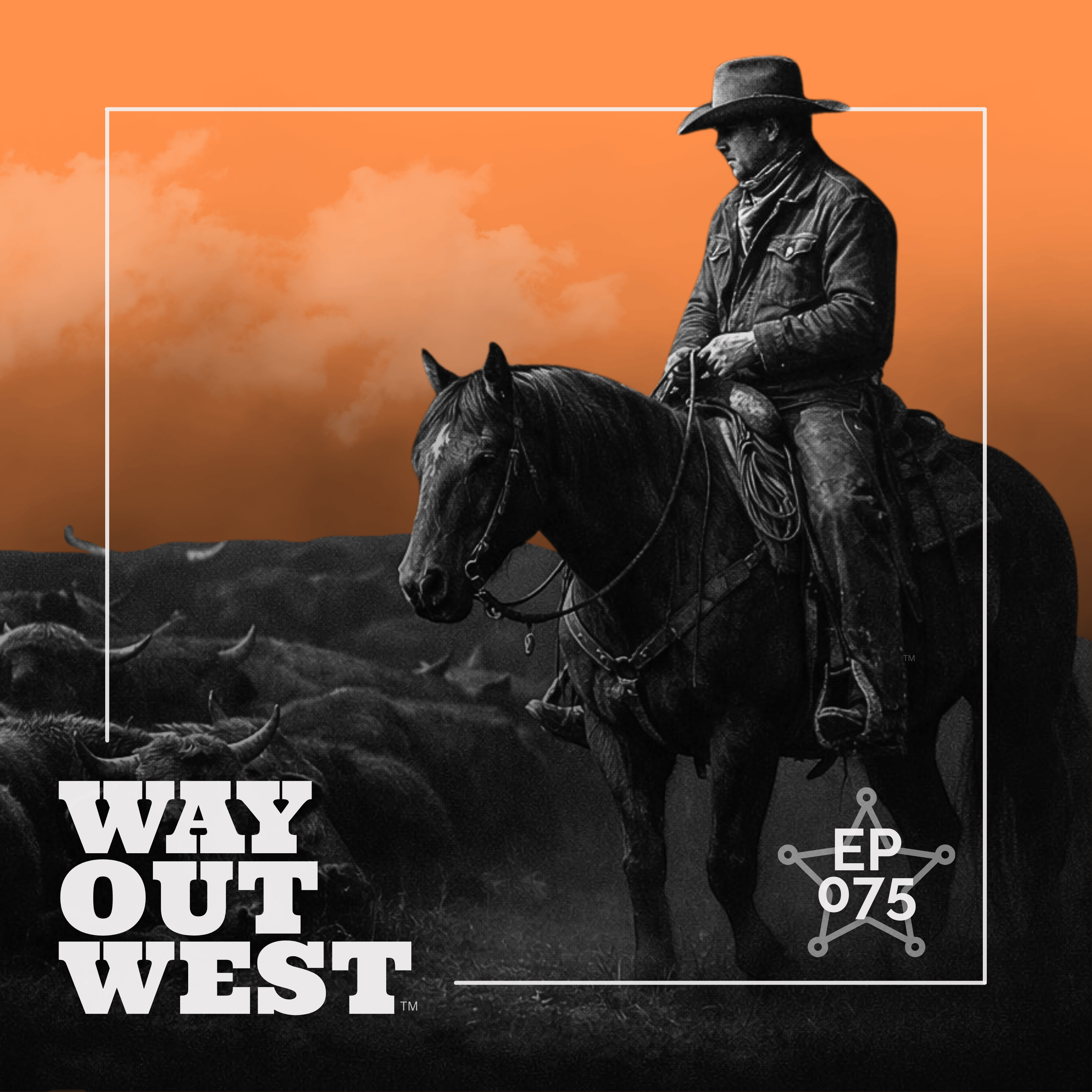
When the herd was bedded down and the camp finally went quiet, someone stayed awake. Riding night guard meant slow circles in the dark, low songs carried on the night air, and the responsibility of keeping calm while the world slept. This is the story of that unseen work.


When most of the trail crew rolled into their bedrolls, the work wasn’t finished.
Night guard was one of the most important and least celebrated jobs on the cattle trail. While others slept, a cowboy rode slow circles around a bedded-down herd, listening, watching, and keeping cattle calm through the most dangerous hours of the night.
In this episode of Way Out West, ride into those quiet hours to explore what night guard really was, why it demanded patience and skill, and how one wrong sound could undo a full day’s work. We look at the risks of the night, the kind of cowboys trusted with this responsibility, and the horses that carried them through the dark.
We also revisit the role of cowboy music—not as entertainment, but as a working tool. Sung low and steady, these songs helped soothe cattle, prevent stampedes, and bring a sense of rhythm and calm to the long hours before dawn.
Finally, this episode reflects on what night guard still teaches us today: that some of the most important work happens quietly, without recognition, and often while everyone else rests.
In This Episode, You’ll Hear:
- What riding night guard actually involved on a cattle drive
- Why were the night hours often more dangerous than the day
- How cattle behaved after dark, and what could trigger a stampede
- The role of cowboy music in keeping herds calm
- What cowboys thought about during long, lonely night shifts
- Why unseen work and quiet responsibility mattered on the trail
Cowboy Glossary Term of the Week
Cattle Lullaby
A slow, steady song sung by cowboys on night guard to soothe a bedded-down herd. These low, simple tunes helped keep cattle calm and prevent stampedes during the night hours.
Listen & Learn More
This episode pairs naturally with our earlier exploration of cowboy music and the role songs played on the trail—not for performance, but for survival.
Enjoying the ride? Saddle up with us:
Transcript: For a full transcript of this episode, click on "Transcript"
Your Turn! Share your thoughts → howdy@cowboyaccountant.com
Support the Show: Buy me a coffee → https://buymeacoffee.com/thecowboycpa
Follow Along: Instagram → https://www.instagram.com/RideWayOutWest
03:02 - Chapter 1: Setting the Scene
03:48 - Chapter 2: What the Night Guard Really Was
05:24 - Chapter 3: The Enemy Wasn’t Just Predators
06:00 - Chapter 4: The Cowboy’s Voice in the Dark
06:35 - Chapter 5: Tying Back to Cowboy Music
07:15 - Chapter 6: Loneliness on the Night Shift
07:56 - Chapter 7: Skill, Not Romance
09:32 - Chapter 8: The Horse’s Role
10:01 - Chapter 9: Why Night Guard Mattered
11:17 - Chapter 10: A Modern Reflection
12:52 - Chapter 11: Buster the Bull & the Cowboy Glossary Term of the Week
13:34 - Chapter 12: Thanks for Listening
Most of the West didn’t sleep all at once.
Not on the trail.
Not with a thousand head of cattle bedded down under a restless sky.
While towns went quiet and lamps were turned low…
someone stayed awake.
Listening.
Watching.
Riding slow circles through the dark.
This was the cow hand riding night guard.
And it might’ve been the loneliest job on the trail.
[MUSIC]
Howdy. Chip Schweiger, here.
Welcome to another edition of Way Out West—
the podcast that takes you on a journey through the stories of the American West,
brings you the very best cowboy wisdom,
and celebrates the legacy of the American cowboy
While towns went quiet and lanterns dimmed behind saloon windows,
someone stayed awake.
A lone rider moved slow through the dark.
Hooves careful.
Voice lower than a whisper.
Circling the herd not to push it—but to reassure it.
Because in the night, calm mattered more than speed.
And one wrong sound could undo a day’s hard work.
So, today on the show, we’re riding into those quiet hours on the cattle trail—exploring the job known as night guard, the men who stayed awake while others slept, and how low, steady songs became working tools to keep the herd calm and the night from breaking loose.
After the episode, check out the show notes at WayOutWestPod.com/riding-night-guard
[MUSIC]
Welcome back.
Last week, we talked about what happened the next day—
after the music faded,
after the crowds thinned out,
and cowboys swung back into the saddle to get on with the work of the trail.
But before that…
we followed them into town.
Into boardwalks and saloons.
Bright lights.
Bad decisions.
And the brief escape that came when a long drive finally ended.
Taken together, those two episodes showed us both sides of cowboy life—
the noise and the quiet,
the celebration and the responsibility.
So this week, we stay with the work…
but we move it into the hours most people never saw.
Because when the herd was bedded down,
and the camp finally went still,
someone still had to stay awake.
Tonight, we’re riding night guard.
Chapter 1: Setting the Scene
Picture the open range at night.
No fence lines stretching off into the dark.
No town lights on the horizon.
Just cattle, bedded down in uneven clusters, breathing slow and heavy.
Horses flicking ears at sounds you can’t quite place.
And above it all—
a sky so full of stars it feels close enough to touch.
This is when the trail really tested a cowboy.
Not at noon, under a hard sun.
Not during a river crossing with men shouting and ropes snapping tight.
But here.
In the quiet.
When one wrong sound could send a herd into chaos.
Chapter 2: What the Night Guard Really Was
The Night guard wasn’t glamorous.
It was usually pulled in shifts—two or three hours at a time.
A cowboy would swing into the saddle, ease his horse forward, and begin riding slow circles around the herd.
Not too close.
Not too far.
Close enough to feel the cattle.
Far enough not to crowd them.
His job was simple on paper:
keep the herd calm and prevent a stampede.
But the reality was anything but simple.
Sometimes, the night guard failed.
Not because a cowboy didn’t care—
but because the West didn’t leave much room for mistakes.
A sudden clap of thunder could crack open the sky.
Lightning would roll, close and sharp,
and cattle—already uneasy—would rise all at once.
One animal bolts.
Another follows.
And in seconds, the dark comes alive with movement.
Men were jolted awake, grabbing reins and saddles by feel alone.
Horses snorted.
Voices shouted—too loud, too fast—only making it worse.
In the chaos, riders were thrown.
Horses went down.
Cattle scattered into country that might never give them back.
By morning, the damage showed itself quietly.
Broken gear.
Limping horses.
Missing cattle.
Sometimes a man didn’t ride again after a night like that.
That’s why night guard mattered.
Because preventing disaster was always easier than surviving it.
Chapter 3: The Enemy Wasn’t Just Predators
Sure, wolves or coyotes could stir things up.
So could lightning, sudden rain, or a clap of thunder rolling across the plains.
But more often than not…
it was imagination.
A steer bumping another in the dark.
A horse snorting at a shadow.
A stray sound echoing just wrong.
Cattle are prey animals.
When one spooks, the rest follow.
And once a stampede started at night—
men were injured.
Horses were lost.
Sometimes lives ended before dawn.
Chapter 4: The Cowboy’s Voice in the Dark
This is where something unexpected entered the picture.
Not a gun.
Not a rope.
A song.
Cowboys learned early that cattle responded to calm, familiar sounds.
A low voice carried on the night air.
A tune without sharp edges.
Not performed.
Not loud.
Just… steady.
Many of the songs we now think of as cowboy music were born right here—
on the night guard.
Not for applause.
But for survival.
Chapter 5: Tying Back to Cowboy Music
If you’ve read my blog article on cowboy music, you know this already:
those old trail songs weren’t written for stages or saloons.
They were tools.
Songs like “Git Along, Little Dogies” or “The Old Chisholm Trail” weren’t about storytelling first—they were about rhythm.
A rhythm that matched a horse’s walk.
A rhythm that told cattle everything was fine.
The cowboy sang not to entertain himself…
but to settle the herd.
Music as labor.
Music as responsibility.
Chapter 6: Loneliness on the Night Shift
Now imagine being that cowboy.
Your shift starts around midnight.
The fire has burned down to coals.
The others are rolled up in their bedrolls.
You’re alone with your horse, your thoughts, and the cattle.
This was when homesickness hit hardest.
When worries about money, weather, or family came creeping in.
Some cowboys hummed.
Some sang full verses.
Some just talked softly to their horse.
The songs sung weren’t always for the cattle.
Sometimes it was for the man singing it.
Chapter 7: Skill, Not Romance
Hollywood later turned night guard into a poetic image.
A lone rider under the stars, singing softly.
And yes—it was beautiful.
But it was also skilled work.
A good night guard rider knew how to read cattle in the dark.
Knew when to sing… and when silence was better.
Knew when to ease a horse forward—or stop dead still.
This wasn’t the place for rookies.
One mistake could undo months of hard work on the trail.
And pulling Night guard gave a man too much time to think.
During the day, there was dust, noise, and orders to follow.
At night, there was only the rhythm of a horse’s walk
and the sound of cattle breathing in the dark.
This is when homesickness crept in.
A wife left behind.
A mother waiting on a letter that might never come.
Pay that depended on the drive making it through.
Some men counted cattle just to stay focused.
Others replayed old conversations in their heads.
Some thought about injuries that hadn’t healed
because there was no time for them to.
The songs helped—but not always.
Sometimes a cowboy sang just to hear another voice in the dark.
To remind himself he was still there.
Still moving.
Still doing his job.
Night guard didn’t just test skill.
It tested a man’s ability to stay steady
when no one was watching.
Chapter 8: The Horse’s Role
The horse mattered just as much as the man.
A night horse had to be steady.
Unflappable.
Willing to walk slow, hour after hour.
Some horses learned the songs, too.
They relaxed when their rider sang.
They knew the sound meant calm—not danger.
Man, horse, cattle—
all moving to the same quiet rhythm.
Chapter 9: Why Night Guard Mattered
Night guard didn’t make headlines.
It didn’t show up in dime novels the way gunfights did.
But without it—
the cattle drives don’t work.
No beef reaches railheads.
No towns grow.
No ranching economy survives.
It was unseen labor.
Quiet responsibility.
The kind of work that holds everything else together.
Now the best moment of the night guard wasn’t the start of the shift.
It was first light.
The stars faded slowly, one by one.
The eastern sky took on a pale wash of gray and pink.
And the herd—still calm—rose without panic.
A night rider eased sore legs out of the saddle.
A horse stretched its neck, blowing softly into the cool air.
Coffee fires came back to life.
There was relief in daylight.
Not because the work was over—
but because the danger had passed.
If the herd made it through the night,
everything else felt possible.
Every Night guard ended without ceremony.
No praise.
No applause.
Just the quiet knowledge that the job had been done
and another day could begin.
Chapter 10: A Modern Reflection
There’s something about riding night guard that stays with you.
Not because it was dramatic—
but because it was quiet.
It reminds us that not all important work is visible.
Not all responsibility comes with recognition.
And not all danger announces itself loudly.
The cowboys who rode night guard weren’t doing it for praise.
Most of the crew was asleep.
No one was keeping score.
They stayed awake because someone had to.
Because if no one rode the dark hours,
everything that had been earned during the day
could unravel before morning.
And that idea carries forward.
Today, we still rely on people who do their work quietly.
People who hold things steady behind the scenes.
Who prevent problems instead of reacting to them.
The work looks different now—
but the responsibility feels the same.
There’s also something worth remembering about the songs.
Cowboy music wasn’t always meant to be heard.
It wasn’t written for crowds or stages or recordings.
Some of it was sung low,
to cattle that didn’t know the words
but understood the calm.
The song wasn’t the point.
The steadiness was.
And maybe that’s the lesson night guard leaves us with.
Sometimes the most meaningful thing you can do
is simply show up…
stay steady…
and keep things calm
when no one else is watching.
Because morning depends on someone
being willing to ride the dark.
Chapter 11: Buster the Bull & the Cowboy Glossary Term of the Week
OK—before we saddle up and ride outta here for this week, we’ve got one more thing.
[BULL SOUND]
Yep. That distinctive call from Buster the Bull means it’s time for the Cowboy Glossary Term of the Week.
And this week’s term is… Cattle Lullaby.
A cattle lullaby was the slow, steady song a cowboy sang on night guard—not to entertain, but to soothe a bedded-down herd. Sung low and without sharp edges, these simple tunes helped keep cattle calm, prevented stampedes, and turned music into one more working tool on the trail.
Chapter 12: Thanks for Listening
Well, that’s about all for this episode of Way Out West.
I appreciate you spending part of your day with me—and hope you enjoyed getting back onto the trail where every cowboy belongs.
If you enjoyed the show, please consider sharing it with a friend who loves a good Western tale. That helps us reach more fans of the American West.
And don’t forget to drop us a review on your favorite podcast app and connect with us on Instagram and Facebook.
Next time on Way Out West,
Winter didn’t knock.
It didn’t warn.
It just arrived.
In the late 1880s, a series of sudden blizzards swept across the Great Plains—
catching cowboys, cattle, and entire ranching operations completely unprepared.
Fences failed.
Herds vanished.
And the open range would never be the same again.
Next week, we’re telling the true story of the Great Plains blizzards of the 1880s—
and how one brutal winter changed the American West forever.
Until next week, this is Chip Schweiger reminding you—
some of the most important work in life
is done quietly,
while the rest of the world sleeps.
We’ll see ya down the road.