The Cowboy and His Horse: Trust, Survival, and the Open Range
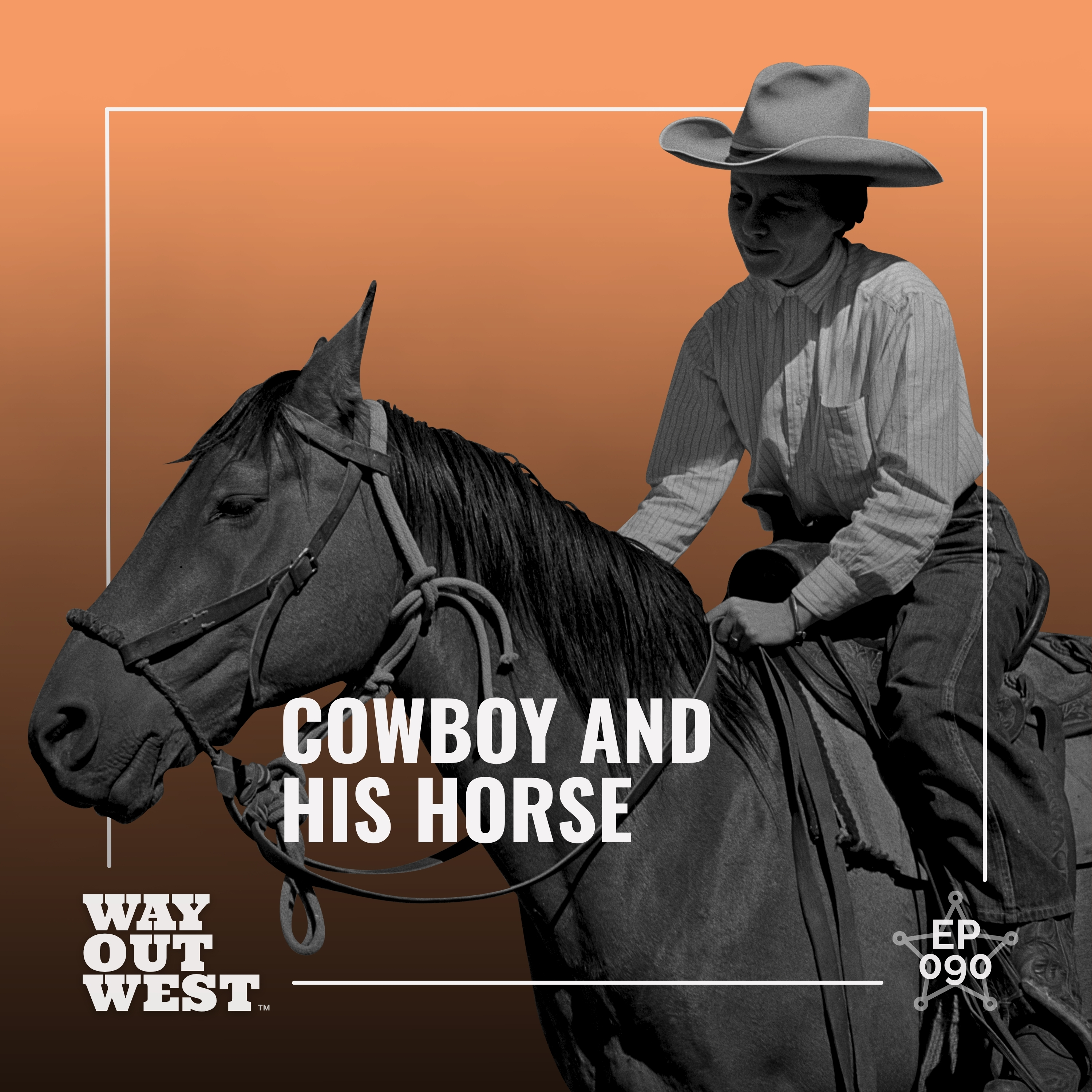
When everything went wrong on the range, one thing determined whether a cowboy stayed in the saddle—the horse beneath him. In this episode, we explore the trust, training, and partnership that made a horse more than transportation—it made the job possible.
"When the herd breaks and the storm rolls in… there’s only one thing between you and the ground."
The Cowboy and His Horse: Trust, Survival, and the Open Range
Out on the frontier, the horse wasn’t part of the job—it was everything
A storm rolls in. Low and fast. The kind that doesn’t ask permission.
The herd shifts. Then tightens. Then breaks.
And now it’s moving. Not where you want it to go… but where it wants to go.
You don’t have time to think.
No time to plan.
You move… or you get run over.
And in that moment—
There’s only one thing between you and disaster.
The horse beneath you.
In this episode of Way Out West, we step into the most important partnership on the frontier—not between men, but between a cowboy and his horse.
Because out on the range, a cowboy wasn’t just riding. He was trusting.
And when things went wrong… that trust was the difference between staying in the saddle—or not making it home at all.
From the Saddle
I’ve spent enough time around horses, and around people who really know them, to understand this isn’t something you fake.
It’s not about riding. It’s about feel. Timing. Trust.
And the more you think about it, the more you realize that kind of partnership doesn’t just show up when things go right. It shows up when they don’t.
What You’ll Hear
- Why the horse wasn’t part of the job—it was the job
- What separated an average horse from a true cow horse
- How trust between horse and rider was built over time
- The influence of vaquero horsemanship on the American cowboy
- Why that partnership mattered most when the work turned dangerous
Cowboy Glossary Term of the Week
Finished Horse: A fully trained, experienced, and reliable horse—especially in the vaquero tradition. A horse that’s been tested over time and can be trusted to stay steady when the work gets hard.
Ride Way Out West
If this episode gave you a deeper appreciation for the life behind the saddle, there’s more ahead.
Subscribe: so you never miss an episode
Support the Show: Buy me a coffee → https://buymeacoffee.com/thecowboycpa
Follow Along: Instagram → https://www.instagram.com/RideWayOutWest
And if you know someone who understands what it means to rely on something built over time—share this episode with them.
Because out there… What you built slowly… Was what carried you when it counted.
Every cowboy depended on one thing more than anything else… the horse beneath him.
02:13 - Chapter 1 - The Horse Was the Job
02:55 - Chapter 2 - Not All Horses Were Equal
03:42 - Chapter 3 - Built, Not Bought
04:27 - Chapter 4 - The Vaquero Foundation
05:13 - Chapter 5 - A Day in the Saddle
05:57 - Chapter 6 - When the Work Turns Hard
06:35 - Chapter 7 - The Wreck
07:09 - Chapter 8 - The Quiet Bond
07:50 - Chapter 9 - A Personal Reflection
08:26 - Chapter 10 - Closing Reflection
09:53 - Chapter 11 - Buster the Bull & Cowboy Glossary Term of the Week
10:30 - Thanks for Listening
A storm rolls in. Low and fast. The kind that doesn’t ask permission.
The herd starts to shift. Then tighten. Then break.
And now it’s moving. Not where you want it to go… but where it wants to go.
You don’t have time to think.
No time to plan.
You move…
or you get run over.
And in that moment—
there’s only one thing between you and disaster.
The horse beneath you.
[MUSIC]
Howdy. Chip Schweiger, here.
Welcome to another edition of Way Out West.
Where the stories of the American West are told…
Cowboy wisdom is earned…
And the legacy of the American cowboy still rides on.
This week… we’re talking about the most important partnership on the frontier.
Not between cowboys.
Not between ranchers.
Between a man…
and his horse.
Because a cowboy wasn’t just riding.
He was trusting.
Relying.
Depending.
Day after day.
Mile after mile.
Through heat…
through cold…
through dust that stuck in your teeth and wind that never seemed to quit.
And I’ll tell you this—
I’m not a cowboy.
But I’ve spent enough time around them…
and enough time around horses…
to know this isn’t something you fake.
You either understand that partnership…
or you don’t.
And when things went wrong—
and they did—
that partnership was the difference between staying in the saddle…
or not making it home at all.
After the episode, check out the show notes at WayOutWestPod.com/the-horse
[MUSIC}
Chapter 1: The Horse Was the Job
Welcome back.
If you strip it all down—
the horse wasn’t part of the job.
The horse was the job.
Everything a cowboy did…
started there.
You didn’t get to the cattle without a horse.
You didn’t move the herd without a horse.
You didn’t cover country without a horse.
And you didn’t last long…
without the right one.
This wasn’t occasional riding.
This was every day.
Sunup to sundown.
In the saddle so long your legs forgot what walking felt like.
And that kind of work…
it exposed everything.
Every weakness.
Every flaw.
In the rider…
and in the horse.
Chapter 2: Not All Horses Were Equal
Now here’s something worth understanding—
not every horse was cut out for this.
Some had the build.
Some had the speed.
But that wasn’t enough.
You needed a horse with sense.
A horse that didn’t lose its head
when things got loud…
or tight…
or unpredictable.
Cattle don’t move like machines.
They bunch.
They scatter.
They turn back on themselves.
And a good cow horse—
could read that.
Almost before it happened.
Shift its weight.
Cut off a steer.
Hold a line.
All without being told every step.
That’s not training alone.
That’s instinct…
refined by work.
Chapter 3: Built, Not Bought
You could buy a horse.
But you couldn’t buy a partnership.
That had to be built.
And it wasn’t built in big moments.
It was built in small ones.
Every ride.
Every correction.
Every quiet adjustment.
Consistency.
That’s what shaped it.
A horse learns your hands.
Learns your balance.
Learns what you’re asking—before you fully ask it.
And over time…
you start to feel the same thing in reverse.
You know when that horse is tense.
When it’s unsure.
When it’s locked in and ready.
That kind of awareness…
doesn’t come from a manual.
It comes from miles.
Chapter 4: The Vaquero Foundation
Long before the American cowboy…
there were vaqueros.
Working cattle across Spanish and Mexican lands.
And they understood something early—
force breaks a horse.
Feel builds one.
Their approach wasn’t rushed.
It was deliberate.
Hands low.
Movements quiet.
Signals subtle.
Because the goal wasn’t control.
It was responsiveness.
A horse that wanted to work with you…
is a different animal entirely.
And when American cowboys came along—
they borrowed heavily from that foundation.
Whether they realized it or not.
Chapter 5: A Day in the Saddle
Picture the rhythm of a day.
You’re up early.
Coffee if you’re lucky.
Saddle goes on before the sun fully breaks the horizon.
Leather creaks.
Horse shifts under you.
And then—
you ride.
Miles of it.
Checking fence lines.
Gathering cattle.
Moving slow when things are calm…
moving fast when they’re not.
Your horse carries all of it.
The miles.
The terrain.
The decisions.
And the better the partnership—
the less you have to think about it.
That’s the goal.
Not constant correction.
But quiet cooperation.
Chapter 6: When the Work Turns Hard
Because the work always turned hard.
Maybe it was weather.
A blue norther rolling in—fast and unforgiving.
Maybe it was terrain.
Rough ground.
Loose rock.
Hidden holes.
Or maybe it was cattle.
A nervous herd.
A sudden break.
A full-blown stampede.
And here’s the truth—
in those moments…
you don’t have time to micromanage a horse.
You need one that’s already there.
Already thinking.
Already committed.
Because hesitation—
even for a second—
can cost you.
Chapter 7: The Wreck
Every cowboy knew what a wreck looked like.
Horse goes down.
Rider goes with it.
Dust.
Confusion.
Pain.
And sometimes…
worse than that.
A bad step.
A bad reaction.
That’s all it takes.
And that’s why the partnership mattered so much.
Because you were counting on that horse—
not just to carry you—
but to keep you out of trouble.
Or at least…
give you a fighting chance.
Chapter 8: The Quiet Bond
Now here’s the part that doesn’t always get talked about.
This wasn’t sentimental.
Not in the way we think about it today.
Cowboys weren’t out there naming horses and telling stories around the fire about them.
But that doesn’t mean the bond wasn’t real.
It just showed up differently.
In how a man took care of his horse.
Checked its legs.
Watched its breathing.
Paid attention.
Because if that horse went down—
so did everything else.
And over time…
respect builds.
Not loud.
Not dramatic.
Just steady.
Chapter 9: A Personal Reflection
I keep coming back to this idea—
that some things can’t be rushed.
And this is one of them.
That kind of trust—
the kind that shows up when it matters—
it’s built slowly.
Proven over time.
And I think that’s why this still resonates today.
Even outside of ranch life.
Because we’re all depending on something.
People.
Systems.
Decisions.
And when pressure hits—
you find out real quick…
what’s solid…
and what isn’t.
Chapter 10: Closing Reflection
A cowboy could lose his hat.
He could lose his bedroll.
He could even lose a day’s work.
But if he lost his horse…
he wasn’t a cowboy anymore.
Not out there.
Not where it counted.
Out on the open range…
nothing worked without that partnership.
Not the cattle drives.
Not the long days.
Not the quiet miles in between.
Because every decision…
every movement…
every risk taken…
was carried out on the back of that horse.
And when things got hard—
when the weather turned…
when the herd broke…
when the ground gave way beneath you—
that wasn’t the moment to figure it out.
That was the moment everything you’d built…
either held…
or it didn’t.
That partnership—
it wasn’t loud.
It wasn’t showy.
Most of the time… it barely drew attention at all.
Just a man riding across open country…
doing his work.
But underneath that—
was trust.
Built slowly.
Earned over miles.
Proven when it counted.
And maybe that’s why it still resonates.
Because whether you’re in the saddle or not…
we’re all building something like that.
Something we depend on.
Something that has to hold…
when the pressure shows up.
Out there—
the horse beneath him…
was everything.
And in a lot of ways…
that idea still rides with us today.
Buster the Bull and Cowboy Glossary Term of the Week
Before we close out for this week, we’ve got one more thing…
[BULL SOUND]
Yep—that distinctive call from Buster the Bull means it’s time for our Cowboy Glossary Term of the Week.
This week’s term is: “Finished Horse.”
A finished horse… is one that’s fully trained.
In the vaquero style of horsemanship, he’s
Experienced.
Tested.
Reliable.
The kind of horse that’s seen enough…
to stay steady when things get tough.
And out on the range—
that’s the kind of horse you wanted under you.
Thanks for Listening
Well, that’s about all for this episode of Way Out West.
I appreciate you taking time out of your day to spend with me.
If you enjoyed this episode…
I’d appreciate you subscribing wherever you get your podcasts.
And if you’d like to support this work directly, I’ll never say no to a cup of coffee—there’s a link waiting in the show notes.
One quick note before we ride off this week.
Next week on Way Out West, I’m featuring an encore episode. One I think deserves another listen.
Not everything worth saying—
Gets heard the first time.
And this one’s stuck with me.
I’ll be back the following week with a new story to kick off a new season.
Until then … this is Chip Schweiger, reminding you—
what you build over time… is what carries you when it counts.
We’ll see ya down the road.