When Cowboys Came to Town: Boardwalks, Saloons, and Bad Decisions
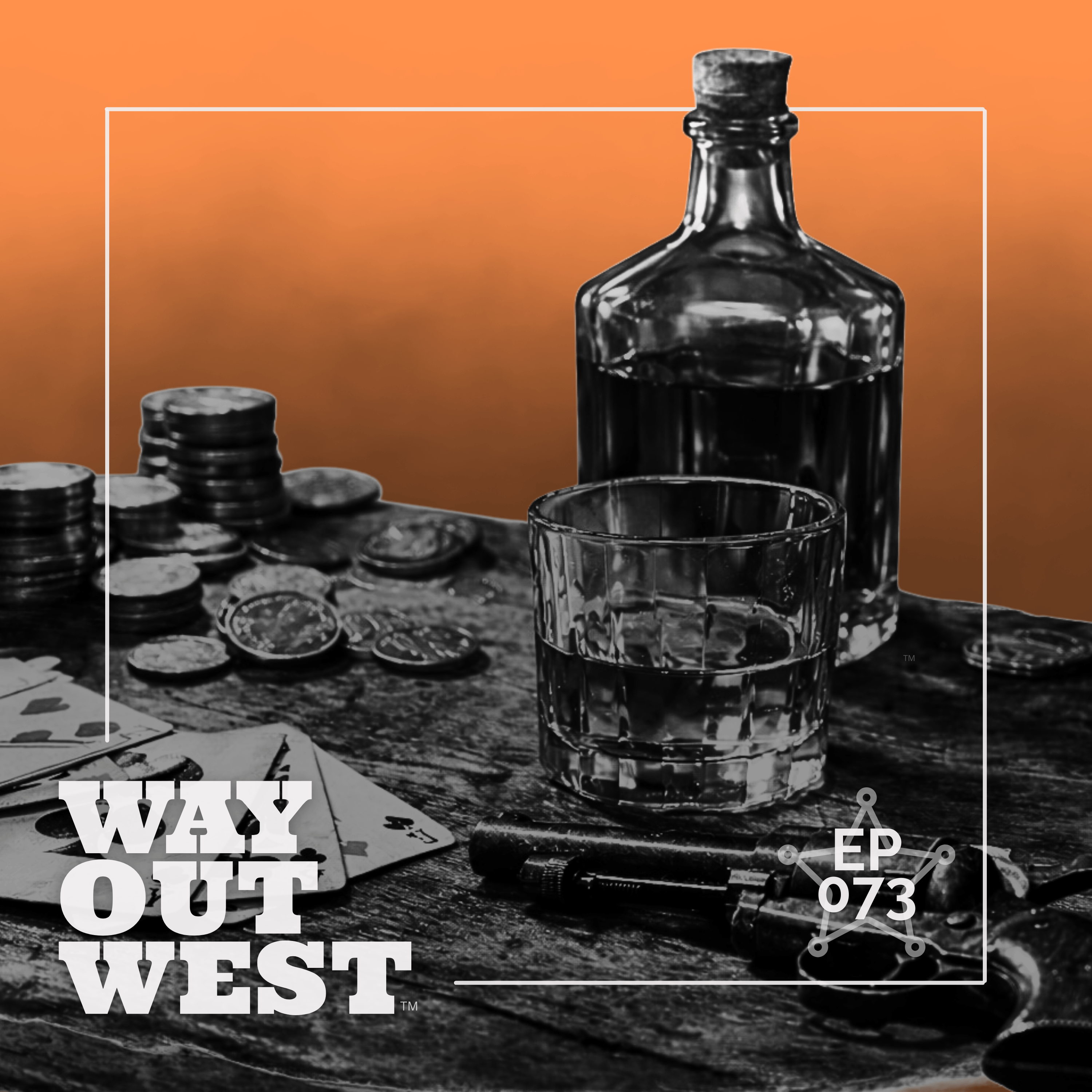
After months on the open range, cowboys rode into town ready to spend their pay and cut loose. Saloons, gambling, gunfights, and tall tales collided in nights that made the frontier legendary.


When the cattle were delivered and the trail finally ended, cowboys didn’t head home. They headed into town.
In this episode of Way Out West, Step off the open range and onto the boardwalks of frontier towns where cowboys cut loose after months of hard riding. Saloons filled first. Cards hit the tables. Whiskey flowed. Music spilled into the streets. And with it came trouble, tall tales, and moments that shaped the legends of the American West.
Explore what town life really looked like for working cowboys: why payday vanished so fast, how gambling and alcohol fueled conflict, and why many frontier towns tried (and often failed) to control the chaos. From unwritten rules and gun ordinances to the women, lawmen, and storytellers who kept towns running, this episode looks past Hollywood myths to the human reality of frontier life.
Because when cowboys came to town, the West didn’t just get louder. It revealed who these men really were when the work paused, and the lights came on.
In This Episode, You’ll Hear:
What really happened when cowboys left the trail and hit town after months on the open range
Why saloons were the social, economic, and emotional center of frontier towns
How payday, gambling, and alcohol turned quiet boardwalks into pressure cookers
The unwritten rules cowboys followed—and what happened when those rules broke down
How frontier lawmen tried to keep order with little more than reputation and nerve
Why tall tales, legends, and reputations were forged in saloons as much as on the trail
What frontier towns reveal about cowboy culture beyond the Hollywood myths
Cowboy Glossary Term of the Week:
Blowin’ In
As Mentioned in this Episode:
👉 The Reality of Guns in the Wild West
Enjoying the ride? Saddle up with us:
Transcript: For a full transcript of this episode, click on "Transcript"
Your Turn! Share your thoughts → howdy@cowboyaccountant.com
Support the Show: Buy me a coffee → https://buymeacoffee.com/thecowboycpa
Follow Along: Instagram → https://www.instagram.com/RideWayOutWest
02:43 - Chapter 1: Why Towns Mattered
03:21 - Chapter 2: First Stop, The Saloon
04:52 - Chapter 3: Gambling, Drinking & Blowing Pay
06:09 - Chapter 4: The Women of Town
06:52 - Chapter 5: Standoffs & Showdowns
08:30 - Chapter 5: Law & Order (Such as it Was)
09:08 - Chapter 6: Tall Tales & Legends
10:06 - Chapter 7: When the Town Turned Dark
10:59 - Chapter 8: Why Cowboys Always Left Town
11:33 - Chapter 9: The Last Look Back
12:17 - Chapter 10: Buster the Bull & the Cowboy Glossary Term of the Week
12:52 - Chapter 11: Thanks for Listening
They’d been dusty for months.
Sunburned.
Sleep-starved.
Paid in promises and trail wages that jingled heavy in their pockets.
And then—
out of the shimmer on the horizon—
a town.
Boardwalks.
Swinging doors.
Piano music leaking into the street like trouble.
When cowboys came to town…
the West held its breath.
[MUSIC]
Howdy.
Chip Schweiger, here.
Welcome to another edition of Way Out West—
the podcast that takes you on a journey through the stories of the American West,
brings you the very best cowboy wisdom,
and celebrates the legacy of the American Cowboy.
Picture the moment.
The herd is delivered.
The trail boss has counted heads.
The remuda’s cooling out.
And for the first time in months…
there’s nowhere you have to be.
No night guard.
No river crossing.
No thunderhead building behind you.
Just a town up ahead.
So today on the show, we’re riding off the trail.
And heading into that town.
Because for cowboys, the town wasn’t just a place.
It was a release valve.
After weeks—sometimes months—of dust, danger, and discipline,
The town was where the rules bent.
Sometimes broke.
And sometimes…
got somebody killed.
After the episode, check out the show notes at WayOutWestPod.com/when-cowboys-came-to-town
[MUSIC]
Welcome back.
If the trail was discipline…
A town was temptation.
Out on the trail,
a man learned patience.
Learned silence.
Learned how to read the sky and the stock and the men riding beside him.
But in town?
Everything talked at once.
Music.
Money.
Egos.
Opportunity.
Frontier towns weren’t built for quiet reflection.
They were built to absorb impact.
And when a trail crew hit town—
dusty, paid, and restless—
the place didn’t just notice.
It changed.
So let’s step away from the comforts of the open range
and onto the boardwalk—
to see what really happened
when cowboys came to town.
Chapter 1: Why Towns Mattered
Let’s get something straight.
Most cowboys weren’t outlaws.
They weren’t gunfighters.
They weren’t drunk every night.
They were working men.
But town?
The town was different.
A town meant:
• Hot food
• Clean sheets
• Cold whiskey
• Music
• Women
• Laughter
• Noise
Things you didn’t get on the trail.
And when hundreds of young men—
flush with pay,
amped on adrenaline,
and starved for human contact—
hit a small frontier town all at once…
Well.
Things got interesting.
Chapter 2: First Stop, The Saloon
The saloon wasn’t just a bar.
It was the living room of the frontier.
You drank there.
You gambled there.
You got paid there.
You heard the news there.
You found work there.
You lost money there.
And sometimes…
you lost your teeth.
Swinging doors.
Sawdust floors.
A long bar scarred by knives, boots, and bad decisions.
Beer was warm.
Whiskey was rough.
And nobody asked your name unless they needed it later.
A piano player worked nonstop—
ragtime, ballads, anything loud enough to drown out trouble.
And trouble usually followed.
Here’s something most folks don’t realize.
Many saloons opened before churches.
Before schools.
Before permanent housing.
Because a saloon wasn’t just a place to drink—
it was where deals got made.
Cattle contracts.
Trail jobs.
Land rumors.
And that sawdust on the floor?
It wasn’t decoration.
It soaked up spit, blood, and spilled liquor—
and gave boots some traction
when tempers slipped.
Mirrors behind the bar weren’t for vanity.
They let bartenders see trouble coming.
And the whiskey?
Often cut with water.
Sometimes cut with tobacco.
Occasionally cut with things
no one should ever drink.
But it was strong.
And it was there.
And that was enough.
Chapter 3: Gambling, Drinking & Blowing Pay
Cowboys didn’t save much money.
Not because they were careless—
but because the future was uncertain.
A stampede.
A fall.
A fever.
A gunshot.
You learned to live in the moment.
So when payday came,
it often disappeared fast.
Monte.
Faro.
Poker.
Cards slapped the table.
Coins clinked.
Tempers flared.
A man could lose a month’s wages in minutes.
Or win enough to buy drinks for the whole room—
which usually guaranteed he’d lose it all anyway.
And that was fine.
Because tomorrow wasn’t promised.
Most cowboys were paid $25 to $40 a month.
That sounds small now—
but back then, it was real money
for a young man with no family ties.
And payday didn’t come weekly.
Or even monthly.
It came at the end.
End of the drive.
End of the season.
Which meant a cowboy might walk into town
with several months’ pay in his pocket—
and no real plan for tomorrow.
Some wired money home.
Some bought gear.
Some saved.
Most didn’t.
Because the town didn’t feel like a place for planning.
It felt like a place for release.
Chapter 4: The Women of Town
No frontier town worked without women.
Dance hall girls.
Saloon singers.
Madams.
Waitresses.
Wives trying to keep order in the chaos.
Some came west chasing independence.
Some ran from something back east.
Some ran entire businesses while the men postured and postured.
They were entertainers, caretakers, entrepreneurs, and survivors.
And cowboys—
lonely, young, and half-feral after months on the range—
were drawn to them like moths to lantern light.
Not all romance.
Not all tragedy.
But always human.
Chapter 5: Standoffs & Showdowns
Now let’s talk about guns.
Despite Hollywood,
most cowboys didn’t walk around itching to shoot someone.
But towns made weapons unavoidable.
Alcohol.
Egos.
Old grudges.
Bad hands of cards.
That’s how standoffs happened.
Sometimes it was fast.
A flash.
A crack of sound.
Other times it was slow.
Two men standing in the street.
Hands hovering.
A crowd backing away.
Most towns tried to control it.
Gun ordinances.
Marshals.
Rules at the city limits.
But rules and reality didn’t always agree.
And when they didn’t—
history got made.
Here’s a fun contradiction.
Some of the “wildest” towns
actually had strict gun laws.
Places like Dodge City and Tombstone
required visitors to check their firearms
with the sheriff or at the edge of town.
That famous sign—
“Check Your Guns”?
It wasn’t decoration.
It was survival.
Of course, not everyone followed the rule.
And not every lawman enforced it equally.
But the myth of every cowboy
wandering through town fully armed,
looking for a fight—
That’s more Hollywood than history.
Most violence came from alcohol, not ambition.
Want to learn more about the real story behind guns in the Wild West—
beyond the Hollywood myths.
Check out my blog article, The Reality of Guns in the Wild West. I’ll drop a link in the show notes.
Chapter 5: Law & Order (Such as it Was)
Frontier law wasn’t soft.
But it was thin.
A town might have:
• One marshal
• One deputy
• Maybe a jail with one cell
That was it.
So lawmen relied on reputation.
On nerve.
On backing down the right man at the right time.
A good lawman didn’t fight everyone.
He picked his battles.
A bad one didn’t last long.
Sometimes justice came quick.
Sometimes it came crooked.
Sometimes it never came at all.
And everyone knew it.
Chapter 6: Tall Tales & Legends
Town is where stories were born.
Every cowboy had one.
A stampede he barely survived.
A horse nobody else could ride.
A fight that grew bigger with every retelling.
Truth bent.
Facts stretched.
And legends took shape.
The man who drank the most.
The man who fought the hardest.
The man who walked away when everyone expected blood.
By morning,
half of it wasn’t true—
but all of it felt real.
And here’s the thing:
There were no newspapers on the trail.
No photographs.
No recordings.
Stories were currency.
They filled long nights.
They earned drinks.
They built reputations.
And once a story left town—
it rarely came back the same.
That’s how ordinary men
became legends.
Not because they lied—
but because memory is generous
and boredom is powerful.
Chapter 7: When the Town Turned Dark
Frontier towns ran hot.
Too many people.
Too little structure.
Too much expectation.
You had:
• Men with money and nowhere to spend it
• Men with grudges and no privacy
• Men who’d spent months living by instinct
That’s a volatile mix.
The town didn’t create violence—
it concentrated it.
And when things went wrong,
they went wrong fast.
Towns could be brutal.
Drunks froze in alleys.
Men were cheated.
Women were exploited.
Fights ended wrong.
Some cowboys never made it back to the trail.
A knife.
A bullet.
A bad fall.
Frontier towns were young, raw, and unforgiving—
just like the people who built them.
The West didn’t promise safety.
Only opportunity.
Chapter 8: Why Cowboys Always Left Town
Here’s the thing.
No matter how wild the town got—
cowboys rarely stayed.
Because the town was noise.
The trail was purpose.
Out there,
your horse mattered.
Your word mattered.
Your work mattered.
Towns burned hot.
The range burned slow.
And after a few days—
sometimes a week—
the money ran out.
The excitement faded.
And the quiet comfort of the horizon started calling again.
Chapter 9: The Last Look Back
So imagine it.
A cowboy at the edge of town.
Hat pulled low.
Bedroll tied tight.
He looks back once.
At the saloon doors.
The laughter.
The trouble he didn’t quite find.
Then he turns toward open country.
Because the town was a pause.
The trail was life.
When cowboys came to town,
they reminded the frontier it was alive.
Messy.
Loud.
Unpredictable.
But they also reminded it that work still waited beyond the lights.
That freedom carried responsibility.
And that celebration meant more
when it followed real labor.
That’s a lesson that still rides with us today.
Chapter 10: Buster the Bull & the Cowboy Glossary Term of the Week
OK, before we finish up this week, we’ve got one more thing.
Yep, that distinctive call from Buster the Bull means it’s time for the Cowboy Glossary term of the week, and this week’s term is: “Blowin’ In”
To blow in meant riding into town suddenly—
often broke,
often loud,
and rarely unnoticed.
A cowboy who blew in
wasn’t there to ease quietly into civilization.
He was there to announce himself.
And frontier towns knew exactly
what that usually meant.
Chapter 11: Thanks for Listening
Well, that’s about all for this episode of Way Out West.
I appreciate you spending part of your day with me—and hope you enjoyed getting off the trail and riding into town.
If you enjoyed the show, please consider sharing it with a friend who loves a good Western tale. That helps us reach more fans of the American West.
And don’t forget to drop us a review on your favorite podcast app and connect with us on Instagram and Facebook.
Next time on Way Out West,
After the whiskey wore off,
after the cards were put away,
and after the town went quiet again—
cowboys still had to ride out.
Hungover.
Broke.
Sometimes injured.
Next time, we’re talking about
what happened after town—
the hard ride back to work,
and why the trail didn’t care
what kind of night you had.
Until next week, this is Chip Schweiger reminding you to enjoy the town when you’re there,
but never forget
what you’re riding for.
We’ll see ya down the road.