When Winter Broke the Range: The Great Plains Blizzards of the 1880s
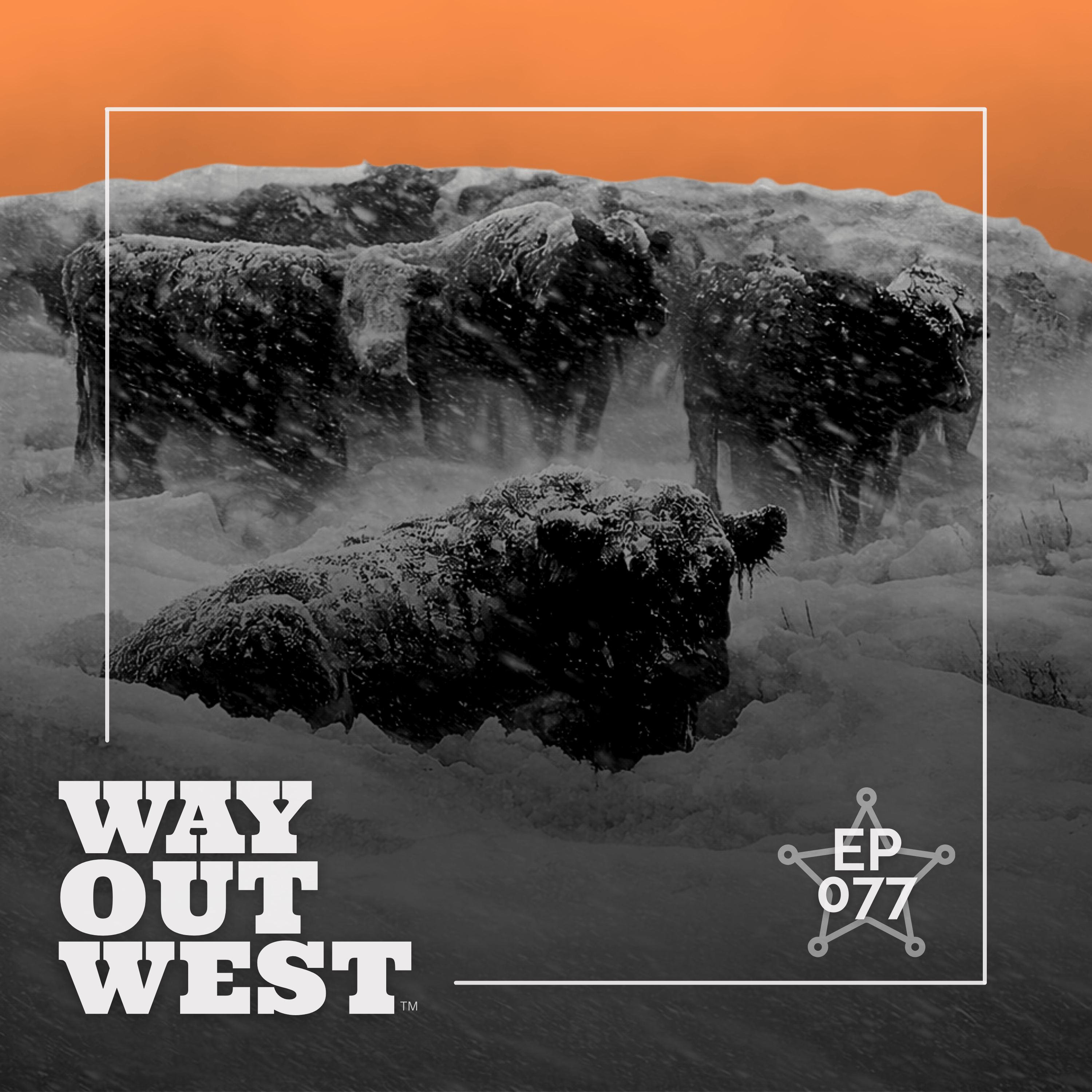
In the winter of 1887, brutal blizzards swept across the Great Plains, killing millions of cattle and ending the open range forever. In this episode of Way Out West, we explore how one catastrophic winter reshaped ranching and humbled the American West.


In the late 1880s, the American West stood at the height of the open range era. Cattle grazed freely. Investors poured in money. Ranchers believed nature would always provide.
Then winter arrived.
In 1886 and 1887, a series of devastating blizzards swept across the Great Plains. Temperatures collapsed. Snow buried grazing land. Hurricanes of wind and ice trapped cowboys and destroyed herds. Millions of cattle died. Entire ranching operations vanished.
In this episode of Way Out West, Chip Schweiger tells the true story of the Great Plains blizzards and how they permanently changed ranching in the American West.
In This Episode, You’ll Hear:
- The rise of the open range and the cattle boom
- Why ranchers were dangerously unprepared
- How cowboys fought to survive brutal conditions
- The staggering cattle losses of the winter of 1887
- Personal accounts from those who lived through it
- The collapse of the cattle industry
- The end of the open range
- How modern ranching was born from disaster
- The timeless lessons this storm still teaches today
This is the story of confidence, collapse, and resilience—told from the saddle.
🐎 Cowboy Glossary Term of the Week
Open Range — Land where cattle grazed freely without fences or fixed boundaries. The Great Blizzard of 1887 marked the end of this era.
🎧 Listen & Subscribe
Subscribe to Way Out West for weekly stories of cowboy life, ranching history, and Western wisdom.
Transcript: For a full transcript of this episode, click on "Transcript"
Your Turn! Share your thoughts → howdy@cowboyaccountant.com
Support the Show: Buy me a coffee → https://buymeacoffee.com/thecowboycpa
Follow Along: Instagram → https://www.instagram.com/RideWayOutWest
02:38 - Chapter 1: The Golden Age of the Open Range
03:49 - Chapter 2: A False Sense of Security
04:39 - Chapter 3: The First Warning Signs
05:15 - Chapter 4: The Great Blizzard Of 1887
06:15 - Chapter 5: Cattle In The Storm
07:02 - Chapter 6: The Human Cost
09:11 - Chapter 7 – The Spring Reckoning
09:50 - Chapter 8: The End Of The Open Range
10:31 - Chapter 9: Cowboy Wisdom From The Storm
11:22 - Chapter 10: Modern Reflection
11:55 - Chapter 11: Closing Thoughts
12:23 - Chapter 12: Buster the Bull & the Cowboy Glossary Term of the Week
12:58 - Chapter 13: Thanks for Listening
The prairie is quiet tonight.
No coyotes.
No wind in the grass.
No creak of leather.
Just snow.
Falling slow…
soft…
endless.
Under a pale winter moon…
A lone cowboy rides.
His coat is stiff with ice.
His breath hangs in the air.
His horse moves carefully—
each step testing the ground.
Somewhere out there…
Thousands of head of cattle stand in the dark.
Hungry.
Cold.
Waiting.
The cowboy doesn’t know it yet.
But this ride…
Will be remembered.
Not for what he saves.
But for what is about to be lost.
By morning…
The grass will be buried.
The trails erased.
The herds scattered.
And the open range…
Will begin to disappear.
This is the night
winter came for the West.
And nothing was ever the same again.
[MUSIC]
Howdy.
Chip Schweiger, here.
Welcome to another edition of Way Out West.
The podcast that takes you on a journey through the stories of the American West…
brings you the very best cowboy wisdom…
and celebrates the legacy of the American cowboy.
Now let me ask you something.
Have you ever been caught in a storm you didn’t see coming?
Not just rain.
Not just cold.
I mean…
a storm that changes everything.
One that turns confidence into fear.
Plans into mistakes.
Success into survival.
Because in the late 1880s…
That’s exactly what happened
on the Great Plains.
Sudden blizzards.
Whiteout winds.
Temperatures that fell overnight.
Cowboys trapped.
Cattle buried.
Ranches destroyed.
And when the snow finally melted…
The open range was gone forever.
So Today on the show,
We’re telling the true story
of the Great Plains blizzards of the 1880s.
And how one brutal winter
changed the American West forever.
After the episode, check out the show notes at WayOutWestPod.com/riding-night-guard
[MUSIC]
Chapter 1: The Golden Age of the Open Range
Hi there and welcome back,
Before we talk about the storm…
We need to talk about what came before it.
Because in the 1870s and 1880s…
The cattle business was booming.
This was the age of the open range.
No fences.
No property lines you could see.
No borders on the grass.
Just millions of acres of prairie.
Public land.
Free land.
And free grass.
Texas ranchers drove longhorns north.
Wyoming.
Montana.
The Dakotas.
Investors from New York.
Boston.
Even England.
Put their money into cattle.
Why?
Because it looked foolproof.
Buy cheap cattle.
Let them graze for free.
Sell them high.
No barns.
No feedlots.
No winter hay.
Nature would take care of it.
Or so they thought.
Huge cattle outfits appeared almost overnight.
Some ran fifty thousand head.
Some ran one hundred thousand.
And many of the owners?
Never even saw their ranch.
They were “absentee investors.”
They trusted managers.
They trusted foremen.
And most of all…
They trusted the weather.
Chapter 2: A False Sense of Security
Here’s the problem.
The 1880s started out warm.
Really warm.
Several mild winters in a row.
Snow melted quickly.
Grass stayed available.
Cattle survived easily.
So ranchers got confident.
Too confident.
They stopped putting up hay.
They stopped building shelters.
They stopped preparing for hard winters.
Some even overstocked.
Put more cattle on the land than it could support.
Because hey…
It worked last year.
And the year before.
And the year before that.
Sound familiar?
Good times have a way of teaching bad habits.
By 1886…
The Plains were crowded with cattle.
The grass was thin.
And nobody was worried.
Chapter 3: The First Warning Signs
The winter of 1886 started early.
In November…
Snowstorms hit Montana and Wyoming.
Heavy snow.
Deep drifts.
Cattle couldn’t reach grass.
Some began to starve.
Cowboys rode out in blizzards
trying to move herds.
Some never made it back.
Others barely survived.
But many ranchers told themselves:
“This is temporary.”
“It’ll warm up.”
“It always does.”
They’d been right before.
They were wrong this time.
Chapter 4: The Great Blizzard Of 1887
January 1887.
That’s when everything collapsed.
A warm spell hit first.
Snow melted.
Ice formed.
Cattle grazed happily.
Then…
Without warning…
An Arctic front slammed south.
Temperatures dropped 40 degrees in hours.
Winds reached hurricane strength.
Snow fell sideways.
Visibility went to zero.
This wasn’t just cold.
This was violent.
Cowboys caught outside couldn’t see their hands.
Horses froze standing still.
Men wrapped reins around their arms
so they wouldn’t lose their mounts.
Some were blown off their horses.
Some froze within sight of cabins.
Others wandered in circles until they collapsed.
Entire crews were trapped for days.
Inside bunkhouses.
With no food.
No fuel.
No way out.
Chapter 5: Cattle In The Storm
Now imagine being a cow.
No shelter.
No barn.
No feed.
Just open prairie.
And wind.
And ice.
And snow piling higher by the hour.
Cattle tried to walk into the wind.
Instinct told them to.
They walked until they couldn’t anymore.
Then they froze.
Some drifted into ravines.
Some piled against fences.
Thousands died standing up.
Others suffocated under snowdrifts.
By spring…
Carcasses were everywhere.
Rivers clogged.
Hillsides covered.
Ranches that once held tens of thousands of head…
Were empty.
Some lost 70 percent.
Some lost 80.
Some lost everything.
Chapter 6: The Human Cost
You know what’s easy to forget about this storm?
We mostly remember it in numbers.
Seventy percent lost.
Eighty percent gone.
Thousands dead.
But behind every number…
Was a human story.
Because cowboys, ranchers, and settlers
wrote about this winter.
In letters.
In journals.
In newspapers.
And what they left behind…
Doesn’t sound like statistics.
It sounds like heartbreak.
One rancher in Wyoming wrote:
“We found cattle frozen in rows,
as if they had simply laid down to sleep.”
Another said:
“The prairie looked like it had been salted with death.”
A cowboy near Miles City, Montana, wrote to his family:
“I have never known such cold.
We burned fence posts to keep warm.
We prayed the horses would live through the night.”
Think about that.
Burning fences.
Not for warmth.
For survival.
Some families stayed inside for weeks.
Snow piled against doors.
Food ran low.
Fuel disappeared.
People melted snow for water.
Boiled leather for soup.
Waited.
Hoped.
And wondered…
If spring would ever come.
One woman on a small homestead wrote:
“We buried two calves today.
We buried hope with them.”
That’s not exaggeration.
That was life.
Out there.
In 1887.
No headlines.
No reporters.
Just people trying not to freeze.
And here’s what’s remarkable.
Most of them didn’t quit.
They mourned.
They regrouped.
They rebuilt.
They learned.
They adapted.
That’s the part of this story
we don’t talk about enough.
Yes, the storm destroyed.
But it also forged something tougher.
A new kind of Westerner.
More careful.
More disciplined.
More humble.
The kind who respected winter.
Because they had seen what it could do.
Chapter 7 – The Spring Reckoning
When spring finally came…
The Plains looked like a battlefield.
Dead cattle everywhere.
Rotting hides.
Bleached bones.
The smell lasted for months.
Railroads stopped shipping beef.
Banks stopped lending.
Investors panicked.
British capital fled.
The cattle boom collapsed.
Overnight.
And suddenly…
People started asking hard questions.
Was the open range sustainable?
Was “free grass” really free?
Could you run livestock without preparation?
The answer was now obvious.
No.
Chapter 8: The End Of The Open Range
After the Great Blizzard…
Everything changed.
Ranchers adapted.
Or they disappeared.
Fences went up.
Barbed wire spread everywhere.
Hay was stored.
Windbreaks built.
Shelters constructed.
Herd sizes shrank.
Breeding improved.
Range management began.
Science entered ranching.
The romantic era of unlimited freedom…
Was over.
The modern ranching era had begun.
Not because of government policy.
Not because of politics.
Because of weather.
Because nature reminded everyone who was in charge.
Chapter 9: Cowboy Wisdom From The Storm
Now let’s talk about what this teaches us.
Because this story isn’t just about snow.
It’s about human nature.
First lesson:
Never confuse luck with skill.
Ranchers thought they were smart.
But they were just lucky.
Until they weren’t.
Second lesson:
Prepare for bad times
during good times.
The ones who survived?
Had hay.
Had shelters.
Had backup plans.
Third lesson:
Respect the land.
You don’t dominate it.
You work with it.
Ignore it…
And it will humble you.
Fast.
Fourth lesson:
Growth without discipline is dangerous.
Overstocking.
Overconfidence.
Speculation.
It all caught up with them.
Sounds familiar in business, doesn’t it?
Chapter 10: Modern Reflection
Today…
We have forecasts.
Satellites.
Radar.
Feedlots.
Insurance.
Tractors.
Technology.
But the principle is the same.
Markets crash.
Droughts come.
Costs spike.
Customers disappear.
And the people who survive?
Are the ones who planned ahead.
Who didn’t believe their own hype.
Who saved when times were good.
Who respected risk.
That’s cowboy wisdom.
Learned the hard way.
In the snow.
In the wind.
In 1887.
Chapter 11: Closing Thoughts
The Great Plains blizzards of the 1880s
ended an era.
They wiped out fortunes.
They humbled investors.
They changed ranching forever.
But they also left us something valuable.
A reminder.
That nature always has the final word.
That preparation matters.
That humility matters.
And that real cowboys…
Don’t gamble everything on good weather.
Chapter 12: Buster the Bull & the Cowboy Glossary Term of the Week
Alright, before we close…we’ve got one more thing.
Yep, that distinctive call from Buster the Bull means it's time for the Cowboy Glossary term of the week.
And this week’s term is: “Open Range.”
The open range was land where cattle could graze freely
without fences.
No fixed boundaries.
No private pastures.
No containment.
It defined early Western ranching.
And it disappeared after the Great Blizzard.
Because freedom without responsibility
doesn’t last long.
Chapter 13: Thanks for Listening
Well, that’s about all for this episode of Way Out West.
I appreciate you spending part of your day with me—and hope you enjoyed getting back onto the trail where every cowboy belongs.
If you enjoyed the show, please consider sharing it with a friend who loves a good Western tale. That helps us reach more fans of the American West.
And don’t forget to drop us a review on your favorite podcast app and connect with us on Instagram and Facebook.
Next time on Way Out West,
We’re riding into another forgotten chapter of Western history.
We’re talking about…
How cowboys handled sickness, injury, and death
on the trail.
No hospitals.
No ambulances.
No doctors for hundreds of miles.
Just grit.
Improvisation.
And sometimes…
Miracles.
You won’t want to miss it.
Until next week, This is Chip Schweiger, Reminding you…
That the West wasn’t built by luck.
It was built by people who learned…
And kept riding.
Until next time.
We’ll see ya down the road.