Who Built the American West?

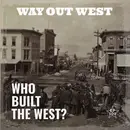
The cowboy may be the most recognizable symbol of the American West, but he never built it alone. Discover how generations of people, cultures, and traditions became braided together to create the West we know today.
Who Built the American West?

The cowboy may be the most recognizable symbol of the American West. But no single group of people built the West alone.
Long before the cattle drives and frontier towns of popular culture, Indigenous nations had developed generations of knowledge about the land. Spanish exploration and settlement brought new animals, traditions, and ways of life. Mexican vaqueros helped shape the cattle culture that later influenced the American cowboy.
And the story continued.
Black cowboys worked the great cattle drives. Ranch wives and frontier women sustained families and communities. Chinese laborers and thousands of other workers built railroads across mountains and deserts. Homesteaders broke ground, merchants opened businesses, and soldiers, lawmen, surveyors, stagecoach drivers, and countless others helped create the infrastructure of the growing West.
In this episode of Way Out West, we widen the lens to explore how generations of people, cultures, and traditions became braided together to create what we now call the American West.
Because the real story of the West was never about one kind of person.
It was built one strand at a time.
What You’ll Hear
- Why the familiar image of the lone cowboy tells only part of the Western story
- How Indigenous knowledge shaped life across the landscapes of the West
- The influence of Spanish settlement and Mexican vaquero traditions
- The diverse backgrounds of the working cowboys who drove cattle across the plains
- The overlooked contributions of Black cowboys and frontier women
- How Chinese laborers and other workers helped build the railroads
- The role of homesteaders, merchants, soldiers, lawmen, and ordinary families
- Why the American West is best understood as a story braided together over generations
Cowboy Glossary Term of the Week
Riata: a traditional braided rawhide rope used by vaqueros long before modern nylon ropes became common. Made by braiding narrow strips of carefully prepared rawhide together, the riata became remarkably strong, durable, and dependable in the hands of a skilled horseman.
Chapters
The Question Behind the Legend
Who really built the American West, and why does the familiar image of the lone cowboy tell only part of the story?
The First Strands
Indigenous knowledge, Spanish settlement, horses, cattle, and the generations of vaquero traditions that helped shape Western ranching culture.
The People Who Built the West
American cowboys, Black cowboys, ranch wives, Chinese railroad workers, homesteaders, merchants, soldiers, lawmen, and the countless ordinary people whose work created communities across the West.
The Braided West
Why no single group can claim the story alone—and how every generation continues adding another strand to the unfinished story of the American West.
Your Turn! Share your thoughts → howdy@ridewayoutwest.com
Support the Show: Buy me a coffee → https://buymeacoffee.com/thecowboycpa
Follow Along: Instagram → https://www.instagram.com/RideWayOutWest
01:35 - Introduction
02:51 - Chapter 1 - The Question Behind the Legend
05:43 - Chapter 2 - The First Strands
11:11 - Chapter 3 - The People Who Built the West
19:19 - Chapter 4 - The Braided West
22:32 - Chapter 5 – Buster the Bull & Cowboy Glossary Term of the Week
23:15 - Chapter 6 – Thanks for Listening
Who built the American West?
Ask that question, and you'll probably hear the same answer over and over again: The cowboy.
It's an understandable answer.
The cowboy is one of the most recognizable figures in American history. A rider beneath a wide-brimmed hat. A horse. Open country. Hard work. Independence.
But the farther you ride into the history of the West...
...the more people you begin to meet.
People who spoke different languages.
People who came from different continents.
People who arrived centuries apart.
Some came willingly.
Others had no choice.
Some crossed the plains horseback.
Others on foot.
Some drove cattle.
Or laid railroad track.
Opened stores.
Raised families.
Or protected settlements.
Some had lived on the land for thousands of years before anyone else arrived.
And all of them left something behind.
History has a funny way of simplifying itself.
The farther away we stand from it...
...the fewer faces we remember.
Because the American West wasn't built by one kind of person.
It became what it is because countless lives became braided together...
...one strand at a time.
[Music Up]
Howdy. Chip Schweiger, here.
Welcome to another edition of Way Out West.
Where the stories of the American West are told...
Cowboy wisdom is earned...
And the legacy of the American cowboy still rides on.
The American West has never belonged to a single story.
It stretches from windswept prairies to desert mesas...
from snow-covered mountain passes to quiet ranch valleys where dawn still begins with the sound of horses and the smell of fresh coffee.
Every canyon, every trail, every weathered fence line holds echoes of the people who came before us.
Some are remembered.
Many are not.
But together, they built something far greater than any one legend could ever tell.
Today's journey begins there.
Before we saddle up, you'll find photographs, maps, and additional resources for today's episode in the show notes at WayOutWestPod.com/who-built-the-west
Chapter 1 - The Question Behind the Legend
Welcome back.
For a long time, I've thought about today's question.
Who built the American West?
Not who became famous.
Not who appeared in movies.
Or ended up in history books more often than everyone else.
Who actually built it?
Because the truth is, history usually isn't built by one extraordinary person.
It's built by thousands of ordinary people whose stories eventually become tangled together.
That's especially true in the American West.
When we picture the West, it's easy to imagine a single rider crossing an endless landscape.
It's a beautiful image.
It's also incomplete.
The real West looked more like a busy stockyard than a lonely prairie.
People coming and going.
Different languages filling the air.
Wagons arriving.
Freight being unloaded.
Children running down dusty streets.
A blacksmith's hammer ringing through town.
Someone leading a string of mules.
Someone else driving cattle.
Maybe a train whistle in the distance.
History didn't happen one person at a time.
It happened all at once.
And maybe that's why it can be so hard to untangle.
Or maybe...
Instead of untangling it...
We should think of it as something braided together.
There's an old piece of cowboy gear called a riata.
Traditionally, it was braided from strips of rawhide.
By themselves, those strips weren't especially remarkable.
But braided together...
They became incredibly strong.
I've started thinking about the American West the same way.
Every people.
Every culture.
Every generation.
Another strand in the braid.
Imagine it's early morning somewhere in the West around… 1885.
The sun has barely climbed above the horizon.
A ranch wife has already been awake for an hour.
Coffee is on the stove.
Biscuits are in the oven.
Children are beginning to stir.
Outside, a cowboy tightens his cinch before heading toward a herd grazing just beyond town.
Across the street, a merchant unlocks the front door of his store.
A blacksmith is lighting his forge.
The depot agent glances down the tracks, waiting for the morning train.
Before long, riders begin drifting into town.
Some are trailing cattle.
Some have freight to pick up.
Some are simply buying flour, nails, coffee, and lamp oil before heading home.
It feels ordinary.
Because it was.
None of those people probably believed they were building the American West.
They were just living another Tuesday.
History is funny that way.
It's usually built out of ordinary mornings.
Chapter 2 - The First Strands
If we're going to understand who built the West...
We have to begin long before there were cattle towns.
Long before railroads.
Before wagon trains.
Or even before anyone called this place the American West.
Because people already knew this country.
For thousands of years.
Indigenous nations had learned every corner of these landscapes through generations of experience.
They knew where water could be found after a dry summer.
They understood which grasses fed animals best.
Which mountain passes remained open longest.
When rivers flooded.
When buffalo moved.
Which plants healed.
Which plants harmed.
Knowledge like that isn't gathered in a lifetime.
It's gathered across centuries.
Different nations understood different landscapes.
The Comanche became extraordinary horsemen on the southern plains.
The Nez Perce developed one of the finest horse cultures in North America.
The Apache learned to survive in country that could seem impossibly harsh to outsiders.
Out here, knowing where water was could mean the difference between reaching tomorrow...
or not reaching it at all.
The Navajo built lives shaped by both farming and livestock in the Southwest.
Every landscape taught different lessons.
Every people adapted differently.
That's one of the oldest strands in the braid.
Over time...
new people began arriving from across the Atlantic.
Some came searching for wealth.
Others for opportunity.
Others simply because kings and empires had their own ambitions.
Spanish explorers first entered what is now the American Southwest in the 1500s.
Some came searching for cities of gold.
Others came for empire.
Some established missions.
Others founded settlements that would grow into places still familiar today.
What people often miss is that they weren't simply passing through.
They brought livestock.
Horses.
Cattle.
Sheep.
New farming practices.
European tools.
New legal systems.
New architecture.
New ideas.
Some of those ideas blended with existing traditions.
Others created conflict that still echoes today.
History is rarely tidy.
It almost never unfolds exactly the way anyone expects.
But whether they realized it or not...
The Spanish introduced animals that would permanently reshape the West.
Especially one.
The horse.
Now, I should pause here.
People sometimes say, "The Spanish brought horses to America."
That's true.
But it's only part of the story.
Once horses escaped or were traded, they spread far beyond Spanish settlements.
Indigenous nations adopted them with astonishing speed.
Within a few generations, entire cultures had transformed.
Mobility changed.
Hunting changed.
Trade changed.
Warfare changed.
Daily life changed.
The horse didn't belong to one people anymore.
It became part of many cultures.
That's another strand in the braid.
The same thing happened with cattle.
Spanish cattle adapted remarkably well to the dry country of the Southwest.
Generations later, their descendants would become Texas Longhorns.
Those hardy animals could survive conditions that challenged many European breeds.
And with cattle came people whose job was to care for them.
The vaqueros.
If you've listened to this podcast for very long, you've heard me say this before.
The American cowboy didn't suddenly appear one morning wearing a Stetson and carrying a six-shooter.
Like most things in history...
He evolved.
The vaqueros of New Spain—and later Mexico—developed generations of practical knowledge about managing cattle from horseback.
Not because they were trying to invent the cowboy.
Because they were trying to get a difficult job done.
They refined saddles.
Ropes.
Bits.
Spurs.
Branding techniques.
Roundups.
Horsemanship. All of it.
Much of it reflected earlier traditions from Spain, adapted to a completely different landscape.
Then, over generations, those practices blended again with local experience.
That's how history usually works.
Not through a single invention.
But through constant refinement.
Even today, the fingerprints remain.
Words we use without thinking.
Rodeo.
Bronco.
Mustang.
Lariat.
Cinch.
Corral.
They're quiet reminders that cultures leave traces behind.
Sometimes those traces are still hiding in everyday conversation.
And that's another strand in the braid.
Here's something that always makes me smile.
The first time many eastern cowboys headed south into Texas after the Civil War, they didn't just have to learn new country.
They had to learn new words.
Suddenly everyone was talking about remudas...
chaparreras...
bosals...
riatas...
The language itself reminded them that they were entering a ranching culture that had been taking shape for generations.
Chapter 3 - The People Who Built the West
When the United States expanded westward during the nineteenth century, it inherited far more than open land.
It inherited ideas.
Skills.
Animals.
Trails.
Communities.
And ways of working that had already been evolving for generations.
The American cowboy didn't replace the vaquero.
He learned from him.
On ranches across Texas and the Southwest, traditions mixed together.
An American ranch hand might throw a loop using techniques that had been refined over generations by Mexican vaqueros.
He might ride a horse descended from Spanish stock.
Work cattle whose ancestors first arrived centuries earlier.
Use equipment whose design reflected influences from half a world away.
History isn't a relay race where one group hands the baton to another.
It's more like a river.
Streams flow together until, after a while, it's impossible to separate them.
That's another strand in the braid.
Of course, when most people picture the American cowboy today...
They usually picture one person.
A white man riding alone across an empty landscape.
Hollywood gave us that image.
But the working cowboy was far more varied than the legend.
Historians estimate that roughly one in four cowboys after the Civil War was Black.
Others were Mexican.
Some were Indigenous.
Many were recent immigrants.
Most weren't looking for adventure.
They were looking for work.
The job itself didn't care much where you were born.
If you could stay in the saddle...
Handle cattle...
Pull your weight...
And be trusted by the crew...
You had a place.
That doesn't mean prejudice disappeared.
It certainly didn't.
But on a long trail drive, competence had a way of speaking louder than pride.
The cattle still had to reach market.
And every hand mattered.
Picture a trail crew pushing two thousand head north toward Kansas.
Dust so thick you can't see the rider beside you.
Thunderheads building on the horizon.
Twelve or fifteen cowboys spread across the herd.
Chances are...
One or more of them was Black.
Most people watching a Western movie never realize that.
One of those hands belonged to Nat Love.
If you've listened to Way Out West for a while, you know I'm a fan of his autobiography.
Love was born into slavery in Tennessee and, after emancipation, headed west as a young man.
He became an accomplished cowboy, worked trail drives, and later wrote about his experiences in a memoir that remains one of the great firsthand accounts of cowboy life.
Was every story in his book polished a little?
Probably.
Cowboys have been known to improve a story around the campfire.
But beneath the storytelling is something important.
His life reminds us that the cowboy story was never as narrow as popular culture later made it seem.
That's another strand in the braid.
And while the cowboys were out riding the range...
Someone else was keeping the ranch alive.
I've always thought ranch wives deserve far more attention than they usually receive.
Because ranches weren't sustained by cowboys alone.
They were sustained by families.
Women often managed the household.
Raised children.
Kept gardens.
Prepared meals for crews.
Tended livestock close to home.
Managed accounts.
Ordered supplies.
Nursed injuries.
Sometimes they rode alongside the men.
Sometimes they ran the entire operation when circumstances demanded it.
Life on the frontier didn't leave much room for idle hands.
Everybody worked.
Frontier women came from every background you can imagine.
Some were born in cities.
Some crossed oceans.
They were Indigenous.
Or Hispanic.
Some arrived in covered wagons.
Others had lived in the region for generations.
Different stories.
Same determination.
Another strand.
Then came the railroads.
Now here's something we don't think about very often.
The great cattle drives only lasted for a relatively short period of time.
Why?
Because the railroad kept moving west.
Every time the tracks advanced...
The trail got shorter.
Eventually, the cattle didn't need to walk hundreds of miles anymore.
They could be loaded onto railcars much closer to where they were raised.
The railroad didn't end the cattle business.
It changed it.
And building those railroads required astonishing effort.
Thousands upon thousands of laborers.
Irish immigrants.
Civil War veterans.
Freedmen.
And Chinese workers whose contribution was enormous but far too often overlooked.
Many of them blasted tunnels through solid granite.
Imagine lowering yourself over a granite wall in nothing more than a woven basket, carrying drills, black powder, and the hope that the rope above you holds.
The worked in brutal winters.
Faced avalanches.
Explosives.
Accidents.
Imagine standing in the Sierra Nevada with hand drills, black powder, and a mountain standing in your way.
It's difficult enough to build a railroad with modern equipment.
Imagine doing it one hammer blow at a time.
Without those railroads...
The West develops very differently.
That's another strand in the braid.
The same could be said for the homesteaders.
Some succeeded.
Many didn't.
The Homestead Act offered opportunity.
It didn't promise comfort.
Families arrived full of hope.
Then came drought.
Grasshoppers.
Blizzards.
Isolation.
Crop failures.
Debt.
The prairie could be breathtakingly beautiful.
It could also be heartbreakingly unforgiving.
And yet...
People stayed.
They planted windbreaks.
Built schools.
Started churches.
Raised barns.
Dug wells.
Planted orchards.
One generation struggled.
The next often benefited.
That's how communities grow.
One season at a time.
Of course...
No town survives very long without businesses.
It's easy to celebrate the rancher.
But somebody had to sell him fence wire.
Somebody sharpened his tools.
Repaired wagons.
Printed newspapers.
Ran banks.
Operated hotels.
Opened cafés.
Sold coffee.
Stocked flour.
Those little mercantiles that still survive in historic western towns weren't just charming buildings.
They were lifelines.
I've always smiled at the old general stores.
Walk in for a sack of beans...
Walk out with a shovel...
a pair of boots...
lamp oil...
a spool of thread...
peppermint sticks for the kids...
and probably the latest gossip from three counties.
Amazon has nothing on an old western mercantile.
Every town needed people who could keep commerce moving.
Another strand.
And then there were the people whose job was to bring some measure of order to places that often grew faster than anyone expected.
Soldiers built forts.
Surveyors mapped land.
Engineers designed bridges.
Stagecoach drivers carried mail.
Telegraph operators stitched distant communities together with a single wire.
Lawmen...
Well...
Sometimes they kept the peace.
Sometimes they struggled to find it.
The truth is, the frontier wasn't nearly as lawless as Hollywood liked to portray.
Most people simply wanted safe streets...
Reliable mail...
A functioning courthouse...
And someone who would show up if trouble found its way to town.
Civilizations aren't built only by dramatic moments.
They're built by dependable people doing ordinary jobs.
Day after day.
Year after year.
Chapter 4 - The Braided West
When you step back from all of it...
Something remarkable begins to appear.
No single strand explains the American West.
Not the cowboy.
Not the vaquero.
Not the rancher.
Not the railroad.
Not the homesteader.
Not the merchant.
The soldier.
Or the ranch wife.
Not even the Indigenous nations who knew these landscapes so deeply.
Take away any one of them...
And the story changes.
The braid becomes weaker.
History has a way of tempting us toward simple answers.
Simple answers fit on bumper stickers.
They fit in movie scripts.
They fit into neat little chapters in schoolbooks.
Real history almost never does.
It's messier than that.
Richer than that.
More human than that.
And I think that's good news.
Because the real story is almost always more interesting than the legend.
Maybe that's why the American West still captures our imagination.
It isn't because it belonged to one kind of person.
It never did.
It isn't because everyone agreed.
They certainly didn't.
The West was built through cooperation.
Conflict.
Exchange.
Adaptation.
Persistence.
Generation after generation.
One strand joining another until something remarkably strong emerged.
Like a braided riata.
Strong enough to pull together things that seem impossible to hold.
The American West isn't remarkable because one group built it.
It's remarkable because so many different people left something of themselves behind.
Some left trails.
Others left towns.
Great ranches.
Songs.
Recipes.
Some left words we still speak.
Some left fences that still stand.
Some left stories that are only now beginning to be told more fully.
And here's the part I love most.
The story isn't finished.
Somewhere this morning, before sunrise, a ranch hand saddled a horse.
Somewhere else, a tribal elder shared a story with a grandchild, mouth to ear.
A freight train crossed the plains.
A family unlocked the doors of a small-town hardware store.
Someone fixed a fence.
A group of folks branded calves.
Someone else swept the porch of a century-old mercantile.
The tools have changed.
Some of the names have changed.
But people are still adding strands.
The West was never just a place.
It has always been a living story.
Maybe that's the greatest lesson the American West has to offer.
We inherit stories the same way we inherit land.
Not so we can keep them exactly as we found them...
But so we can understand them more completely than the generation before us.
Every generation discovers another voice.
Another diary.
Another photograph.
Another piece of the puzzle.
Not because history changes...
But because our understanding of it grows.
The braid becomes clearer.
And that's a good thing.
Because the real American West has always been far richer...
and far more interesting...
than the simplified version we sometimes remember.
Chapter 5 – Buster the Bull & Cowboy Glossary Term of the Week
OK, before we ride out today, we’ve got one more thing
[BULL SOUND]
Yep, that distinctive call from Buster the Bull means it’s time again for our cowboy glossary term of the week.
And this week’s term is riata
So, a little bit more about a riata. It’s a traditional braided rawhide rope used by vaqueros long before the modern nylon rope became common.
Braiding several narrow strips of rawhide together created a rope that was remarkably strong, durable, and dependable.
Seems fitting.
Because that's how the American West was built.
Not by one strand...
But by many. Braided together
[MUSIC UP AND FADE]
Chapter 6 – Thanks for Listening
Well, that’s all for this episode of Way Out West. Thanks for riding with me here
If you enjoyed the episode, please follow, rate, and share the show
with someone who loves the history, culture, and traditions of the American West.
And if you'd like to see more of the work we're doing, you can visit RideWayOutWest.com.
There you'll find articles, a mercantile, the podcast archive, and more resources for fans of the American West. That’s RideWayOutWest.com
Until next time…this is Chip Schweiger reminding you… Keep your boots dry… Your cinch tight...
And remember...
The farther you ride into history...
The more faces you begin to see.
We’ll see ya down the road.