Why The West Still Matters
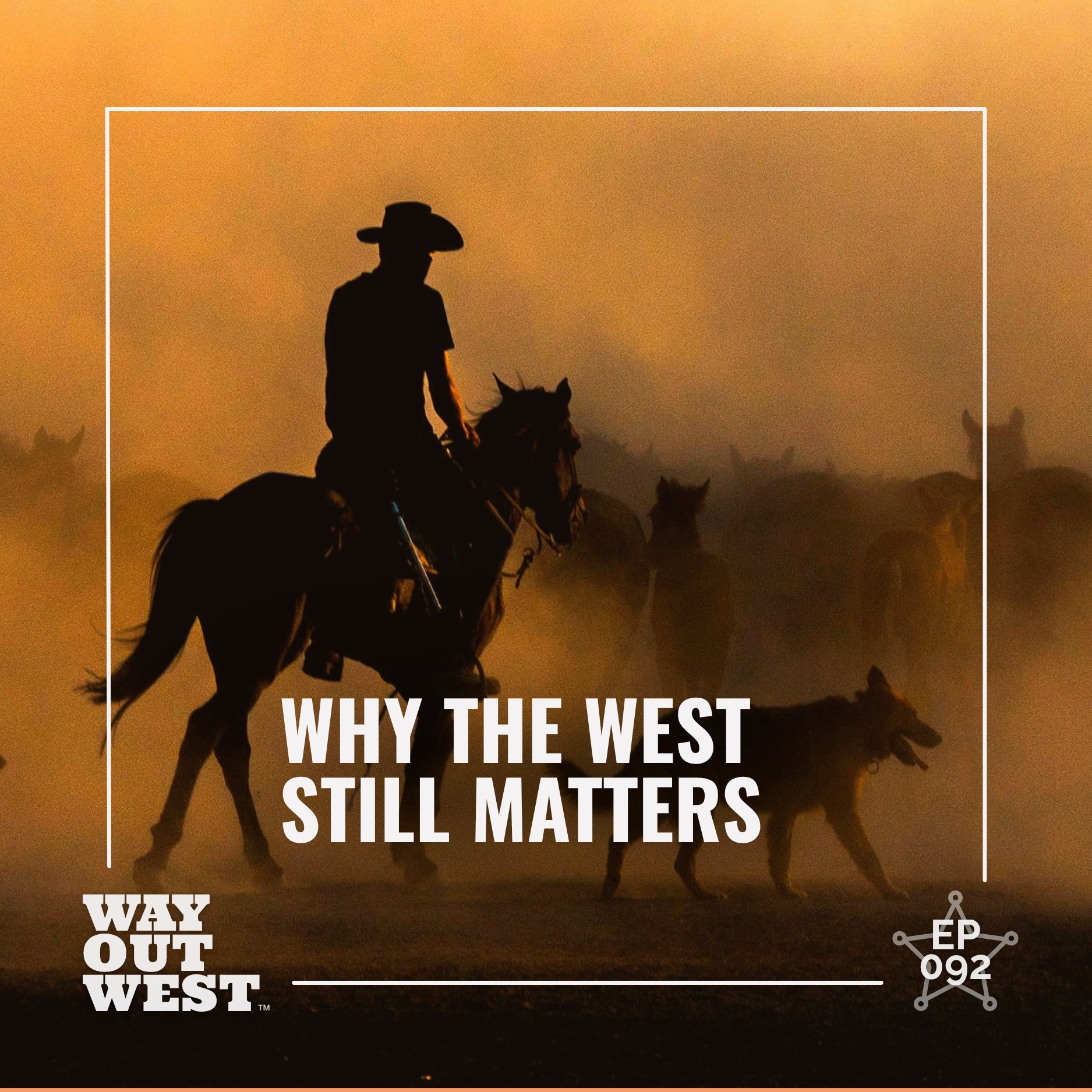
Season 5 begins with a reflection on why the American West still speaks to modern people through resilience, responsibility, ranch life, quiet competence, and the enduring search for something real in an increasingly disconnected world.
Why the West Still Matters
A Reflection on Ranch Life, Responsibility, and the Enduring Spirit of the American West
Why does the American West still hold such power over the American imagination?
Why do people still feel drawn to ranch life, cowboy culture, horses, weathered barns, open country, and the quiet competence of people who know how to handle hard things?
In this opening episode of Season 5, Chip Schweiger reflects on why the spirit of the American West still matters in modern life—not because the past was perfect, but because many of the values forged there still work today.
Through stories and reflections shaped by ranch life, horsemen, cattlemen, storms, drought, fences, livestock, and small western communities, this episode explores the growing modern search for something real in a world that often feels distracted, artificial, and disconnected.
This is not an episode about nostalgia.
It’s about resilience. Responsibility. Quiet endurance. Keeping your word. And the kind of grounded competence that still holds communities together when life gets difficult.
What You’ll Hear
- Why the American West still resonates with modern people
- The connection between responsibility and meaning
- What ranch life teaches about competence and resilience
- The quiet dignity of capable people
- How small western communities still reflect frontier values
- Why many people are searching for something more grounded and real
- Reflections on horses, weather, work, livestock, fences, and endurance
Cowboy Glossary Term of the Week
Top Hand: A top hand was the cowboy everybody counted on. The dependable one. Skilled with horses. Calm under pressure. Usually not the loudest person in camp—just the one trusted when things got difficult. Out West, that reputation mattered more than talk.
Ride Way Out West
If you enjoyed this episode, make sure you’re subscribed to Way Out West wherever you get your podcasts.
You can also explore more stories, articles, and episodes celebrating the history, culture, and enduring spirit of the American West at: Way Out West
And if you’d like to support the show, there’s always a way to buy the editor a cup of coffee:
Support the Show: Buy me a coffee → https://buymeacoffee.com/thecowboycpa
Follow Along: Instagram → https://www.instagram.com/RideWayOutWest
02:26 - Chapter One — Reality Has a Way of Straightening People Out
04:18 - Chapter Two — The West Was Built on Responsibility
06:10 - Chapter Three — People Are Searching for Something Real Again
08:00 - Chapter Four — The Quiet People Who Still Hold Things Together
09:23 - Chapter Five - Closing Reflection
10:23 - Chapter Six – Buster the Bull & Cowboy Glossary Term of the Week
11:01 - Chapter Seven - Thanks for Listening
There’s a feeling a lot of people have right now.
Hard to name it exactly.
Maybe you’ve felt it yourself.
You can spend an entire day connected to everything…
and somehow feel connected to nothing.
More noise.
More screens.
More opinions.
More performance.
But less weight.
Less reality.
Less of that feeling that what you do actually matters.
And I think that’s one reason people keep turning their eyes west.
Not because the West was perfect.
It wasn’t.
Not because life was easier.
It absolutely wasn’t.
But because out there…
consequences were real.
Weather mattered.
Work mattered.
Your word mattered.
A loose horse mattered.
A broken fence mattered.
A storm rolling over the ridge mattered.
And people had to become the kind of men and women who could meet those realities honestly.
That spirit still speaks to people.
Even now.
Especially now.
[MUSIC]
Howdy. Chip Schweiger, here.
Welcome to another edition of Way Out West.
Where the stories of the American West are told…
Cowboy wisdom is earned…
And the legacy of the American cowboy still rides on.
And this week…
We’re starting Season 5 with something a little different.
Not just a story from the West.
But a question…
Why does the West still matter?
Why—more than a century later—do people still feel drawn to cowboy culture… ranch life… horses… open country… old frontier values… and the quiet competence that came out of that world?
What is it people are really searching for?
Well…
That’s what we’re talking about today.
After the episode, check out the show notes at WayOutWestPod.com/ why-the-west-still-matters
[MUSIC]
Chapter One — Reality Has a Way of Straightening People Out
Welcome back.
You know, the American West was shaped by hard realities.
Not slogans.
Not aesthetics.
Reality.
A drought didn’t care about your plans.
A January norther on the plains didn’t care whether you felt motivated that morning.
Cattle still had to be fed.
Water still had to be checked.
Horses still had to be caught.
Fences still had to stand, straight and true, with tight wire.
And when something broke…
You fixed it.
Because there usually wasn’t anybody else coming.
That kind of life shapes people differently.
It teaches usefulness.
And usefulness creates confidence.
Not loud confidence.
Not performative confidence.
The quieter kind.
The kind you see in people who know how to back a trailer…
deliver a calf…
doctor a horse…
run a chainsaw safely…
or keep their head when weather turns ugly.
The West produced generations of people who understood something simple:
You don’t always rise to the occasion in some mythic way.
Most of the time…
you fall back on what you know how to do.
And I think modern people miss that feeling more than they realize.
The feeling of being capable.
Of being needed.
Of knowing your hands can still solve problems.
Because so much of modern life feels strangely disconnected from consequence.
You can spend all day moving information around and still wonder if you actually accomplished anything real.
But a ranch…
A ranch answers that question pretty quickly.
The animals know whether you showed up.
The land knows.
And weather definitely knows.
There’s honesty in that.
A hard honesty sometimes.
But an honest one.
Chapter Two — The West Was Built on Responsibility
One thing I’ve noticed around ranchers, horsemen, and older western communities…
The capable ones usually don’t talk very much about themselves.
Because responsibility has a way of sanding off performance.
When you’re fixing a windmill in August heat…
or trying to get hay put up before a storm…
or riding fence after three straight days of rain…
You stop worrying so much about appearing important.
The work itself becomes the focus.
And there’s dignity in that.
Real dignity.
Not the kind people announce online.
The quieter kind.
The kind where a man feeds livestock before breakfast without expecting applause.
The kind where neighbors show up with trailers during a wildfire evacuation.
The kind where somebody fixes your gate and leaves before you even know who did it.
Small western towns still carry pieces of that culture.
Not perfectly.
But it’s there.
People still notice who shows up.
Who helps.
Who keeps their word.
And maybe that sounds old-fashioned.
But I don’t think human beings ever really outgrow those values.
Because trust still matters.
Competence still matters.
Reliability still matters.
Especially when life gets difficult.
And difficult seasons have a way of revealing what’s real.
The West understood that.
Not romantically.
Practically.
Because survival depended on it.
A handshake meant something because people couldn’t afford endless layers of distance between words and actions.
If a storm was coming…
you either helped your neighbor or you didn’t.
And they remembered.
Out there, character wasn’t branding.
It was behavior.
Chapter Three — People Are Searching for Something Real Again
I think a lot of people feel untethered right now.
Not because technology is bad.
Not because modern life is bad.
But because human beings still need grounding.
We still need responsibility.
We still need purpose.
We still need places where actions matter more than image.
And that’s part of why people keep gravitating toward the imagery and stories of the West.
Horses.
Barns.
Leather.
Dust.
Mountains.
Campfires.
Open range.
Sure, some of it is aesthetic.
But I think underneath that…
People are searching for evidence that a more grounded way of living is still possible.
Not easier.
Grounded.
There’s a difference.
Because real western life was never soft.
A lot of folks romanticize the West without understanding the cost of it.
The isolation.
The weather.
The uncertainty.
The labor.
There were winters that wiped people out.
Droughts that ruined ranches.
Markets that collapsed.
Families that barely held things together.
But even with all that…
Some values survived.
And the reason they survived is because they worked.
Self-reliance worked.
Community worked.
Stewardship worked.
Resilience worked.
Knowing how to endure without constant complaint worked.
The land itself demanded those things.
And I think people still recognize truth when they see it.
Even if they can’t fully explain why it moves them.
Because deep down…
Most people still want a life connected to something real.
Something earned.
Something useful.
Something that exists beyond performance.
Chapter Four — The Quiet People Who Still Hold Things Together
One thing I admire about a lot of Western people…
They tend to understand that life is maintenance.
Not constant reinvention.
Fences don’t stay fixed forever.
Neither do people.
You keep working at both.
There’s wisdom in that.
A ranch teaches patience because nature does not care about your timeline.
Horses teach humility because they react to what you are…
not what you pretend to be.
Weather teaches perspective.
And livestock teaches responsibility fast.
Because living things depend on you.
That changes a person.
And I think that’s why the spirit of the West still matters.
Not because everybody needs to go live on horseback.
But because the West reminds people what reality feels like.
It reminds us that strong communities are usually built shoulder-to-shoulder…
not screen-to-screen.
It reminds us that competence is attractive.
That steadiness matters.
That dignity often looks quiet from the outside.
And maybe most importantly…
The West reminds us that meaning usually lives inside responsibility.
Not escape from it.
And I think that’s a lesson modern life still desperately needs.
Chapter Five - Closing Reflection
The American West still speaks to people because it asks something of them.
It asks for presence.
For responsibility.
For endurance.
For honesty.
For usefulness.
And in a world that increasingly feels filtered, artificial, distracted, and temporary…
Those things feel rare.
Maybe even sacred.
Not because they belong to the past.
But because they still work now.
You can still be the kind of person who keeps your word.
You can still learn competence.
You can still care for land.
For animals.
For neighbors.
For family.
You can still become someone people can rely on when things get hard.
And maybe that’s what people are really searching for when they look west.
Not a fantasy.
Not nostalgia.
But something solid and authentic.
A way of living that still feels anchored to something true.
Chapter Six – Buster the Bull & Cowboy Glossary Term of the Week
Before we close out for this week, we’ve got one more thing, and yep, we’re still doing these…
[BULL SOUND]
That distinctive call from Buster the Bull means it’s time for our Cowboy Glossary Term of the Week.
And this week’s term is: Top Hand.
A top hand was the cowboy everybody counted on.
The dependable one.
Skilled with horses.
Calm under pressure.
Usually not the loudest person in camp.
Just the one who could be trusted when things got difficult.
And out West…
that reputation mattered more than talk.
Chapter Seven - Thanks for Listening
Well, that’s about all for this episode of Way Out West.
I appreciate you taking time out of your day to spend with me.
If you enjoyed this episode…
Make sure you’re subscribed wherever you get your podcasts.
And if you’d like to support this work, I’ll never say no to a cup of coffee. There’s a link in the show notes about how you can buy me one.
Thanks in advance. It means a lot.
Until next time, this is Chip Schweiger, reminding you:
what you build over time… is what carries you when it counts.
We’ll see ya down the road.